

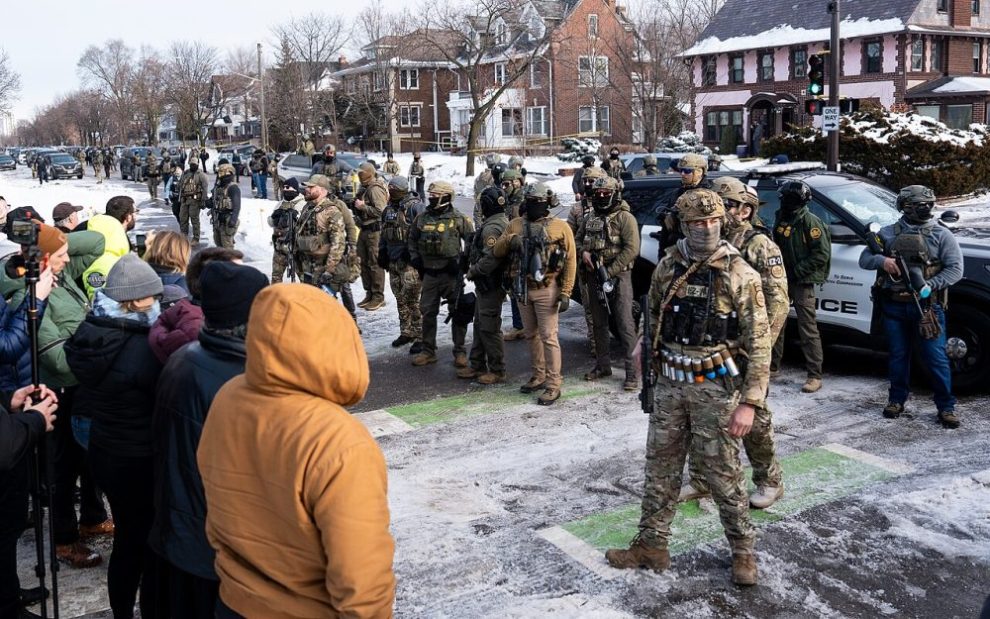
On January 7, 2026 an Immigration and Customs Enforcement officer murdered Renee Good, a mother of young children and an award-winning poet. Also in Minneapolis, ICE agents teargassed students while they were at their public high school. I have seen videos and pictures of ICE breaking car windows and tearing people out of their vehicles and calling bystanders—and U.S. citizens, lest we think this is still about immigration status—vile and dehumanizing names.
I know the words I’m supposed to say after witnessing an atrocity. I’ve written the words before—or edited them—repeatedly during my decade working here at U.S. Catholic. We write them after a school shooting or after an unarmed Black person is killed by police. After a bombing at a synagogue or as our government hurts and kills people in the name of border security. “Never again.” “Say their names.” “We must bear witness.” “Stand up and protest.”
Today, those messages fall flat. I have no more words in me about outrage or standing up or speaking out. The words that are used to name evil feel inadequate. That evil continues anyway, no matter what we say.
In the preface to the 2006 translation of Night, Elie Wiesel writes, “I knew that I must bear witness. I also knew that, while I had many things to say, I did not have the words to say them. Painfully aware of my limitations, I watched helplessly as language became an obstacle.” I used to think that he meant there were no words to describe the horror of the Shoah. But now I wonder if he also meant that eventually, all our words and language about justice and God and equality lose their power. The best of words no longer interrupt the violence, or have any effect at all. People are still dragged from cars, children are still pepper sprayed, mothers are still murdered.
I wish I knew where to go from here, that I could write some wise spiritual reflection. But the best solace I have is that this feeling of impotence and exhaustion isn’t unique to our time. And making us feel helpless is part of the point. It’s what the Nazi Party in Germany wanted. It’s what ICE wants. If our words lose their meaning, then we lose our best tool to fight back against the evil pressing in on all sides.
When words lose their force, when we don’t know what to say, neutrality starts to feel tempting. If we can’t add anything to the conversation, if it’s all been said before, then why should we raise our voice? This, too, is how violence advances.
So yes, get involved. Call your legislators. Look out for your local community. Protest. Care for one another in all the ways you know how. But also, refuse to get tired of calling out evil and injustice. Don’t slide into vague language, polite horror, and abstract grief. Refuse to let brutality become normal simply because it has become familiar.
“Why should I sanctify His name?” Wiesel writes in Night. “The Almighty, the eternal and terrible Master of the Universe, chose to be silent. What was there to thank Him for?” Like Wiesel, I think many of us are struggling right now with how to pray in this world where words have become meaningless. But—although as a Catholic it may pain me to say it—prayer is not about saying the right words in the right order. It’s not about wish fulfillment. Maybe right now prayer looks more like gathering with others who are just as shaken as we are and choosing to stay present in the moment. Maybe it looks like refusing to let our attention drift and cruelty to blur into the background noise of daily life.

I don’t have a redemptive ending. I don’t have a prayer that feels adequate. What I have is a line I am not willing to cross: I will not help make this ordinary. I will not help make this unspeakable by pretending there is nothing left to say.
Image: Wikimedia Commons/Chad Davis, ICE agents at the scene of the shooting of Renee Good (CC BY 4.0)




Add comment