As a Catholic of South Indian origin, I am amazed by the multiple religions thriving in the single country of India. I recall visiting the state of Kerala, and on a single street there might be a Syro-Malabar Catholic Church on one corner, a Hindu temple on another corner, a mosque down the street, and a Pentecostal church on the other side of the street. Amid the religious plurality, Hinduism is the predominant religion of this land.
Hinduism has many deities. Popular ones include Krishna, a blue-colored youth, Ganesh, a god with an elephant head, and Shiva, the father of Ganesh and considered a pivotal deity within Hinduism. In Hinduism, Brahma is the god of creation and associated with knowledge and wisdom, while Vishnu is the preserver and protector of the universe. Shiva, however,is the god of destruction.
When I first learned of Shiva as the god of destruction, I immediately associated this with malevolence. In ancient Greek mythology, for instance, even though all gods are to be honored and propitiated, some are seen as beneficial while others are seen as harmful. However, when I better understood the role of Shiva in Hinduism, I came to realize that the “destruction” he stands for should not be viewed as something negative. And I discovered that Shiva’s role of destruction and renewal can be instructive for Catholics as we pursue spiritual growth during the Lenten season.
Benevolent destroyer
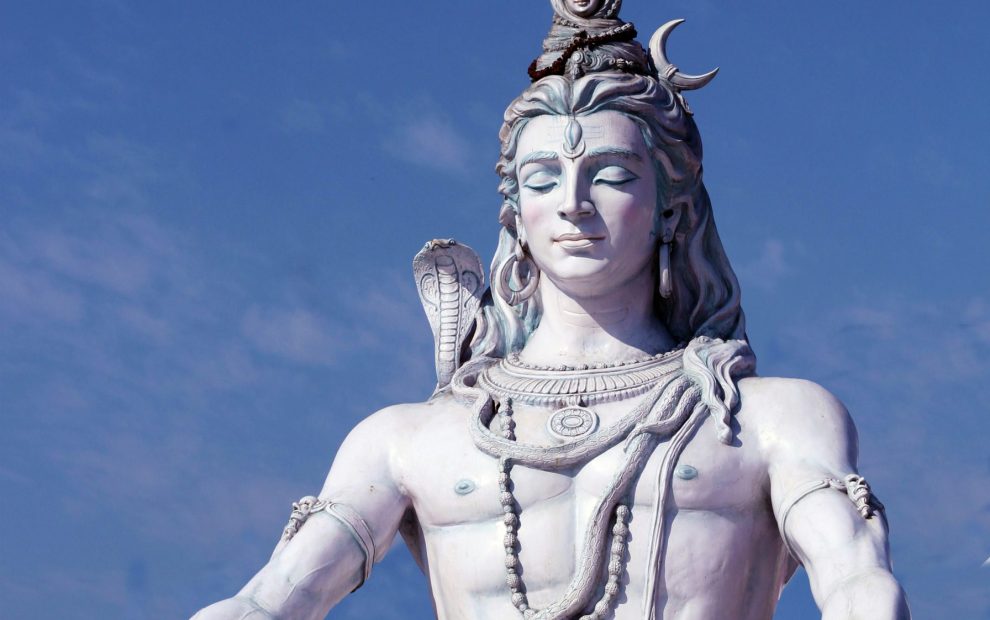
I have seen various statues of Shiva. In one, Shiva is sitting in a meditation position with an extended hand, displaying the hand’s palm. In another, Shiva appears to be dancing. The former image represents to Hindus that Shiva is the Adiyogi, or first yogi (the originator of yoga and its first guru, or teacher), as well as the lord of meditation. Hindus refer to the latter image of Shiva as Nataraja, the lord of the dance.
In the Hindu pantheon, Shiva existed before creation and represents eternal and infinite energy. Shiva married Parvati, the goddess of love and fertility. As mentioned, Shiva is the father of Ganesh (believed by Hindus to be the remover of obstacles), and also of Kartikeya.
Hindus believe that Shiva destroys that which prevents us from being our best version of ourselves. This can include illusions about ourselves and others, and harmful behaviors. Thus, Shiva is not malicious in his task of destruction. He is not operating in an evil manner; rather, he seeks to destroy evil.
In one of the images of Shiva, there is a snake wrapped around his neck. A number of meanings are associated with this snake, who is known as Vasuki, the serpent king. In one interpretation, the snake represents the ego, over which Shiva has mastery. In another, the snake’s capacity to shed its dead skin points to the necessity of transformation in the spiritual life to grow and become transformed. So the destruction with which Shiva is associated is the kind of destruction associated with rejuvenation and new life. The old passes away, and the new is born.
The Judeo-Christian God of destruction
Christians who view the theme of destruction as a negative thing should note that it is not limited to Hinduism. In fact, the God of the Bible, especially Hebrew scripture, is often represented as very destructive.
In Genesis, for instance, we encounter God sending forth a massive flood to purify the earth and rebuild humanity. In Exodus, we witness God delivering the Israelites from bondage through a series of plagues and a parting of the Red Sea. The Psalms often depict God as wrathful yet still benevolent and loving. Christians have often had to grapple with how to square these depictions of the divine nature with beliefs about God as all good. So Shiva’s status as a god of destruction who is also benevolent should not be surprising.
Even in the Gospels, destruction is associated with regeneration. This is key to the Easter season, in which we celebrate Jesus’ resurrection. Jesus suffered and died so that the sins of the world may be conquered. So the theme of a God of destruction is an appropriate paradigm for the Lenten season.
Destruction of sin and inordinate attachments
During Lent, Catholics seek God’s grace to overcome sin and imitate Christ. While there are many ways of looking at and understanding sin, one of these is laid out by Saint Ignatius of Loyola, who defines sin as “inordinate attachments” in the Spiritual Exercises. These are areas of our life that we cling to instead of clinging to God. These are idols that can be overt or subtle. Some obvious examples include inordinate attachment to wealth and power instead of placing trust in the God of the beatitudes.
In my own life, I notice how my personal identity and self worth can become intertwined in my career. This leads me to overemphasize work projects and deals that I am closing over and above God, family, and ultimately myself. I also notice the pattern of letting disappointments due to criticisms at work weigh me down significantly. As I recognize this occurring in my life and reflect on my relationships, I surrender this to God during Lent. I want God to be the priority in my life. And I want God’s love to guide how I relate to myself and others in my daily life.
Lent is a time of letting go of habits and beliefs that are not leading us toward God. With the grace of God, removing these obstacles to spiritual growth permits transformation in our lives. During this time, we are called to examine ourselves and our societies, to identify things we are attached to that prevent us from being our best selves in community with one another.
Shiva and Lenten spirituality
Polytheism is a very different religious framework than the trinitarian monotheism of Catholic belief. But interfaith practice and dialogue can strengthen our bonds with others in the community of God’s children on Earth and enrich our spiritual lives.
In Nostra Aetate (Declaration on the Relation of the Church to Non-Christian Religions), Pope Paul VI writes about how all cultures possess a “certain perception of that hidden power which hovers over the course of things and over the events of human history” and that this perception “penetrates their lives with a profound religious sense.”
“In Hinduism,” Nostra Aetate states, “men contemplate the divine mystery and express it through an inexhaustible abundance of myths and through searching philosophical inquiry. They seek freedom from the anguish of our human condition either through ascetical practices or profound meditation or a flight to God with love and trust.”
In the case of Shiva, I find that pondering the relationship of destruction to rejuvenation helps me better understand our Lenten practice. We all have areas of our lives that are blocking our capacity to love God, love ourselves, and love others. We can invite both destruction and renewal into these areas of inordinate attachment so that we can be transformed into Christ.
By the grace of God, may we shed our inordinate attachments, as a snake sheds its skin, and become transformed throughout the season of Lent, as we look forward to the destruction of sin and death that we celebrate on Good Friday and on Easter.
Image: Unsplash/Baatcheet Films