The Seagull on the Chapel
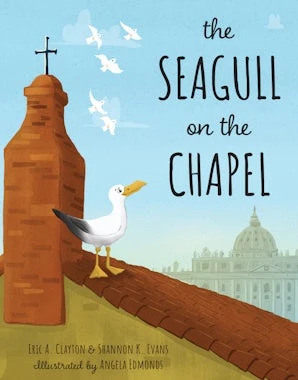
By Eric A. Clayton and Shannon K. Evans, illustrated by Angela Edmonds (Paraclete Press, 2026)
Only recently did I learn that two of my family members, bird-lovers like myself, are prejudiced against gulls. It probably did not help that a couple of very vocal fledglings were perched on the roof outside the house we were staying in, and that their raucous chatter kept us awake at night. But I am fond of gulls and find their curiosity and brashness entertaining. Seeing the fledglings on the roof reminded me of the gull on the Sistine Chapel that made a global impression during the 2025 papal conclave that elected Pope Leo XIV.
Eric Clayton and Shannon Evans’ new children’s book, The Seagull on the Chapel, illustrated by Angela Edmonds and published by Paraclete Press, commemorates that moment, offers a welcoming gospel-based message for kids, and also serves as a delightful counter to what I regard as unreasonable gull-hate. The book opens with a quotation from St. Augustine: “God loves each of us as if there were only one of us,” and the story that follows, of a seagull who has spent her life wishing she were a dove, reiterates that theme in a way that is charming and accessible to younger readers.
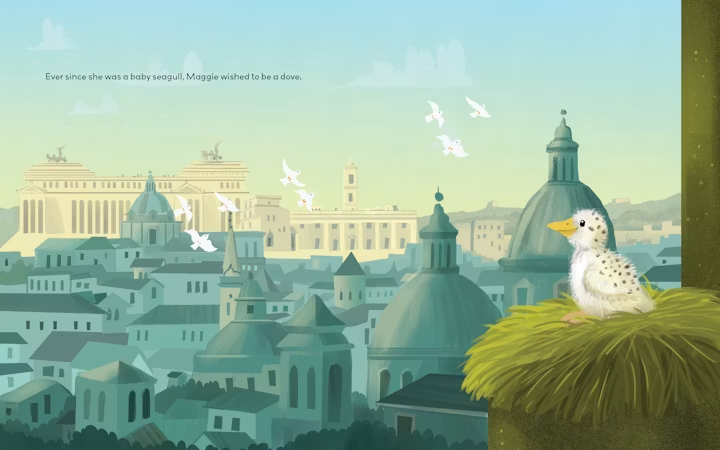
The seagull, Maggie, views doves as elegant and special—perfect, even. “No wonder they represent the Holy Spirit,” she thinks. When she tries to coo like a dove, only a squawk comes out. When she tells her friends about her longing to be beautiful, sacred, and cherished by God, they laugh at her and tell her beak is too big. Ashamed and sad, Maggie flies away from her friends and lands on a roof. When the white smoke begins to billow from the metal chimney, she realizes she’s on the Sistine Chapel. As crowds of humans down below cheer and wave, Maggie realizes she is a part of God’s plan after all. She was the first to spot the white smoke.
And, of course, she gets a close-up view of the new pope. “God loves you all,” the pope says. It’s a simple message, but one that many of us easily forget, perhaps because so many of our organizations and institutions broadcast the opposite message: that not everyone is beloved, that you can’t be viewed as valuable unless you have the right ethnicity or sexuality or citizenship or prestige or appearance. That’s an incredibly harmful message for kids to internalize. Clayton and Evans counter it beautifully in this simple but evocative story.
The book closes with an educational section about the papal conclave. So it’s useful for parents who are focused on their kids’ education in religious history as well as on making sure they grow up knowing that God loves them and calls them to do important work in the world, just as they are.
As well as the book’s affirming religious message for kids and their parents, I also appreciate its reminder of the sacredness of all nonhuman animals. It’s not just the pretty, pleasing creatures who bear the imprint of God’s image. Maybe I should send this book to my gull-hating relatives.
Image: from the interior of Seagull on the Chapel (Paraclete Press)