We weren’t in the market for a second church. But my 12-year-old daughter had started to notice that, in Catholic spaces, no one in the highest positions of authority looks like her. In fact, she came away from her first eight years of education—in Catholic school—sour on the idea of religion in general.
So when she met a friend of mine who is one of two women copastors at a Brethren church in our city, it got her attention. Likewise, my friend enjoyed meeting my daughter, whom she called a “force of nature” after their initial encounter.
My friend said I was welcome at her church on Sunday mornings, but acting on that invitation felt far flung for a committed, if mediocre, Catholic whose weekend Mass commitment was quite enough. That changed when my daughter insisted on checking out the Church of the Brethren. I drove her there and stuck around to see my friend lead her congregation in worship.
The spiritual center of gravity of our household shifted that day. My daughter loved the Brethren church and insisted we return. So we did. In fact, even her little brothers have tagged along—intrigued, even excited—on some Sunday mornings.
As each Sunday gave way to the next, we experienced faith ecumenically. In joining the Brethren in community and stretching out in encounter and dialogue, we found Christians joyfully living and supporting one another, as well as breaking their hearts open with care for the world around them. It brought us to a deeper understanding of what it means to recognize people as followers of Jesus because you “see how they love one another.”
Pope John XXIII said that one of his reasons for calling the Second Vatican Council was to promote unity with “our separated brethren,” that is, the many Christian denominations beyond the boundaries of the Catholic Church. I’d lived this in the form of joint prayer services and interfaith protests and marches, but a sustained relational dive with a second faith community—right after the 9 a.m. Mass—was a new experience altogether.
It proved to be a splendid choice. In our earliest visits to our Brethren brethren, my daughter and I received what I jokingly called “about 10 Catholic years’ worth” of people coming up to greet us and introduce themselves. Granted, guests tend to stand out in this small community with one worship service a weekend, as opposed to our suburban mega-parish’s five.
Despite being a small congregation, the Brethren community was not insular. My own previous experience of a small church was an agrarian parish where three large families ran the place for more than a hundred years, newcomers forever consigned to outsider status. But that was not the case here.
The Brethren community, like my pastor friend, embraced my daughter, seeing not only her potential as an intelligent young person on the cusp of the transition to adulthood, but also her value as a burgeoning faith leader. They invited her to participate in visible ways on Sundays—as scripture leader, prayer leader, and other roles where she could find growth and meaning.
Surrounded by an affirming community of faith, her sour attitude toward religion softened. As friends of our family in another diocese shared stories of their new pastor nixing altar girls and making female students sacristans instead, I realized how fortunate, even privileged, she is to have this level of support.
But my daughter wasn’t the only visitor that our Brethren friends engaged with warmth and curiosity. I quickly became their resident Catholic, and events such as the illness and death of Pope Francis and the election of Pope Leo XIV served as monumental opportunities for dialogue and reflection.
Brushing up on my Reformation history in order to understand our hosts better, I was reminded that the Anabaptist tradition sought to radically reclaim Christianity as it would have been lived by the earliest church—simple, loving, driven by the Good News out into the world as leaven. Honestly, our Brethren neighbors live up to this splendidly.
It’s profound to have encounters with other Christians not be defined by dithering over sacraments and scripture, but by sharing in the joy of the gospel. I daresay not many of my fellow Catholics have internalized—or even know—that ecumenical encounter is supposed to be about learning from and embracing one another. Agendas to win arguments or convert people do not create the conditions needed to build lasting, loving, trusting relationships. These encounters are what can lead to greater unity among Christians.
As the Catholic Church in the United States (especially in my little swatch of the suburban Midwest) turns more inward and pietistic, it’s refreshing—a spiritual lifeline even—to pray with people who recognize and speak openly about the harm being done to immigrants, the environment, peaceful protesters, LGBTQ+ people, and people in need. A church that wears its solidarity and openness to diversity on its sleeve was also just what my sixth grader needed.
As we live our shared faith without a whiff of proselytism, my hope for our Brethren neighbors and my family is that we offer an example of what it means to forge authentic, organic, joyful unity among the followers of Jesus. As we share a heart for both a suffering planet and my daughter, it’s a love I’d love to see set the world ablaze.
This article also appears in the September 2026 issue of U.S. Catholic (Vol. 91, No. 9, pages 38-39). Click here to subscribe to the magazine.
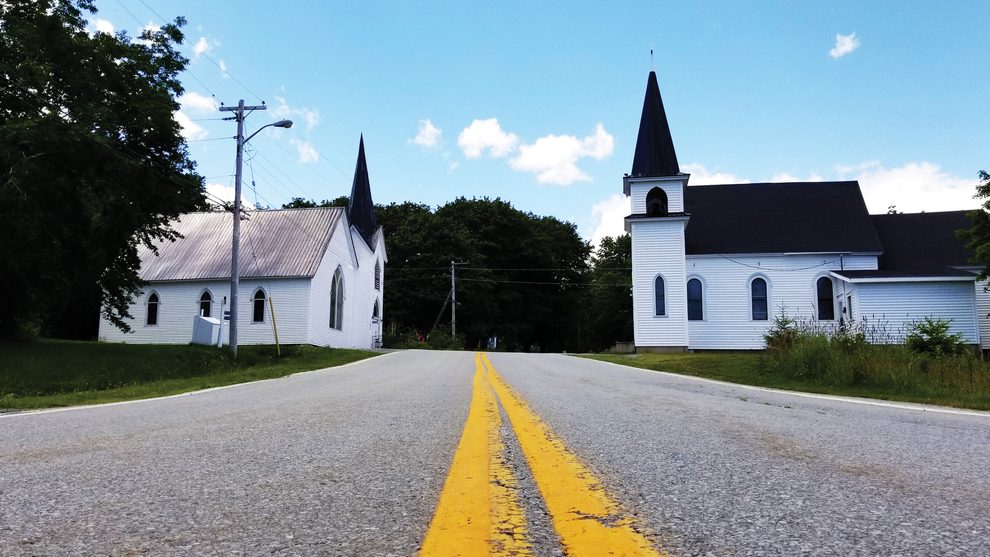
Image; Pexels/Michael Wright