“Compassion is…the knowledge that there can never really be any peace and joy for me until there is peace and joy finally for you too,”
–Frederick Buechner.
Our lives are full of moments, large and small, where we align ourselves with others because we are moved by their sorrow or need. We comfort a friend who just lost his father. Stand in solidarity with people suffering under systematic injustices. Pick up our child when she cries. Care for the orphaned kitten we find on the front stoop. In these situations, it feels almost unbearable to do nothing. When we see pain, we feel moved to act; it is hard to stand passively by. This is compassion.
Meaning “to suffer together,” the word compassion always implies a reciprocal action. When we see someone in pain, we feel an emotional response, but there is also a true desire to help. Different from sadness or empathy, which are interior feelings, compassion reaches outwards. It means standing in relationship with someone else—allowing yourself to experience their world and their suffering as if it were your own.
Studies have shown that when we feel compassion, we release oxytoxin, a chemical in the brain linked to feelings of emotional closeness. At the same time, our heart rate slows and the regions of the brain that are linked to empathy, caregiving, and pleasure all light up. Additional research has also shown that regularly feeling compassion can help make us resilient to stress. And this, in turn, reduces the likelihood of several diseases, including heart disease, cancer, depression, and Alzheimer’s disease.
So apparently practicing compassion has some pretty impressive effects on your health. But before you run out and start tutoring at-risk youth or volunteering in your local soup kitchen in order to decrease your likelihood of getting cancer, consider this: The health benefits are only seen when people are acting out of altruism rather than any self-serving purpose.
That’s not to say that cultivating compassion has no benefits. Quite the opposite. Imagine how different the world would be without compassion! It is this drive to help others in the face of suffering that has resulted in every single social justice victory in human history. The Civil Rights movement or women’s suffrage or the current struggle to end racial inequality would look quite different if only the people directly affected had gotten involved.
Sometimes it’s easy to show compassion. It’s easy to recognize that the child laborer in Bangladesh needs our help and support, or that our best friend needs a shoulder to cry on when she’s going through a tough time at work. But at other times it’s more difficult to remind ourselves to constantly reach out and experience every human relationship with compassion. It is often all too easy to judge others, to get angry, or to assume the worst of someone.
It’s at this point that we need to remember that while compassion is a very human impulse, it is also a divine one. We learn how to be compassionate from God—the same God who we believe sent Christ to Earth to save all of humanity, despite the fact that meant suffering on the cross. As Christians, we believe that God stands with the suffering, the marginalized, and the lost. God mourns with every life lost, every tragedy experienced, every human rights violation or injustice or crime.
In this month’s print version of U.S. Catholic, author and spiritual director Sister Joyce Rupp talks about her work at the Institute of Compassionate Presence in Des Moines, Iowa. Compassion is a nuanced thing; it affects how we understand our relationship with God, others, the rest of creation, and even ourselves. When Rupp does a workshop or retreat on compassion, she takes four days to explain the different ways of thinking about the concept in big and small ways: how compassion affects our brains, self-compassion, compassion for the suffering, compassion for the earth, and compassion for the marginalized.
We aren’t all lucky enough to be able to attend a four-day workshop on compassion with a spiritual director as talented and wise as Joyce Rupp. But this month, on the U.S. Catholic blog, every week we will feature a post about a different way of looking or thinking about compassion. Some of these are small—how to remember to have compassion for yourself, for example. But others are large and far-reaching. All will hopefully allow us to understand this fundamental part of human nature in a deeper and more meaningful way.
The print interview with Sister Joyce Rupp, titled “When help isn’t helpful,” appeared in the August 2015 issue of U.S. Catholic (Vol. 80, No. 8, pages 18–22). An online excerpt from the interview, “A spirituality for busy people,” can be found here.
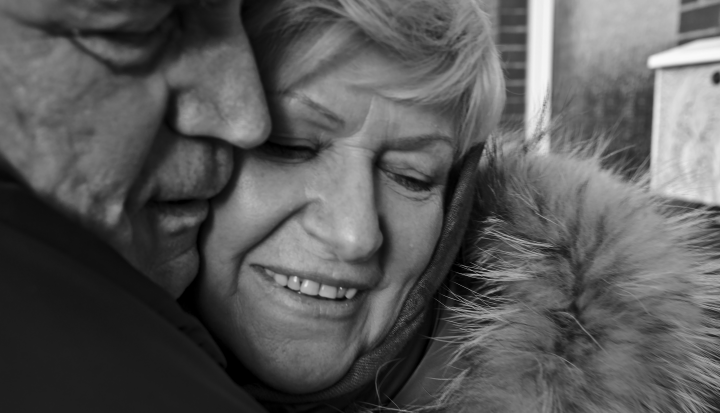
Image: Flickr cc via Namor Trebat