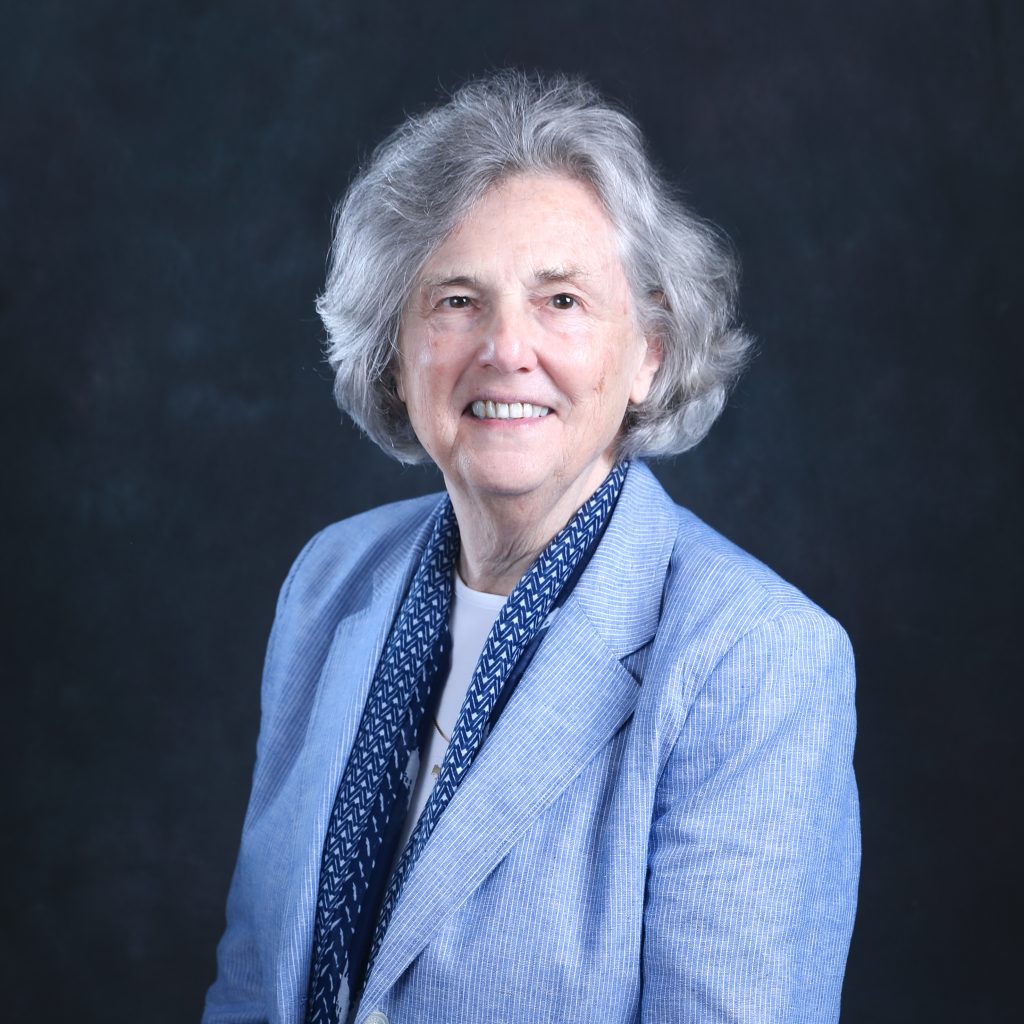
Scholar Phyllis Zagano is widely known as the leading authority on the history and theology of women deacons. Her latest book, The Vatican and Women Deacons (Orbis Books), offers a thorough analysis of the Vatican’s engagement with the issue, including during the Synod on Synodality. Recently, Polish journalist Dawid Gospodarek interviewed Zagano about her scholarship for the journal Tygodnik Powszechny. In the interview, Zagano argues that the barriers to restoring the women’s diaconate today are not theological, but cultural. U.S. Catholic was granted exclusive permission to share the interview, in its English translation.
Your new book documents 50 years of Vatican commissions on the diaconate of women. What did you find in the archives that were not previously known to the public? There is a widespread belief that even if there were deaconesses in antiquity, theirs was not a sacramental diaconate tied to ordination, but merely an auxiliary ministry. What do we actually know about this?
You would have to read my new book, The Vatican and Women Deacons (Orbis Books), to grasp the entire trajectory of secret Vatican commission work on the question of women deacons, who were sacramentally ordained in the church. One of the book’s appendices reprints (in original Latin) an eighth century ordination liturgy for ordaining a deacon. The liturgy’s instructions say to use the correct pronouns when ordaining a man or a woman.
One argument against women deacons holds that the diaconate, priesthood, and episcopate form a single sacrament of holy orders. So if sacramental priesthood is reserved to men, the same must apply to the diaconate. Why does this argument fail to settle the matter?
There is no theological, historical, or even anthropological argument that restricts women from diaconal ordination. From the 12th century on, law dictated that no one could be ordained a deacon unless he (and only he) could be ordained a priest. With his 2009 Motu Proprio, Omnium in Mentem, Pope Benedict XVI reinforced the teachings of the Second Vatican Council, which clearly separates the orders (Lumen Gentium 29) and echoed what had already been published in the Catechism of the Catholic Church: The diaconate and the priesthood are distinct orders.
You argue that the barrier to women’s diaconate today is not theological but cultural. Could you explain exactly what this cultural barrier consists of? How can it be overcome if theology itself is not the obstacle?
In his response to the request of the European synod team leader in October 2025, Pope Leo said the barrier to women in leadership and to restoring women to the ordained diaconate was cultural. He noted that certain cultures could not accept women in such positions. While he did not detail which cultures could not accept women deacons, we know that many secular cultures around the world bar women from significant activities. However, we must recognize also that the well-known culture of clericalism is a significant problem in the church worldwide.
You describe an episode in which Cardinal Ratzinger refused to promulgate an International Theological Commission (ITC) subcommission document favorable to women deacons. What does this tell us about how decisions are actually made in the Vatican?
Discerning and deciding are separate events. No matter what a commission discerns, it is Vatican staff that make recommendations to the pope, who is the ultimate decision-maker. Even the 1987 Synod on the Laity asked about women in the church, but by the time things went through the process, the statement about discrimination against women was changed to read “undeserved discrimination against women.” Did that mean there was “deserved discrimination against women”?
You served on Pope Francis’s first commission (2016–2018). How did that experience change your understanding of why the church finds it so difficult to decide this question?
The church—the people of God—has decided that women can and should be restored to the ordained diaconate. Many in the hierarchy do not seem to be on board yet, and complainers threaten a schism. They apparently do not see the schism that is already occurring, and that women are leaving the church, with their husbands and children.
You propose the principle of subsidiarity—letting local bishops decide according to their diocese’s needs. Doesn’t this solution risk creating “two churches”: one where women are deacons and one where they are not?
The principle of subsidiarity is bedrock in the church’s ecclesiology. Some episcopal conferences and dioceses were slower than others in restoring the diaconate as a permanent vocation for men following Vatican II. Some have ignored Pope Francis’ changes to canon law that allow the installation of lay people not preparing for ordination as lectors and acolytes. Others ignore the newly installed lay ministry of Catechist. “Two churches” is shorthand for the many churches around the world, some of which are slower than others to agree with what the Vatican presents.
You speak directly about misogyny and taboos surrounding women’s bodies as the real substance of the dispute, not merely theology. Do you think this dimension is discussed openly enough in the church, including in Central and Eastern Europe?
I cannot comment on current European misogyny, but there is considerable evidence of it in the medieval church. In the West, Pope Gelasius I was scandalized that women were at the altar, near the sacred. In the East, Matthew Blastares, a 14th century Byzantine Greek monk in Thessalonica, wrote that women were certainly ordained as deacons but banned from the altar on account of their menses. Still in effect today is the 1967 document of Vatican II, Musicam Sacram (Instruction on Music in the Liturgy), which bans women singers from the sanctuary.
You point to the Orthodox Church, including the recent ordination of a deaconess in Africa with the permission of the Greek Orthodox Patriarchate of Alexandria, as a possible path forward. Does ecumenical dialogue have the potential to accelerate change in the Catholic Church?
I think that it would be important for the Vatican to acknowledge the 2024 ordination of Deaconess Angelique in Harare, Zimbabwe, which the Synod of Alexandria and the All Africa Conference of Churches have affirmed is sacramental. The Catholic Church recognizes that Orthodox orders are licit and valid. Recognizing the restoration of the ancient tradition of ordained women deacons in Orthodoxy would be a great step forward for the Catholic Church.
You’ve said you would tell Pope Leo XIV that there is no doctrinal obstacle forbidding the ordination of women as deacons. How would you persuade him to take concrete steps? Do you see signs that this pontificate might move further in that direction than Pope Francis’ did?
Because there is no doctrinal obstacle to restoring women to the ordained diaconate, and since Pope Leo has presented “culture” as the barrier to ordaining women as deacons, it is up to the people of God (including the hierarchy) to ask him to restore the church’s reputation of being countercultural and to affirm the true humanity of women. He has to “say” with action that women are made in the image and likeness of God, and that they indeed can image Christ in the fullness of his—and their—humanity.
You have worked on this subject for decades—as a scholar, but also as a participant in the very processes you describe. After all these years of research, what do you consider your most important discovery—something that surprised even you? What keeps you from giving in to resignation or frustration?
My most important recognition is that, while Pope Benedict was an elegant theologian and most qualified to write a doctrinal statement against the ordination of women as deacons, he did not. Many years ago, I was told that an attitude against women embedded within the clerisy would be the most difficult obstacle to restoring women to ordained diaconal service. I prefer to assist the church in educating its people about the possibilities for the future than to complain about its failures in the past.
This interview first appeared as “Barier just kulturowa,” Interview by Dawid Gospodarek, Tygodnik Powszechny, September 29, 2026.
Image: Unsplash