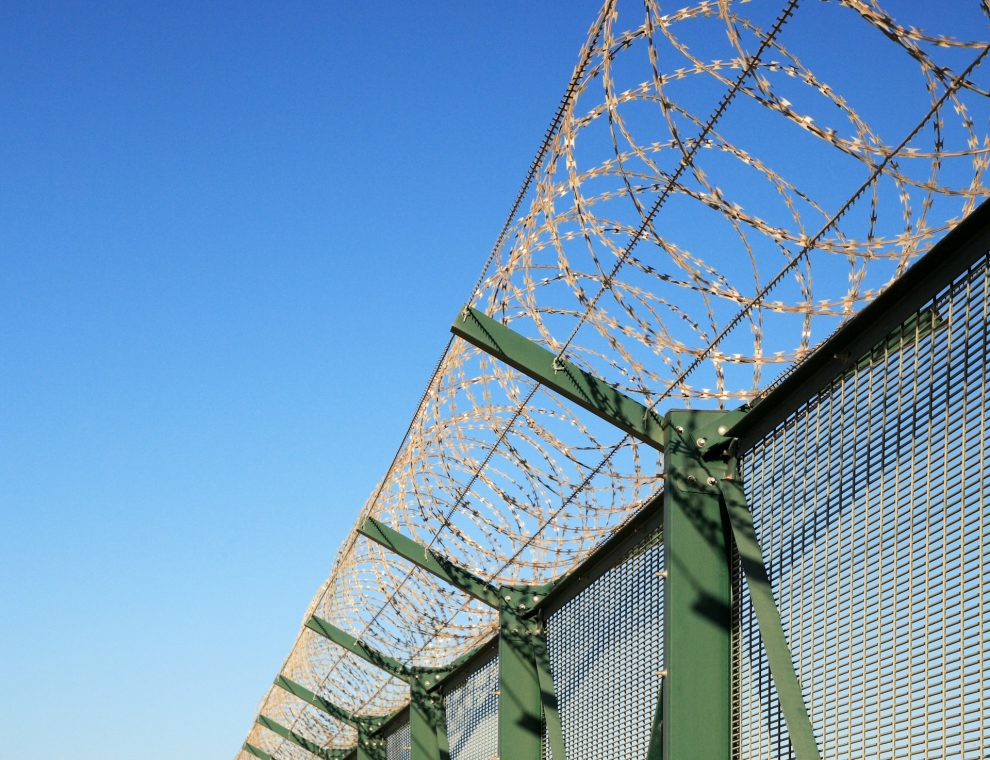
A vast carceral network is being hastily constructed in the United States to warehouse people too often rounded up after inadequate attention to due process or asylum claims. Contained within this network are detention facilities such as the notorious Alligator Alcatraz, Speedway Slammer, Cornhusker Clink, and Louisiana Lockup. Are these detention facilities most like internment sites, immigrant gulags, or concentration camps? A debate such as this is probably not one a healthy democratic society should be having.
Past examples of the dehumanization of such detention facilities abound, spanning several countries. We have already seen enough cases from Nazi Germany, Soviet Russia, China’s current Xinjiang region, and our own history. The United States used stockade camps during the forced relocation of Indigenous people in the 1800s, and created Japanese internment camps during World War II.
Last year, the Department of Homeland Security (DHS) sent an influx of agents to overwhelm the populace in sanctuary jurisdictions such as Chicago, Minneapolis, and Los Angeles. The result: disheartening headlines and footage that captured likely criminal acts. At least 10 people were gunned down by federal agents under extremely questionable circumstances.
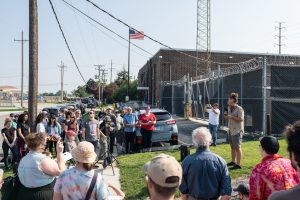
Now, Immigration and Customs Enforcement (ICE) agents and Customs and Border Protection (CBP) officers are attempting to stay out of the headlines, though their ambition to deport hundreds of thousands of U.S. residents remains the same. What the DHS cannot hide, however, are the human storage facilities intended to assist in the effort.
These detention facilities are likely the next flash point in the administration’s campaign against undocumented immigrants, especially as it moves to undermine the legal framework that had provided some legal grounding for hundreds of thousands of immigrants. Many individuals will become “illegal” overnight as Temporary Protected Status (TPS) designations are terminated or allowed to expire following Mullin v. Doe. This decision essentially overturns the lives and residency of about 340,000 Haitian and more than 6,000 Syrian immigrants who had been living and working—many for decades—without incident in the United States. It also sets a dangerous precedent for the TPS status of other undocumented immigrants, including Salvadorans, Venezuelans, and Sudanese, to name a few.
ICE’s February 12 memo, which cites a surge of 12,000 new enforcement agents, dryly notes: “For ICE to sustain the anticipated increase in enforcement operations and arrests in 2026, an increase in detention capacity will be a necessary downstream requirement.” The agency plans to spend nearly $40 billion on the rapid expansion of a new detention model—adding 92,600 beds by the end of November.
The rush to build new sites or retrofit other locations will inevitably lead to shortcuts in construction, staffing, legal niceties, and living conditions. Human Rights Watch (HRW) already reports a spike in deaths at ICE detention centers—57 from Trump’s inauguration up to August 4. “The mortality rate of deaths in ICE custody is at its highest level in over a decade,” according to HRW. This is about four times the rate it was during the Biden administration and “higher than during the Covid-19 pandemic.”
Other criminal justice and human rights groups have been similarly alarmed by overcrowded conditions, understaffing, inadequate sanitation, and insufficient nutrition in often privately run centers. Poor supervision and training lead to more deaths by suicide as detainees with complex health conditions are not treated properly. Preventable deaths have been the outcome.
Community resistance has already forced DHS officials to postpone and reevaluate some projects, but deportation goals and the resulting need for greater detention capacity remain unaltered.
U.S. bishops, as individuals and through the national conference, have challenged the administration’s immigration policy and deportation ambitions. But they may have to step up their game this fall, especially as midterm elections approach and the administration hurries to demonstrate “positive” results—detention and deportation numbers—that may motivate its supporters to vote.
In past elections, some American bishops have tacitly endorsed candidates because of their anti-abortion positions. Will they be willing to counter anti-immigrant efforts this election season? Or will they join the ranks of people seeking to cobble together a suitably benign euphemism for the nation’s rising network of detention camps?
This article also appears in the October 2026 issue of U.S. Catholic (Vol. 91, No. 10, pages 41). Click here to subscribe to the magazine.
Image: Unsplash/Saj Shafique