The U.S. political system has shown signs of distress in recent years, harkening to the Bush v. Gore landmark Supreme Court case that resulted from the 2000 presidential election. That disputed national election delivered George Bush to the White House over popular vote winner, Al Gore, but only after the U.S. Supreme Court’s controversial and likely partisan intervention. In a similar turn of events a few years later, 2016 popular vote winner, Hillary Clinton, lost the presidential election as Donald Trump won the Electoral College.
Questions abound about the nature of America’s electoral system: Is it an antidemocratic anachronism that empowers former slave states, or is it a necessary preventative to the de facto dictatorship of high-population states? And the presidential system itself is beginning to provoke unhappy comparisons to parliamentary models where a vote of no confidence is enough to knock an unpopular leader out of power.
Inflation is on the rise; household costs and national debt seem out of control; immigration raids terrorize neighborhoods; and deported parents and civic institutions alike struggle over how to care for children left behind.
Federal authority seems increasingly disconnected from reality, unpersuaded to accept a course correction by means of mercy and indifferent to the accelerating dislocation caused by its deportation campaign. Congress, far from acting as a check on the excesses of the executive branch, has embraced self-imposed impotence, endorsing instead of challenging constitutional overreach.
Given the train wreck that is contemporary U.S. politics, it might be tempting to wash one’s hands of it all and stay home this month. But would that be sinful?
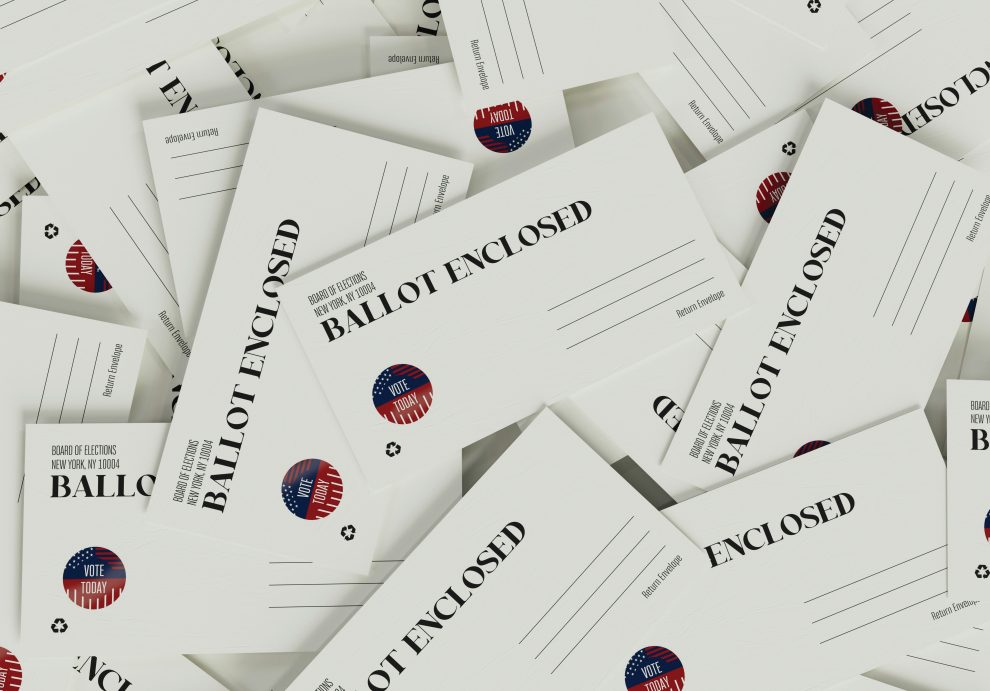
When Catholic voters go to the polls this month, it is no exaggeration to say the viability of the American nation will be on the ballot along with the destinies of millions of people around the world. It is hard to recall a midterm election of such consequence.
But how does one approach the grave decisions on the ballot this month? Many people insist that U.S. Catholics simply cannot vote for a politician who supports abortion. Indeed, the U.S. bishops’ conference reiterated in “Forming Consciences for Faithful Citizenship” that abortion remains a preeminent issue. But the bishops also instruct, using a formula first offered in 2004 by then-Cardinal Joseph Ratzinger, that while Catholic voters cannot support a politician’s explicit pro-choice endorsement, they are free to assess the breadth of a politician’s other positions before voting.
Pope Francis said in Gaudete et Exsultate (On the Call to Holiness in Today’s World) that the “defence of the innocent unborn . . . needs to be clear, firm and passionate,” but also urged participants in civic life to remember: “Equally sacred . . . are the lives of the poor, those already born, the destitute, the abandoned and the underprivileged.” His successor, Pope Leo XIV, has similarly urged American Catholics to attend to the gamut of moral challenges that people face as individuals, participants in a particular economic system, and citizens of the world.
In Magnifica Humanitas (On Safeguarding the Human Person in the Time of Artificial Intelligence), Leo reiterates the Catholic Church’s preference for democracy as the political system that best preserves both human liberty and human dignity. The church, he writes, similarly “recognizes the positive potential of the market and private initiative” but “only if they remain subordinate to the moral law and are guided by the principle of solidarity, without sacrificing the most vulnerable to the rationale of profit.”
A suffering, struggling world still regards the United States with affection and hope. Voting may not be legally mandatory, but for Catholics and people of goodwill it reflects an act of essential civic engagement and participation that is morally obligatory—one that entails profound consequences for the common good both at home and abroad.
This article also appears in the November 2026 issue of U.S. Catholic (Vol. 91, No. 11, page 41). Click here to subscribe to the magazine.
Image: Unsplash