In J. R. R. Tolkien’s The Lord of the Rings, before the hobbits embark on their quest, they are already accustomed to long tramps around the Shire. As a kid reading those books, I didn’t grasp why hobbits, known for taking life easy, spent so much time walking, to the point of having favorite walking sticks and walking songs. Then I discovered the joys of English walking culture.
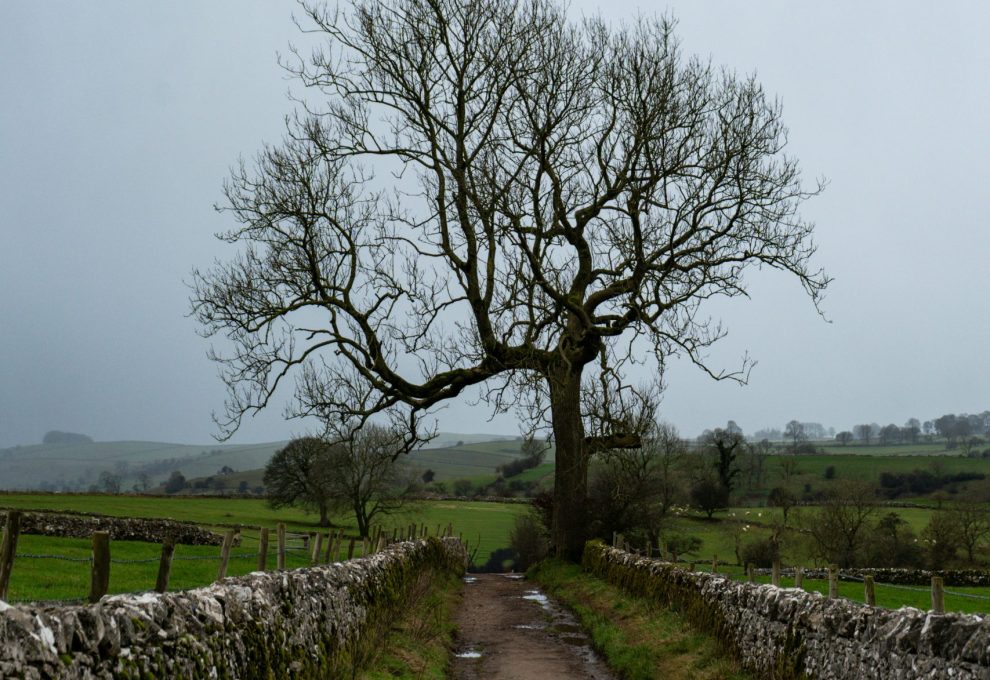
In England, right-of-way laws give access to paths across private as well as public land, so you can walk miles across pastures, through villages, and along rivers. This makes it easier to get exercise and fresh air, and also makes nature’s beauty more accessible to everyone.
I am an introvert and love solitude, including solitary walks, but the rural area where I live is not very walkable. Rolling fields and lush woodlands beckon, but I must sadly decline the invitation. Those landscapes are someone’s legal property. The owner may never use that land or ever walk on it, but they have drawn a hard boundary. If they decide to have a fracking pad or a data center put on it, I’ll be told not to complain, because it’s theirs to do with as they like.
Given our individualistic attitudes around property in the United States, it’s hard to imagine replicating a healthy hobbit-like walking culture. One has to look for a public park and trailheads and hope it’s not just some boring loop. Or trespass and risk getting shot. Having rights-of-way depends on a social contract and mutual respect. Landowners have to trust the people who cross their land not to throw garbage around or scare their animals and to leave gates as they find them. U.S. culture is bad at such social contracts.
This is not to say that English culture is utopian. But U.S. individualism has not translated into a good quality of life. According to the American Psychological Association’s 2025 “Stress in America” survey, more than 6 in 10 adults say societal division is a major source of stress, and more than half say they frequently feel isolated.
Maybe our extreme individualism is one reason why so many people today romanticize the past. My social media is full of memes fantasizing about dropping out of society and building communes on the land. I am not immune to this temptation and have joked about annexing a nearby township and turning it into a cooperative with pubs and walking paths, with medieval guilds but contemporary technologies.
But having lived in intentional communities on the land, I know the reality is less idyllic and easily tips into horror story territory. My taste for solitude is probably a reaction, in part, to my family’s communal endeavors. Like other introverts, I don’t feel drawn to cozy, snuggly images of communal life.
As various hermits have known across the ages, solitude is not the same as loneliness. Sometimes, one is loneliest when surrounded by others, and being an introvert doesn’t mean rejecting communal responsibility. A truly communal outlook isn’t about clumping together and never having a moment to oneself. It’s about trust, respect, and acknowledging our place in a vast tapestry of existence. It means building a world in which life’s goods are available to all and recognizing that ownership is always limited. This communal responsibility stretches into the future, too.
Paradoxically, as hobbit life accentuates, this communal outlook also protects solitude. The pleasures of being alone are sustained, not by rigid individualism, but by a healthy collectivism, inspired by what the Catholic tradition calls the “universal destination of goods.” One need not be an extroverted, bubbly character to prioritize this communal approach to living.
This November, along with thousands of others, I will be working the polls for the midterm elections. This will mean rising earlier than I’d like and spending a day indoors doing repetitive work, surrounded by people with whom I have little in common. This won’t make me feel warm and fuzzy, but I hope it will be one tiny part of a bigger effort to build a better future, in which the goods of life are available for everyone. I may never get my hobbit village, but perhaps my children will.
This article also appears in the November 2026 issue of U.S. Catholic (Vol. 91, No. 11, page 9). Click here to subscribe to the magazine.
Image: Unsplash.com/Julia Fiander