I recently graded an exam in which a student tried to support their point by quoting scripture: “As the Bible says, ‘They’ll know we are Christians by our love.’ ” The sentiment was admirable, but those words are not found in the Bible: They come from Peter Scholtes’ 1966 hymn of the same title. However, the Gospel of John expresses a similar idea when Jesus says, “By this everyone will know that you are my disciples, if you have love for one another” (13:35). The moment reminded me of how powerfully music shapes memory and hope, and how easily even sincere readers blend songs, tradition, and scripture.
A similar challenge arises when we consider whether King David wrote the Book of Psalms. Many people assume he did. St. Augustine, in City of God, argues that David authored all 150 psalms, and 73 are labeled as a “Psalm of David,” which seems straightforward enough.
Yet the psalms themselves complicate the picture. Eleven are attributed to the Korahites and 12 to Asaph, both of which are groups associated with Temple worship (and the Temple was built after David’s death). Some psalms clearly refer to events long after David’s lifetime. Psalms 126 and 137, for example, describe the Babylonian Exile, which occurred roughly four centuries after David.
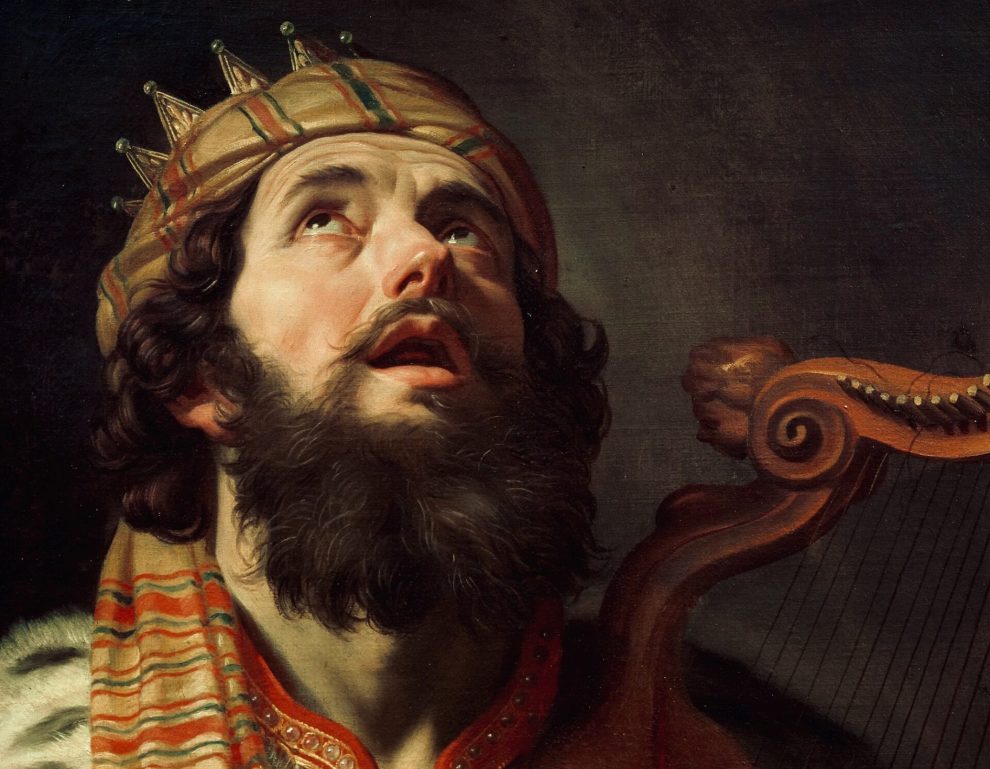
David was certainly a musician. 1 Samuel portrays him as a skilled lyre player, and 2 Samuel records poems and songs that resemble psalm texts: the elegy for Saul and Jonathan, David’s final words, and, most significantly, his long song in 2 Samuel 22. This hymn, echoed in Psalm 18, recounts God’s deliverance throughout David’s life and ends by affirming God’s faithfulness to “David and his descendants forever.” Later Christians saw this as pointing to Jesus, the “Son of David.”
The Books of Chronicles offer another angle. They depict David commissioning Levite musicians and even say that David “offered praise through them.” This suggests that the phrase “of David” in a psalm’s heading may sometimes refer to authorship but could also indicate that a psalm originated from David’s liturgical leadership or authority, perhaps even after his life had ended. This may explain why, in the Greek translation of the Hebrew Bible, even Psalm 137 about the Babylonian Exile is labeled “of David.”
Biblical scholar James Luther Mays proposes a helpful way to understand this complexity. Instead of treating “of David” as a strict claim of authorship, we might see it as an interpretive lens. David, with his struggles, faith, and trust in God, becomes a model through whom worshipers learn to pray. The psalms invite readers to identify with David’s faithfulness and hope, just as Christians see in David’s story a foreshadowing of the Messiah.
So, did David write the psalms? In a narrow, literal sense, no. He likely wrote some, but certainly not all. Yet in a broader sense, yes. The psalms reflect David’s spiritual legacy, just as the lyric, “They’ll know we are Christians by our love,” though not biblical, reflects a truth found throughout the New Testament. Likewise, the psalms, taken as a whole, reflect the faith of David and point forward to the hope fulfilled in Jesus.
This article also appears in the May 2026 issue of U.S. Catholic (Vol. 91, No. 5, page 49). Click here to subscribe to the magazine.
Image: Wikimedia Commons