• Digital Edition
  • Newsletters
  • Donate
  • Renew
  • Subscribe
U.S. Catholic
  • About
    • Mission
    • Who We Are
    • Contact Us
    • Write for Us
    • Advertise with Us
    • FAQ
  • Sections
    • Arts & Culture
    • Catholic Voices
    • In the Pews
    • Our Faith
    • Peace & Justice
    • Poetry
    • Religion
    • Saint Calendar
    • Spanish Content
  • Podcasts
  • Magazine
    • Current Issue
    • Issue Archive
    • Digital Edition
    • Advertise
    • Subscribe
    • Renew
  • Giving
subscribe
U.S. Catholic
  • About
    • Mission
    • Who We Are
    • Contact Us
    • Write for Us
    • Advertise with Us
    • FAQ
  • Sections
    • Arts & Culture
    • Catholic Voices
    • In the Pews
    • Our Faith
    • Peace & Justice
    • Poetry
    • Religion
    • Saint Calendar
    • Spanish Content
  • Podcasts
  • Magazine
    • Current Issue
    • Issue Archive
    • Digital Edition
    • Advertise
    • Subscribe
    • Renew
  • Giving
subscribe
U.S. Catholic
subscribe
  • About
    • Mission
    • Who We Are
    • Contact Us
    • Write for Us
    • Advertise with Us
    • FAQ
  • Sections
    • Arts & Culture
    • Catholic Voices
    • In the Pews
    • Our Faith
    • Peace & Justice
    • Poetry
    • Religion
    • Saint Calendar
    • Spanish Content
  • Podcasts
  • Magazine
    • Current Issue
    • Issue Archive
    • Digital Edition
    • Advertise
    • Subscribe
    • Renew
  • Giving

SHARE

FacebookXEmail
Handing over keys to house

Does the church support the right to private property?

Catholic teaching on the universal destination of goods clarifies that ownership rights must connect with honoring God and loving neighbor.
Religion
Jacob Kohlhaas
Published 5 hours ago

“Who can own a tree? Who can own a rock?” This timeless bit of wisdom from the first VHS tape I owned, the 1987 classic Ernest Goes to Camp, has been lodged in my neurons for decades. Like the movie’s clownishly evil developers who are bent on demolishing Kamp Kikakee, many of us may be operating with overly simplistic ideas about ownership.

It is easy to think of ownership simply as a legal right. Assuring security in ownership, through punishing theft, protecting property rights, etc., is fundamental to society as we know it. In conflict zones and other places where such protections are absent, the ability to build a better life is strained. Within its moral sense, however, the right to ownership is more complex.

In the Catholic moral tradition, there is no such thing as a right isolated from a larger purpose. Rights follow a simple pattern: We protect this (a right) to ensure the freedom to do that (an obligation).

In Catholic social teaching, this pattern holds for rights to many kinds of private property, from homes and wages to creative work and intangible assets. The right to secure ownership is always premised on the idea that this security is necessary for fulfilling religious, moral, and social obligations.

Advertisement
Advertisement
ad promoting Claretian Mission Campaign

Parallel to this theory of rights, our tradition also asserts that we are not the ultimate authors of our own lives. We are neither responsible for our own existence nor do we alone determine the moral purpose of our lives.

If our existence does not ultimately belong to us, then our ownership of anything is necessarily non-absolute. Denying this amounts to denying that we are creatures who are dependent upon a creator. Consequently, any consideration of ownership must be framed by this theological commitment to God’s ultimate ownership of all things.

The Second Vatican Council made explicit the connection between the ethical theory of rights and the theological nature of ownership. St. Pope John Paul II later clarified this with the term, the “universal destination of goods.” In his encyclical on labor, he called this the “first principle” of the social order.

In sum, our rights to ownership are bound up with God’s purposes and ultimate ownership, meant to serve rather than dishonor God. In John Paul II’s language, all we own is owned on a “social mortgage.” Just societies should protect rights to private ownership so that citizens can use their property to serve God and neighbor.

Advertisement
Advertisement
ad promoting El momento Catolico

The universal destination of goods clarifies that any mastery we possess in this life must be oriented toward honoring God. Because, as Christians, we are called to do so through love of neighbor, our moral right to ownership ultimately rests on using our possessions in service to the common good.


This article also appears in the April 2026 issue of U.S. Catholic (Vol. 91, No. 4, page 38). Click here to subscribe to the magazine.

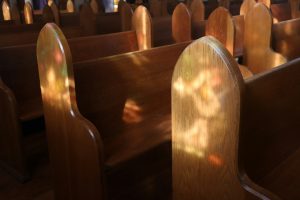
Image: Unsplash
Advertisement
TagsCatholic social teaching Glad You Asked
ad promoting the National Shrine of St. Jude
orange ad promoting U.S. Catholic's upcoming redesign

About the author

Jacob Kohlhaas

Jacob Kohlhaas is a professor of moral theology at Loras College in Dubuque, Iowa.

You may also like

What was the Avignon papacy?

Rebecca Bratten Weiss
refugee child walking through a tent city

Our relationships should reflect God’s inclusive love

Alice Camille
abstract art of an artificial intelligence neural network

What does the church teach about AI?

Enzo Del Brocco

Add comment

    Share This!
    Share
    FacebookXEmail

What’s trending

    a priest with his back to a congregation - US Catholic - Images
    Religion

    What’s the point of being a Christian?

    A U.S. Catholic interview
    Destruction of war in Syria
    Peace & Justice

    Pope Leo wants peace—but what does that mean?

    Enzo Del Brocco
    Wild field of grass
    Peace & Justice

    A Catholic case against lawns

    Cassidy Klein
    Overhead shot of gardens
    Peace & Justice

    A theology of food must prioritize those who labor to produce it

    Michelle Lewis

SUBSCRIBE

DONATE

RENEW

SIGN UP FOR FREE NEWSLETTERS

Quick Links

  • Mission Statement
  • Who We Are
  • Reprint Policy
  • Job Opportunities
  • AI Policy
  • Advertise
  • Contact Us
  • Submissions
FOLLOW US
  • Facebook
  • Twitter
  • Instagram
  • Youtube
Copyright © 2026 US Catholic. All Rights Reserved | Terms of Use | Privacy Policy
a small white version of the USC logo