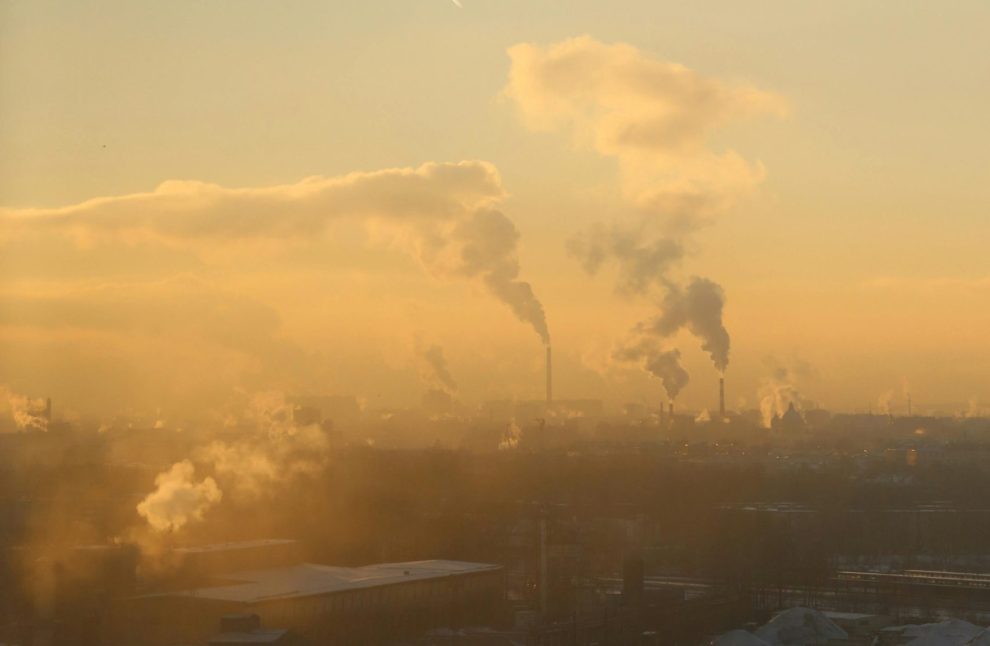
The American Lung Association (ALA) in April released its annual report card assessing the air that we breathe and found much to be concerned about. The ALA analysis raises serious concerns about the nation’s trajectory on air quality.
It reports that “even after decades of successful efforts to reduce sources of air pollution, 44 percent of Americans—152.3 million people—are living in places that get failing grades for unhealthy levels of ozone or particle pollution.” ALA researchers say that 46 percent of America’s children are breathing unhealthy air.
The news regarding children is especially concerning, because their lungs are still developing and they spend more time outdoors, where they are more vulnerable to air pollution. The children breathing the most polluted air are growing up in low-income Black and Latino/a communities that are already confronted by significant systemic obstacles.
Sociological research has long confirmed that municipal codes and other regulatory oversight have had the practical effect of locating the greatest polluters away from wealthy or white communities and closer to city neighborhoods and towns that are predominantly low-income or non-white. Children in those neighborhoods grow up with higher rates of asthma and other health and psychological deficits that can work against them their entire lives. That makes air quality a justice issue that Catholics and people of good will cannot ignore.
Over the last 18 months, the White House has authored a cascade of policy revisions that seem intended to reverse progress on air pollution. It’s hard to say which revisions are the most damaging, but strong contenders include a stampede of waivers from Clean Air Act standards for industrial and energy polluters, the rescinding of a 2009 finding that empowered the Environmental Protection Agency to take action to reduce greenhouse gases, and the abandonment of federal fuel economy standards.
According to a Union of Concerned Scientists (UCS) analysis, almost 200 of the nation’s coal plants, chemical manufacturers, and other major polluters have been granted two-year exemptions from Clean Air Act restrictions. “Another 358 are eligible for the same free pass,” UCS researchers warn. Environmentalists predict that the backpedaling on pollution standards will lead to millions more asthma attacks among children, tens of thousands of premature deaths because of exacerbated respiratory and cardiac issues, and hundreds of billions more in public health costs to contend with them.
Unless the current administration shows a remarkable change of course—Can a storm of citizen objections force the issue?—making America’s air great again may have to be on the agenda for whatever administration is ushered in after President Trump leaves office.
Clean air, lung health, and climate change are, of course, inextricably connected. Attempting to respond to one will likely have an impact on all, a reflection of Pope Francis’ notion of integral ecology. And Catholics don’t have to wait for their government to make grand policy decisions (though they can press for them). Nor do they have to wait for their bishops’ conference, diocese, or parish to make green commitments that will mean cleaner air and better health for vulnerable children and often ignored communities.
Our current political leaders may no longer support the transition to sustainable energy that will contribute to better air quality, but market options for the same are often a click away for energy consumers in their homes. As Pope Leo XIV reminds us in a different context in Magnifica Humanitas (On Safeguarding the Human Person in the Time of Artificial Intelligence), each person can do small things that can lead to change for the better. In fact, we are obligated to do them.
This article also appears in the August 2026 issue of U.S. Catholic (Vol. 91, No. 8, page 41). Click here to subscribe to the magazine.
Image: Pexels