For our Sounding Board column, U.S. Catholic asks authors to argue one side of a many-sided issue of importance to Catholics around the country. We also invite readers to submit their responses to these opinion essays—whether agreement or disagreement—in the survey that follows. Click below to take this month’s survey.
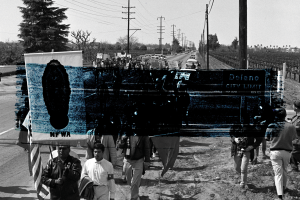
When Black activists organized a boycott of Target after they abandoned their commitment to diversity, equity, and inclusion in 2025, I was all in. I did not want to support a business which would change its stated values depending on which political party was in power. And I knew, as a biracial woman, that the businesses and employees most affected would be people of color. I also knew that boycotts – which are the collective action of many people denying their business to a company – have been extremely effective. A prime example of this is the Montgomery Bus Boycott, which literally changed American history.
And the Target boycott is not the only social justice boycott I have joined in the recent past. I have tried to reduce or eliminate my spending at businesses which flout environmental laws, have proven track records of exploiting labor, or donate to organizations known to violate human rights. As a Catholic who called to protect the dignity of every human being, I am committed to doing what I can to advance the causes of social justice through moral, non-violent action.
But, I have to confess that, after almost a year of avoiding Target, I miss it. As a mother of four, it was a convenient place to get everything I needed without having to take multiple trips. I liked many of their products and it is, quite literally, the closest grocery store to my house. I also still fill my prescriptions at the in-store pharmacy, so I’m consistently fighting the temptation to stroll the aisles. Even though I want Target to change its policies, I would really love it if that could happen without inconveniencing me.
The irony of this statement is not lost on me. Boycotts are built on inconvenience. They require long-term commitment. The Montgomery Bus Boycott lasted over a year and required Black folks to take the extra time to walk everywhere they needed to be. They had to fight the urge to take the bus when they were worn out.
In my boycott fatigue, I am bolstered in my commitment by revisiting the Church’s social teaching. I cannot help but remember what Pope Benedict XVI wrote in his encyclical Caritas in Veritate, that “every economic decision has a moral consequence (CV, 37).” The economy is not morally neutral, guided by invisible market forces that humans have no control over. What we do economically affects human beings locally and globally. As a consumer, it is my duty to understand this and act in accordance with my conscience. And actions like boycotting are morally necessary when we see injustice and immorality at work in our economic system.
Catholic social teaching, in my opinion, supports this conclusion. The Catechism tells us that the economy exists “to provide for the needs of human beings” and that economic activity “is to be exercised within the limits of the moral order, in keeping with social justice so as to correspond to God’s plan for man (CCC #2426).” It also states that “Those responsible for business enterprises are responsible to society for the economic and ecological effects of their operations (CCC #3432).” It affirms that actions such as non-violent labor strikes are “morally legitimate when it cannot be avoided, or at least when it is necessary to obtain a proportionate benefit (CCC #2435).” And that is not to mention the many papal encyclicals such as Rerum Novarum (Leo XIII), Quadragesimo Anno (Pius XI), and Populorum Progressio (Paul VI), which consistently affirm the dignity of workers and the preferential option for the poor. Catholics should be willing and able to commit to long term economic action in solidarity with the least among us.
A real life example of this is the three-year anti-apartheid boycott organized by female employees of the Dunnes Stores grocery chain in Ireland. Their refusal to sell South African grapefruit in protest of the oppression of Black South Africans launched a nation-wide boycott. Catholic clergy and leaders quickly joined the cause by refusing to shop at the stores and the growing efforts drew international attention to the fight for South African equality. In line with their faith and solidarity with other oppressed peoples, the predominantly Catholic Irish shifted international discourse about justice and oppression of the marginalized. Seen through this lens, boycotts are a way in which I can use what power I do have in the system for the good of others.
It must be said, though, that I am privileged to be able to take that type of economic action. My income, social location, and geographic location allow me to choose other stores and providers for the things I need. I am lucky to live in a community with the resources and connections to influence people in power. Many people live in food deserts, lack sufficient income to allow them choices in purchasing, or have access to the resources I take for granted.
I do not believe they would have the same moral or ethical obligations I do. It is unjust for me to expect that from the ones being marginalized by the system I am protesting. And – if we’re honest – it would be hard to participate in today’s global economy if we completely boycotted every business which didn’t align completely with the Church’s social doctrine. But, as Jesus himself says in Luke 12:48, “[from] everyone to whom much has been given, much will be required,” and I have been given many advantages. Looking at my individual situation allows me to see more fully what actions I can take, while discerning which ones God is calling me to.
This is ultimately the call to action for all of us. There is no one specific action, such as a boycott or strike, that every Catholic has to undertake. We instead are called to educate ourselves, pray, and discern where our actions might lead to a more just and moral society. It may be that we are called to other social action, such as choosing to purchase locally, protesting, donating to charities, or serving in our local communities.
For me, that has meant losing my beloved Target runs. For others it means voting or community organizing. Each of us has our own unique path of living out discipleship and solidarity with others. The point is to respond to Jesus’s invitation to love our neighbor and care for the least among us through our daily lives and actions. So let us ask ourselves, where is God calling us right now to see the least among us? Where can we act for their good? And how might we also be transformed by the Holy Spirit, too?
Image: Pexels