The Way of Dante
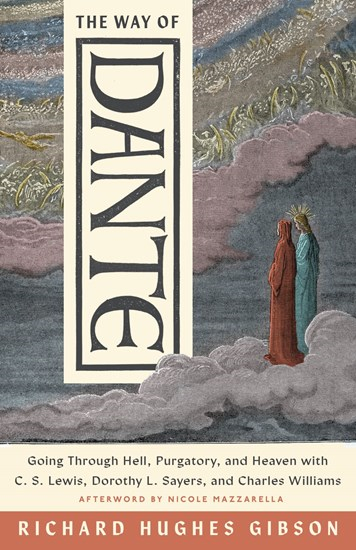
By Richard Hughes Gibson (InterVarsity Press, 2025)
Around the middle of the twentieth century, three English writers—C. S. Lewis, Dorothy L. Sayers, and Charles Williams—revisited and reclaimed Dante’s Divine Comedy. In The Way of Dante: Going Through Hell, Purgatory, and Heaven with C. S. Lewis, Dorothy L. Sayers, and Charles Williams (InterVarsity Press), Wheaton College professor Richard Hughes Gibson examines these writers’ engagement with Dante and one another, drawing on material originally presented in formal Hansen Series lectures.
Readers may find more scholarship and less direct insight into Dante in this book, but the complex interactions among “my trio” (as Hughes calls the three writers) illuminate a transitional time when Dante was reintroduced to the reading public. In their writings and correspondence, Lewis, Sayers, and Williams conceived of a Dante who wrote across boundaries of time and place, and whose work thus remained supremely relevant to contemporary readers, not merely as a historical piece but as genuinely engaging literature—especially in an era that was struggling to comprehend the violence and devastation of two world wars.
Sayers, in particular, fell prey to what Hughes terms “Dante mania.” He comments that “Lewis looked up to Dante in heaven. Sayers sought to bring Dante down to earth.” She dedicated the final years of her life to a translation of the Divine Comedy that would speak to the popular reader, and her energetic colloquial translation reset the cultural tone and rescued Dante from Victorian pieties and intellectual obscurity. She lived to complete the Inferno and Purgatorio; the Paradiso was published posthumously.
Sayers asked Williams to write commentary for her translations and, though they differed on many things, she valued his insistence that time was eternal. To Williams, the six-century gap between his own time and Dante’s Florentine world was negligible. Or irrelevant. He died shortly after the request, but Sayers remained influenced by his ideas.
Although Lewis outlived his “cohorts” (another term Hughes uses to describe the group), he enjoyed deep intellectual and personal friendships with both. He invited Williams to join his literary group, the Inklings, and gave the eulogy at Sayers’ funeral. A medieval scholar himself, Lewis was well-schooled in Dante’s historical references and literary heritage.
All three of these writers had strong individual perspectives on both literature and life, but all worked on the intersection of faith and creativity, and all agreed that evil is an ever-present reality. Against the common view the Inferno is the most readable part of Dante’s masterpiece, and that the poem gets more boring the closer it gets to paradise, they firmly believed that the entire Divine Comedy could be exciting and even entertaining, as well as leading to moral introspection and spiritual growth.
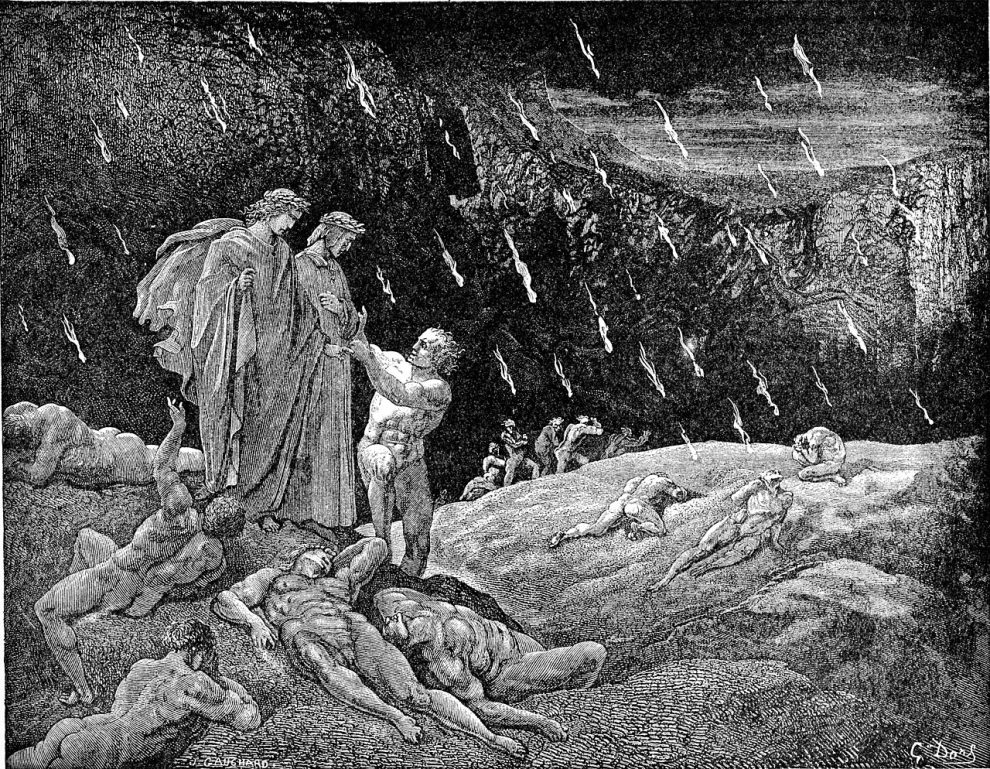
Image: Wikimedia Commons