

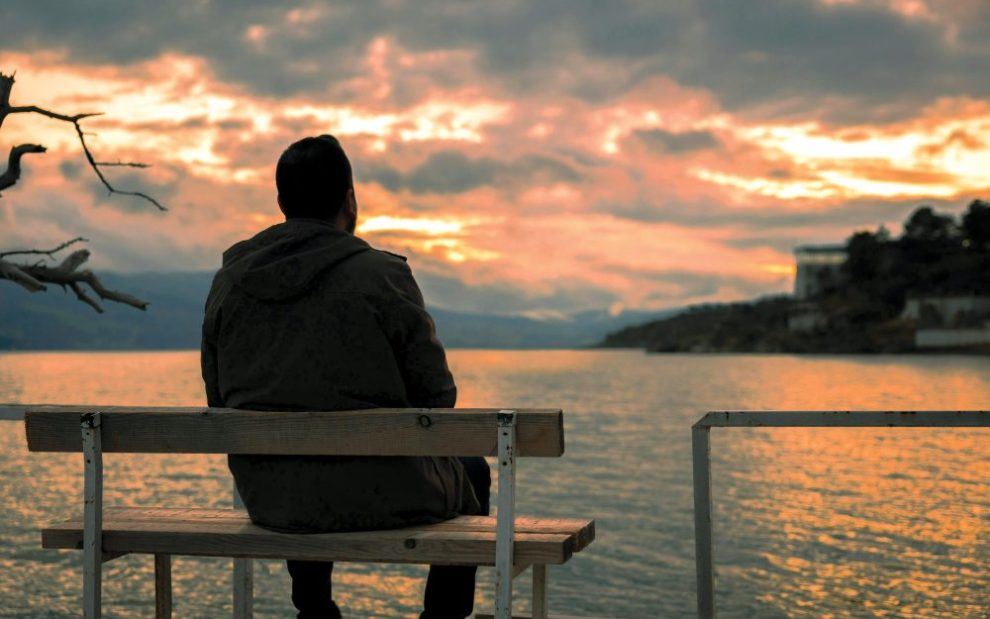
“For I know well the plans I have in mind for you . . . plans for your welfare and not for woe, so as to give you a future of hope.”
(Jeremiah 29:11)
The new year can bring a future full of hope, but it comes with a prior history. As I anticipate the new year, I remember past years, and my heart swells with gratitude for the memories of the family and friends who were there with me even through rough years. Those memories warm my heart like the warmth of a shared campfire.
As a youngster, my siblings and I celebrated New Year’s Eve by playing board games with my grandmom and banging pots and pans outdoors. As a young priest, I experienced New Year’s Eve parties surrounded by joyful parishioners. Yet gradually, I pulled away from festivities. I yearned for the quiet of the midnight hour, the contemplation marking the end of one year and the passage into a new one.
One of my best New Year’s Eve moments was on a retreat at the Spiritual Life Institute in Nova Scotia with the community of hermits. Toward midnight, we gathered in the chapel and, later, around a bonfire in the woods to celebrate the year past and the one to come. I was freezing but loved every moment. I didn’t know where my future lay, but I was confident God was leading.

Since that time, I’ve spent the hours before midnight on December 31 in silence, reflecting on the past year, thankful for both the blessings and struggles and praying for a “future of hope.” 2026 is particularly significant. On May 15, I will be 50 years ordained.
These 50 years carried many blessings. I’m grateful for all the friends I’ve made through the many parishes in the Philadelphia area; Chicago; Springfield, Missouri; and in Kingston, Jamaica. I’m grateful for the children in our parishes, the high schoolers in our youth programs, the young adults at the Penn Newman Center and Catholic Campus Ministry, and for the youth and staff at Camp Re-New-All in the Diocese of Springfield-Cape Girardeau. I’m grateful for the group that went on our canoeing/camping adventures in Quebec and New England, for being a hospital chaplain, a high school chaplain, and for the diocesan boards I sat on. I’m grateful for the people. All the people.
My family is also precious to me. Growing up, I took them for granted. Dad was a city firefighter but also worked at other part-time jobs. My mom, a nurse, worked in the operating room and later in a cardiac intensive care unit. During the day, Mom would drive us to grade school, be with us at home for lunch, and help us manage our paper route and homework. She slept when she could.
My five siblings and I had so much fun together—sledding in our backyard, having neighborhood adventures, gardening. We joined activities like musical corps and Scouts. Family vacations were always exciting, whether to the Jersey Shore, the Poconos, or even Mount Washington in New Hampshire.
Amid all this, touching every aspect of our life, was church. Sunday Mass was always at 9 a.m., followed by breakfast at home around the kitchen table. On Mondays, we visited the Miraculous Medal Shrine in Germantown for the novena. My aunt gave us statues, holy cards, and pictures of the saints. We had crucifixes in the bathrooms, and rosaries were wrapped around our bedposts in case nightmares woke us at night.
I am grateful for my family and the many friends I’ve known along the way. Gratitude fills my heart with hope for the future. As you reflect on the passage of 2025 and the oncoming 2026, for what are you grateful? For what are you hopeful? As Thomas Merton once wrote in his journals, “One must continue to hope.” And that hope grows from the gratitude you hold. USC
This article also appears in the January 2026 issue of U.S. Catholic (Vol. 91, No. 1, page 9). Click here to subscribe to the magazine.
Image: Unsplash




Add comment