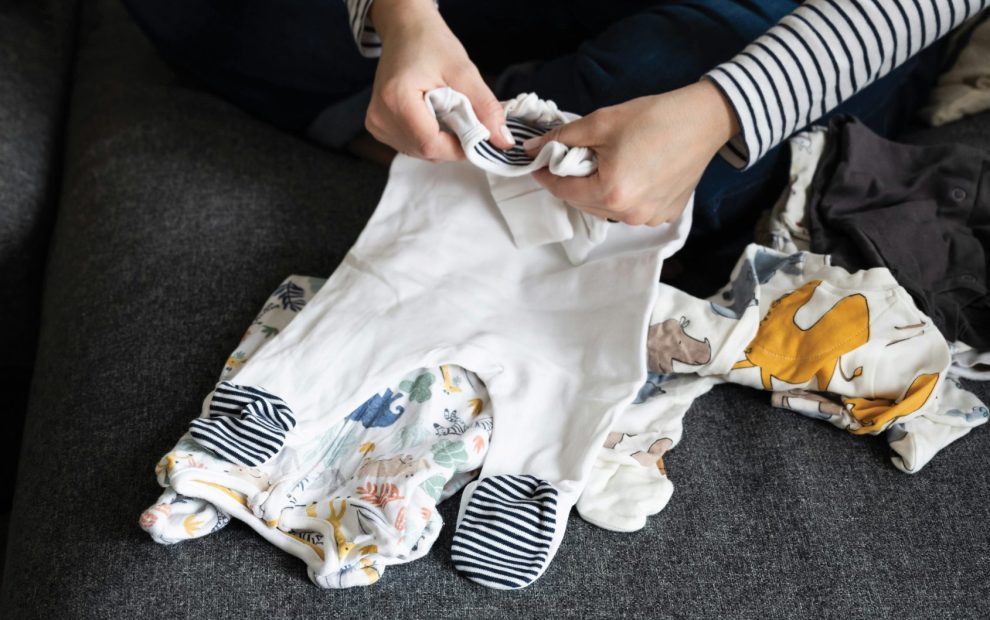
I looked with dread at the pile of clothing in the overflowing basket at the bottom of my infant son’s closet. There, tucked in the shadows beneath teddy bear overalls and mini collared shirts, lay a growing mound of outgrown clothing waiting to be handled.
Of all chores that make up the early years of parenthood, there is one that I am particularly resistant to: managing the endless flow of outgrown children’s clothing. Physically, it’s tedious and exhausting—the careful folding of onesies no larger than a tissue box, coupled with the schlepping and hoisting of plastic bins from our second floor to their temporary resting place on basement shelves. But beyond that, I find the process emotionally devastating. Staring at the tiny sweaters and dresses wrecks me like one of those saccharine mommy accounts on Instagram that proclaim in flowery script: Every day, your child is the smallest they’ll ever be.
The actual process of children’s clothing management involves near constant inventory taking, decluttering, and planning. Each organizing session often feels like an unsolvable math problem. Will this 2T sweater work for my 12-month-old this winter, who is currently wearing sizes six months ahead of his age? Should this be handed down, recycled, or stored? If a donation truck leaves the thrift store traveling 30 miles per hour to my house, will it arrive before I have a nervous breakdown?
After a few weeks of walking by the outgrown clothing mountain and pretending it did not exist, I sighed, paused, and said a little prayer asking God to help me through the process. As I knelt on my son’s woodland animal nursery rug and collected the great mound of baby clothing to be sorted, I was surprised to hear a response: This is holy work. Treat it as such!
Recognizing the nudge to approach this work with something other than annoyance, I tried to shift to gratitude. I thanked God for our children, the good health that allows them to grow so quickly, the ability to put a roof over their heads and clothing on their backs. I smiled at the memories that certain outfits recalled, like the adorable baby suspenders my son donned for my brother’s wedding rehearsal and the charming reindeer sweater he wore on his first Christmas day. As I folded another impossibly small set of footie pajamas, I thought of the corporal work of mercy to clothe the naked.
The corporal works of mercy come to us in the Gospel of Matthew as a guide for recognizing the face of Christ in others and acting accordingly. We are instructed to feed the hungry, give drink to the thirsty, clothe the naked, shelter the home less, visit the imprisoned, care for the sick, and bury the dead (25:35–46).
Prior to having children, my understanding of the corporal works of mercy was a narrow one, as I envisioned acts of charity confined to soup kitchens, homeless shelters, or mission trips. Revisiting the teachings, I was struck by the U.S. Conference of Catholic Bishops’ simple explanation that these instructions for how to treat others “respond to the basic needs of humanity as we journey together through this life.”
While Catholics express a preferential option for the poor and recognize Christ in those with dire needs, we also have plenty of opportunities to practice these works in our own homes, for those we are quite literally journeying with every day. As St. Teresa of Calcutta said, “If we love, naturally, we will try to do something. First in our own home, our next door neighbor, in the country we live, in the whole world.”
I realized that caring for two children under four provides me with plenty of opportunities to respond to basic needs of humanity, whether I’m packing up lunches for daycare (feeding the hungry) or filling a bottle with milk for what seems like the umpteenth time (giving drink to the thirsty). And when I wearily park myself on my son’s nursery rug to shuffle through clothing to donate, give to friends, or place in storage, the ministry of clothing the naked ripples out from my own family to my larger community.
I’ve also been on the receiving end of such kindness in my own circles. The last time I saw my friend Michelle, she handed me a large grocery bag filled with pajamas and baby shoes that her son, just nine months older than mine, had recently outgrown. And whenever I drop off clothes at our local consignment shop, I always take a few minutes to browse. I recently picked up a nearly new jean jacket for my daughter at a quarter of the retail price.
Receiving these graces allows me to understand these acts of mercy, such as clothing the naked, in a communal context. The circular nature of donating clothing while simultaneously accepting the generosity of others helps me resist a throwaway mindset, ensuring that I buy less and save money, while creating opportunities for longevity for the clothing that has kept my children warm and comfortable while they play, learn, and grow.
A few weeks ago, I brought a couple of totes of outgrown clothing to a local pregnancy center. After collecting my items and writing up a donation receipt, the cheerful woman at the front desk looked up at me and said, “Thank you for blessing others.” That unexpected response stuck with me and has motivated me to be less of a grump when the piles of clothing accumulate. After all, giving baby outfits to someone who actually needs them is a wonderful way to honor the clothing and what it has meant to us (and perhaps overcome just a bit of sentimentality).
The more I approach this chore with a spirit of prayer and gratitude, the more tolerable, even rewarding, it becomes. In this season of life when repetitive tasks consume my days, God provides me with endless opportunities to practice the corporal works of mercy and realize what a gift it is to do this holy work.
This article also appears in the November 2026 issue of U.S. Catholic (Vol. 91, No. 11, pages 44-45). Click here to subscribe to the magazine.
Image: Unsplash