Soon after moving to Florida, I fractured my ankle. My life felt fractured, too. Disoriented by the loss of a flourishing ministry and community in Ohio, I felt unmoored and painfully alone. The questions in my heart throbbed with the pain in my foot: Where am I? Where am I going?
Disorientation sets in when we lose our surest bearings: loved ones, vocation, dreams, community, security. In that hollow ache, we often face our most formidable decisions, desperately seeking the trail, shelter, help, and signs that lead us home.
For years, walking had been how I found my way—how I prayed, discerned, and listened. Moving through the world with my feet pressing into the ground, eyes on the horizon, and breath syncing with my steps helped create an interior map that guided me. When I fractured my ankle, I felt my internal navigation system falter, too. But a simple prayer practice, developed by St. Ignatius of Loyola, offered me a way to reorient myself.
Ignatius as a master wayfinder
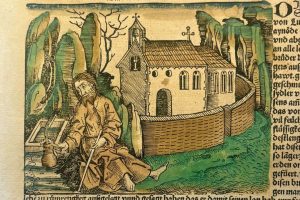
After a cannonball shattered his leg, Ignatius, then a soldier, felt his life shatter with it. The pageantry of court life and his ambitious military career were suddenly lost. In the stillness of recovery, Ignatius noticed interior movements he had long outrun. Fantasizing about fame and romance left him restless and agitated. But when he imagined the life of Christ or following the steps of the saints, he felt alive, and peace lingered. This new embodied awareness stirred a desire for pilgrimage, and with his leg still bandaged, he set out across the Pyrenees.

One limping step at a time, Ignatius discovered what wayfinders have known since ancient times: When we are lost, the body knows the way—drawing on senses, memory, spatial awareness, and emotional insights to create a cognitive map of where we are and where we have been. Along the way, Ignatius learned to read the map of his interior landscape with increasing clarity.
Although his leg never fully healed, Ignatius embraced a lifelong spirituality of pilgrimage, convinced that walking and spiritual exercise move in step. Over time, he developed a master spiritual wayfinding practice: the Prayer of Examen. The Examen is a simple way to look back on the day and notice our interior movements—mind, body, emotions, and desires—that reveal our spiritual orientation. Movements that spiral us inward, drain hope, or pull us from God signal desolation. Movements that open us toward God—peace, courage, tenderness, energy for the good—signal consolation. When we lose our bearings, the Examen attunes us to God’s presence with us, reminds us where we came from, and helps cultivate the embodied wisdom needed to discern the next faithful step forward.
The body knows the way
Following my own injury, months of healing revealed firsthand—and “firstfoot”—just how deeply my sense of discernment is intertwined with my body. Without my daily walks, anxiety accumulated, my mind fogged, sleep turned restless, and my emotions grew agitated. Losing my embodied rhythms drained me and intensified my spiritual disorientation.
Like Ignatius, the forced stillness amplified how emotions manifested physically: Anxiety tightened my chest, loneliness sank like a rock in my stomach, and hope’s first tingles straightened my spine. Still immobilized, I wondered: What is my body trying to tell me? What wisdom is hidden in these sensations?
As I explored the science of walking, I learned why movement aids discernment. Each step helps the brain construct a cognitive map. The contour of a sidewalk, the smell of rain, or birdsong at dusk can stir emotions that subtly steer us. Foot compression, eye shifts, and breath rhythm activate our internal GPS, helping us sense where we are and how to move forward.
Discernment is not primarily rational. God designed the human body to weave memory, imagination, emotion, sensory cues, and reflective thought into the vibrant fabric of embodied wisdom we call discernment. Through my healing journey, I realized how essential this integration is to spiritual clarity. Ignatius and I came to the same intuitive discovery: The way is mapped by walking.
The Examen as a wayfinding practice
While recovering, I wove the Examen into my exercise routine. The daily walks strengthened my body, and the Examen attuned me to the movements within me. What I learned from neuroscience blended seamlessly with the wisdom of Ignatius, and I was struck by how beautifully God mapped wisdom into my body to guide the way.
The Examen invites me to notice my senses, emotions, thoughts, and desires in prayer and to attune myself to God’s guidance in daily life. It is especially meaningful when I feel lost. God loves to find lost things—coins, sheep, people—and when I’m disoriented, I can trust that God has not lost sight of me.
To remember the steps of the Examen on my walks, I created a simple acronym: TARP—a reminder to slow down and take shelter under God’s tent as I discern where I am, where I’ve been, and where I’m going.
T—Thankfulness
Thankfulness counters the brain’s bias toward threat. When unsure of my way, gratitude grounds me in the goodness beneath my feet. It opens me to the graces scattered along the path: a butterfly on a blossom, a web shimmering after rain.
A—Ask for light
Here I ask for the grace to see my day through God’s loving gaze. Walking shifts my attention to the life God is tending around me—the lilies of the field and the birds overhead. These small consolations affirm God’s care as I look at my day through the eyes of love.
R—Review the day
Reviewing the day is an act of humility, a way of checking my inner bearings as I retrace the path I walked. Because memory is linked to movement, each step helps me sift the day for emotional, mental, or spiritual indicators of my orientation: a sharp tone, a reactive email, a conversation avoided. Walking draws these moments into awareness and gives me space to walk them out in companionship with God. Each interior movement of mind, body, emotion, and desire becomes a waypoint for discerning my spiritual orientation. Where did I move toward God today? Where did I drift off the path?
P—Prayerfully plan
Planning a way forward begins with noticing where God is already at work and aligning myself with that movement. Each small step is an act of hope. While fear freezes or retreats, hope steps forward even when the path winds through dark valleys. Trusting in God’s goodness, hope seeks the restoration unfolding at the heart of God’s kingdom. I choose one or two intentional steps that match God’s pace and move forward with hope.
Finding my way home
Walking the Examen has become a way of finding my bearings. Now, when I feel disoriented, I lace up my shoes and step out under God’s TARP—the tent of sky and canopy of trees—to recall where I am, where I’ve been, and to discern a way ahead. On days I can’t walk, other unhurried movements—stretching, untangling yarn, folding laundry, tracing a finger labyrinth—help me tune in to the interior shifts that guide my way. I offer thanks for the ground that steadies me, I rest in the awareness of God’s love, and I look for signs of God’s activity in my life. With this reorientation, I can take the next humble, hopeful step forward.
This article also appears in the August 2026 issue of U.S. Catholic (Vol. 91, No. 8, pages 44-45). Click here to subscribe to the magazine.
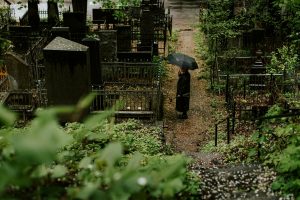
Image: Pexels.com/pripicart