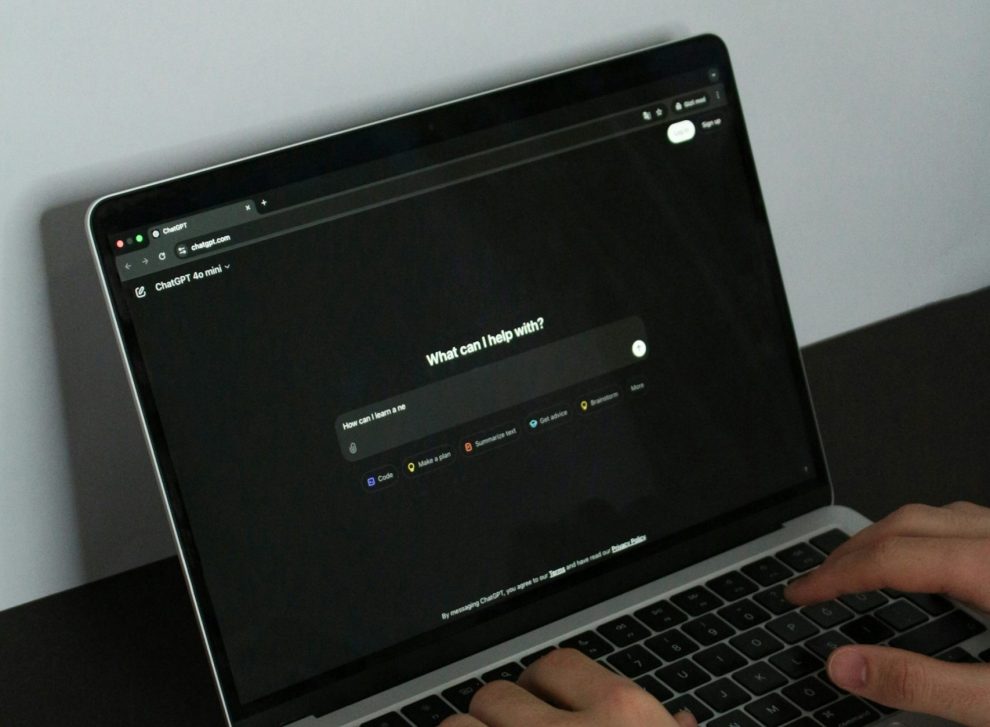
Amid anxious predictions of an AI future, it is a critical time for us to think carefully about the value and dignity of human work.
Theologian Michael Naughton defines work neither as simply a job we do primarily for a paycheck, nor even as a career in which we place our identity, where successes serve our ego. The real significance of work, he says, lies elsewhere. It is in the sort of person our work molds us to be and how our work serves others.
Our daily activity shapes our character more than almost anything else in our lives; it serves to make the self. St. Pope John Paul II called this the “subjective dimension” of work, the idea that work is a matter of realizing who we are. He doesn’t mean the ego-boosting markers of achievement that go on a resume. He means the character we develop from doing the work itself.
In the biblical creation story, this is called dominion, and it is a crucial feature to being made in the image and likeness of God. Human work should arise from self-determination and choice, not just from biological mechanisms such as instinct or in response to the commands of another. Thus, every day as we set out to do our work in the world, we must ask: Am I approaching my tasks with care? Am I trying to do things well?
Carelessness and shortcuts may be efficient and may still seem to produce satisfactory results. But they will also result in developing the character of a person who really doesn’t care, who sees their work simply as a series of tasks to complete to accomplish the job. In situations where it substitutes for our own skill and engagement with the mission of the work, AI seems likely to erode our ability to develop ourselves in this “subjective dimension.”
When we cut corners, we also risk denying the other truth that gives our work meaning—that it happens in service to others. In my career as a teacher, especially when I go into the classroom, I am reminded that whatever plans I put together, my primary task is to pay attention to the students whom I am there to serve. To serve them is my real work. And I try to bring the same perspective of service to meetings with colleagues and to writing magazine columns for readers.
Joseph Ratzinger, in his book Introduction to Christianity (Ignatius Press), argues that Christ completely sank his person into his work. It’s not that Jesus was a workaholic; rather, his entire existence was a matter of being for others and for his mission from God. His work was to give himself totally to God and to others.
Of course, we are called to do this in many settings that do not involve wages. But Ratzinger’s point, reiterated in his encyclical Caritas in Veritate (On Integral Human Development in Charity and Truth), is that this vocation to self-gift is something that should be realized in all aspects of our lives. In theory, we can offload certain tasks to AI so that we can better focus on serving people. But in such cases, AI will remain in the background; face-to-face service will be primary.
Both of these points can make me feel exhausted. Catholic social tradition has insisted, ever since Pope Leo XIII’s Rerum Novarum (On Capital and Labor), that oppressive structures of work mutate its significance into something degrading. A worker’s desire to do things well and in service to others can be exploited. Like the advent of large-scale industrialization in the 19th century, technological advances can be used by the powerful to squeeze more and more out of workers. But the answer to such injustices is not to abandon the core values of work; it is to think carefully about what structures we need to enable the dignity-enhancing and other-serving aspects of work to win out.
Pope Leo XIV, in a recent address, said that “work must be a source of hope and life, allowing the expression of individual creativity and capacity for good.” Whatever future AI brings, we can always ask: With God’s help, how will I work today to better become a person of creativity? And how will I work to serve the genuine good of others?
This article also appears in the July 2026 issue of U.S. Catholic (Vol. 91, No. 7, page 40). Click here to subscribe to the magazine.
Image: Unsplash