Imagine yourself in the first century, living somewhere in the Roman Empire. As a devotee of the local gods and goddesses, you are intrigued by the message of Paul of Tarsus and the women and men who are his coworkers and coleaders. Your life has been transformed in ways you never could have imagined, simply because you now are a follower of “the Way.”
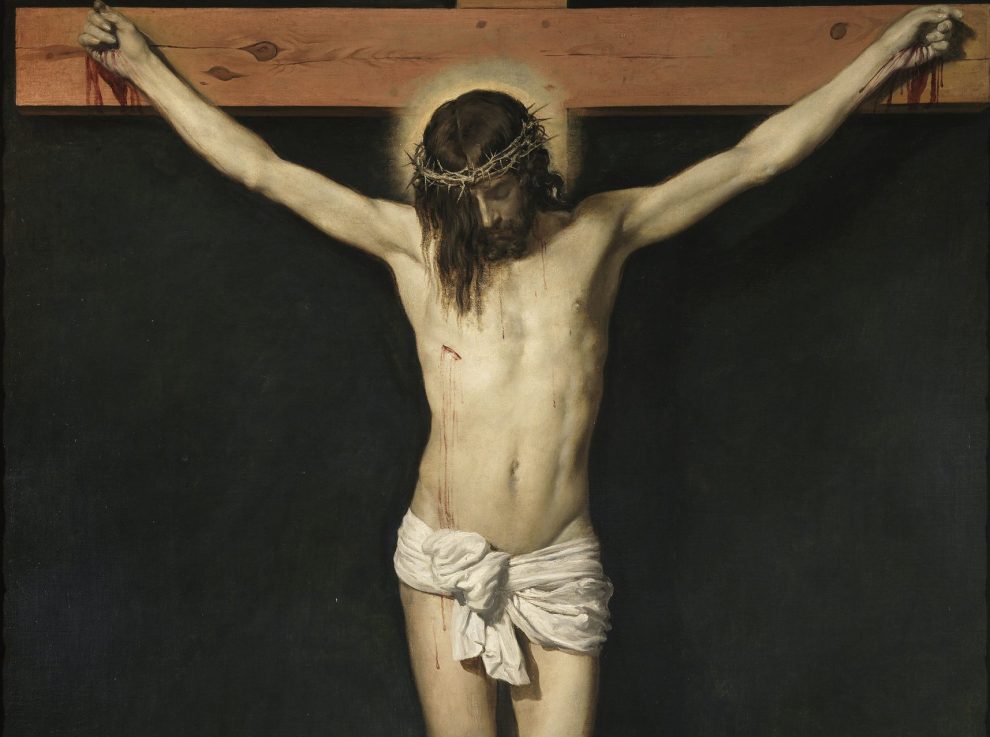
You have never met this Jesus Christ who your teachers claim was crucified and died but was then raised from the dead by God—and you never will in this life. This all happened far away in the Jewish lands around Jerusalem and Galilee. Yet again and again, Paul and his coworkers tell you that you and your community already have met Jesus, because all of you are now “Christ’s body.” Jesus, the crucified Jewish prophet, still has a body and you, a Gentile, are now part of that body. What is he talking about?
Paul believed that the revolutionary spirit of God through Christ abides in the community of people gathered in his name. The people are Christ’s real presence and the Eucharist that we offer and share is Christ’s mystical presence and mystical body. Christ lives in each member of the community, and everyone has been incorporated into Christ’s body. Hence, the famous line from Galatians: “There is no longer Jew or Greek; there is no longer slave or free; there is no longer male and female, for all of you are one in Christ Jesus” (3:28).
Paul also emphasized that the community, as Christ’s body, sets an example of how to live rightly that contrasts with the sinful ways of the Roman Empire. Paul was convinced that the end times arrived with the resurrection. This meant that the work of church-planting and communal spiritual formation was imperative. The church community was supposed to be a visible sign of God’s redeeming work, a sign of God’s covenant here on Earth that God was now bringing to its completion. How you lived your life had cosmic importance, because you were part of Christ’s body.
Paul believed that each member of the early Christian community should be empowered to share their gifts and continue Christ’s work until he returned—which would be soon. As they did this, they proclaimed Christ’s death and resurrection, an invitation of good news to everyone they knew. They invited others to come and see and perhaps receive the invitation to be baptized, enter the covenant, and begin growing into Christ’s body as well.
In 2026, we can retrieve Paul’s vision of the people as the body of Christ and empower one another to live out the opening words of Gaudium et Spes (On the Church in the Modern World): “The joys and the hopes, the griefs and the anxieties of the [peoples] of this age, especially those who are poor or in any way afflicted, these are the joys and hopes, the griefs and anxieties of the followers of Christ.”
This article also appears in the July 2026 issue of U.S. Catholic (Vol. 91, No. 7, pages 48). Click here to subscribe to the magazine.
Image: Wikimedia Commons