Art Is How God Loves Us
By Meridith Hite Estevez (Broadleaf Books, 2026)
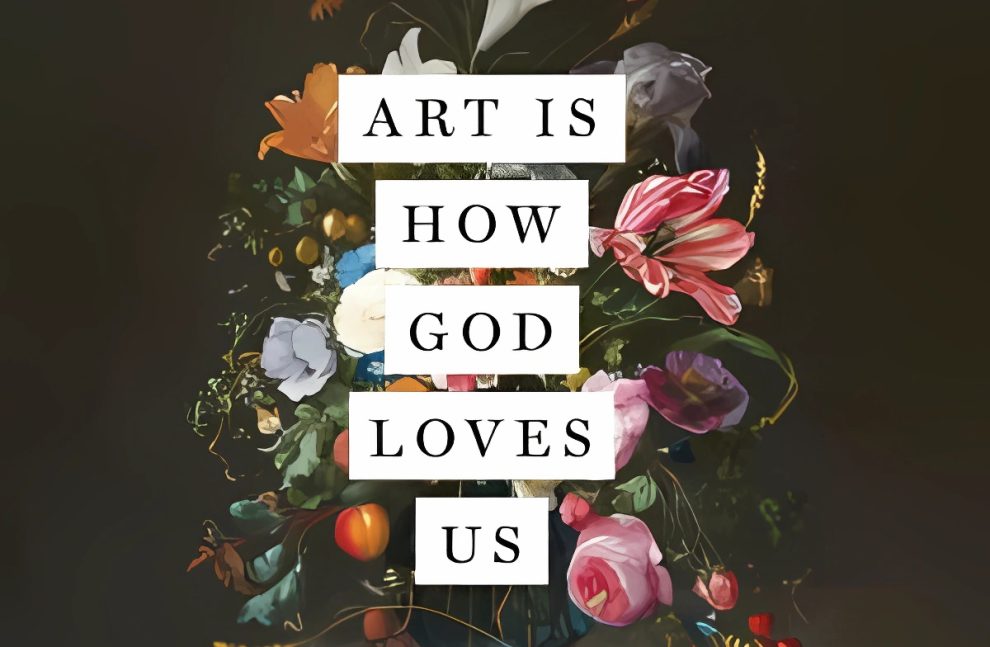
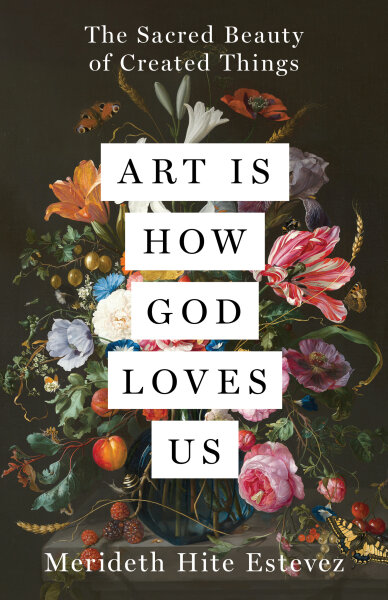
Google’s AI Overview would likely take one look at the floral cover, trendy title, and dustjacket blurbs for Art Is How God Loves Us: The Sacred Beauty of Created Things and characterize Meredith Hite Estevez’s book as another just-trust-Jesus, embrace-your-inner-artist spiritual memoir churned out by a lifestyle-brand Christian woman author. Estevez’s first paragraphs, however, reveal how faulty such surface readings can be. Although the author draws on personal experience as a mother, spouse of a Presbyterian minister, and creativity coach, Estevez’s expertise as an artist—both deep and broad—is what sets this book apart from those that merely skim the surface.
Estevez is a seasoned symphonic oboist with degrees from Yale and a doctorate from Juilliard. She marries her scholarly authority with lived experience, using conversational prose to argue convincingly that any of us—artist or not—can know the nearness of the Creator through created things—music, art, and literature of all genres—if we just pay attention.
“Beauty and joy sing a song that, on some atomic level, we already know,” Estevez writes. “It is just a matter of listening long enough to recognize it, to sit down and try to join in, however imperfectly it may come out.”
The book’s three sections invite readers first to notice spiritual sparks that arise when encountering art, then to trust these moments as sanctuaries for surrender, and finally, to see life itself as a poem cowritten with God, always in draft. Her definition of art is evocative and inviting: an acronym meaning Atoms Responding to Transcendence. An artist, she writes, is any human: “a collection of atoms creating a life. There is no technique you need to master, no perfect product. . . . It is something you already are.”
Catholics familiar with lectio divina will recognize the ancient practice in Estevez’s contemplative approach to art appreciation. She ends a chapter of anecdotes about the dangers of self-imposed, unrealistic creative expectations (such as the composer Brahms’ habit of setting fire to scores he considered failures) with a call to stillness through “audio divina.”
Another exercise prompts a response to the “cry of the oppressed” by picking one work to reflect upon from a list of paintings, quilts, essays, and music created during the civil rights movement.
Another chapter deftly weaves together the work of an Indigenous visual artist, a Pulitzer Prize–winning novelist, scripture, and reflections on nature as the Universal Christ. It closes with prompts that invite readers to consider a work of art that gives them goosebumps and reflect on how such beauty might reveal God’s love, both particular and universal.
In an age when creative authenticity is threatened by machine intelligence, Estevez’s most timely and urgent call is to be “broken open” by art, recognizing in created things the irreducible remnants of humanity, both light and dark: lived experience, interior tension seeking form, and, most importantly, divine authorship. “Every created thing glows with a recognition of God’s creative power,” Estevez writes. She counsels readers to “trust that everything made before and since vibrates with the same Love, even the imperfect offerings that come from our very human hands.”
This article also appears in the August 2026 issue of U.S. Catholic (Vol. 91, No. 8, page 36). Click here to subscribe to the magazine.
Image: Cover art of Art is How God Loves Us (Broadleaf Books)