In Thomas of Celano’s book The Remembrance of the Desire of a Soul, which was completed in 1247, Francis and a companion were traveling when they came upon three women on the side of the road who addressed the saint as “Lady Poverty.” Instead of being offended or surprised at being addressed in feminine terms—hagiographers document how he preferred to be called “mother” and used maternal language among his fellow monks—Francis celebrated being seen.
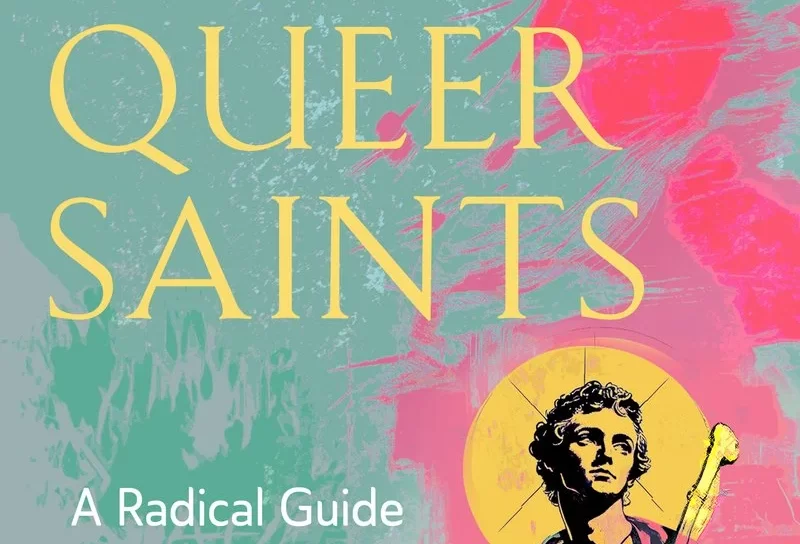
In his new book Queer Saints: A Radical Guide to Magic, Miracles, and Modern Intercession (Weiser Books),Antonio Pagliarulo joyfully recounted this story, which may be more myth than actual memory, but in interviews with anonymous priests and church leaders, he points to the power of Francis transcending gender. One of the priests he interviews, affectionately called Father B, unabashedly acknowledges that Francis was a “gender-bending saint,” and that he is not alone. There are many saints canonized by the institutional church—including those whose stories Pagliarulo includes in his new book, like Hildegard of Bingen, Sebastian, and Joan of Arc—whose lives are examples of queerness at the core of what it means to be a servant of God.
Today, queerness often refers to sexual orientations and gender identities that fall outside of a straight, cisgender norm, but Pagliarulo argues, as do others, that queerness is also related to activism and advocacy, as it involves unsettling and unseating long-standing expectations. This is why the first half of Pagliarulo’s book is dedicated to redefining sainthood as not just about connecting with queer and trans saints but also about embracing “queering” as an inherent part of being someone who challenges societal norms and refuses to conform to what is expected of them. In this sense, queerness is applicable to all of the saints and even Jesus himself.
I first met Pagliarulo when I interviewed him for the Queer and Catholic Oral History Project, a long-term project where I record the lived experiences of queer and trans people who are in any way connected to the Catholic Church or to non-institutional Catholic faith. As I learned, his story affirms not only the extra importance of saints—people who themselves were often persecuted or cast out of their communities because of who they are—to queer and trans people but also the role of folk Catholicism through localized prayers and practices that exist on the margins.
Especially for those of us hurt by the institutional church, this can involve connecting with folk Catholicism, or local Catholic rituals and traditions like making an altar, lighting a candle, writing a petition, carrying a sachet, carving or chanting a verse number into a doorframe or loaf of bread. Some of these traditions, like home altars, are widely accepted and recognized by the Catholic Church, whereas other examples, like praying to candles depicting the very queer saints Pagliarulo describes in his book, are controversial. As Pagliarulo writes, these folk rituals are based on two tenets: simplicity and practicality. For those who live on the margins, accessible, easy-to-implement spirituality is a tool of liberation because these rituals give us strength to keep going and envision ourselves as saints one day.
At its core, folk Catholicism, Pagliarulo explains, is about egalitarian access not only to spirituality but to sainthood, which is why redefining sainthood beyond Catholicism is so important. “Saints belong to everyone, and you do not have to follow a particular faith to work with them,” he writes.
Within Queer Saints are names of people recognized by the church including St. Francis of Assisi and Joan of Arc who have long been described as queer or queer coded, but Pagliarulo also intentionally includes queer and trans people whom history and institutional faiths have discredited, erased, or refuse to recognize. He includes people like trans Civil War soldier Albert Cashier, fashion icon André Leon Talley, civil rights organizer Bayard Rustin, or trans sex worker Cecilia Gentili.
Pagliarulo participates in the very sacred work of finding and affirming the queerness of the saints we know and those we do not; saints recognized by the church whose queerness has been uncovered and those whose queerness remains lost or awaiting discovery in their letters and prayers; and saints whose names we may never know.
Alongside Francis, Pagliarulo describes the life of St. Joan of Arc, who heard and saw visions of St. Catherine of Alexandria, St. Margaret, and the Archangel Michael who implored her to lead Charles VII’s army in the fight against English rule. While most Catholic saint compendiums spend considerable time on her visions and revolutionary action, Pagliarulo focuses instead on her trial as a witch.
“Only a witch possessed the power to do the things she did. Joan, dressed in her armor, her men’s clothing, faced those charges with a grace and courage that belied her tender age,” Pagliarulo writes, and for that “we find a queer person who followed their truest sense of self.”
Composer, author, and theologian Hildegard of Bingen, like Joan, fought against authorities. At one point her monastery was placed under an interdict due to her refusal to disinter the body of a man who had been excommunicated. In Causea et Curae, she wrote what was likely the first description by a woman of a female orgasm, and also had a deeply devoted relationship to Richardis von Stade, the woman who served as her secretary.
“And yet in Saint Hildegard we also find a paradox. Some of her writing outright condemns same-sex relations, yet here we must ask if these writings expressed her true feelings about the topic or if they are the writings of a Catholic nun who had little choice but to follow the Church’s stance on the issue,” Pagliarulo writes. His willingness to confront conflict and dimensionality in the lives of the saints he describes is central to the crux of his book: redefining sainthood beyond the bounds of the Catholic Church or even religious institutions and systems.
In the third chapter, aptly titled “Sainthood Redefined,” Pagliarulo confronts misconceptions about saints, including “the belief that a saint is supposed to view their flesh-and-blood frame as nothing more than a vessel for the divine,” he writes. What endears saints to those on the margins, and what makes them such important, powerful intercessors, is their humanity. It reflects how Catholicism is rooted, as the church teaches, in a fundamental appreciation of bodily experience. “The belief that sainthood and purity are synonymous is misdirected and misunderstood; in fact, that idea negates the very point of sainthood,” he writes.
The book also reminds us that we can connect with and recognize saints who are not canonized by the Catholic Church. As Pagliarulo writes, Joan of Arc was killed in the 15th century but it wasn’t until 1920 that she was officially canonized. Perhaps one day the church will recognize the people we pray to today: the spiritual and societal outcasts who have led communities and countries toward a world that better reflects the intention of the gospel.
Pagliarulo begins this critical work by dedicating half of his book to queer and trans saints like pop artist Keith Haring, editor and socialist May Morris, and Matthew Shepherd, a young gay man who was killed because of his sexuality. For the first time, queer folk saints who have found their way onto candles at Pride gatherings and on drag queens’ altars are shown on equal footing with the Francises and Joans we grew up knowing. He acknowledges that his book is not comprehensive, as no book can ever include all the queer and trans people whose names we will never know. But this book gives us permission to celebrate the people who, for queer and trans people especially, provided us with the visibility and permission to be ourselves.
And that’s not just a lesson for queer and trans people. All the queer saints he shares in this book are allies, advocates, and champions for everyone.
“It’s important to remember that while the word queer is certainly about one’s gender, sexuality, and identity, it also refers to redefining boundaries that no longer serve us emotionally and spiritually,” he writes.
In reclaiming queerness as something beyond gender and sexuality, Pagliarulo’s book reaffirms that everyone is called to live and love radically.
For queer and trans people or anyone raised in or exploring the Catholic Church, Pagliarulo’s book is a valuable addition to any compendium of saint stories a person grew up reading. In it, Pagliarulo explores the rich (but largely hidden) history of saints we now recognize as queer and trans, and recognizes our own queer elders—like Freddie Mercury, Frida Kahlo, and James Baldwin—as saints in their own right, just like all of us can be.
Image: Cropped from Queer Saints book cover, Weiser Books