

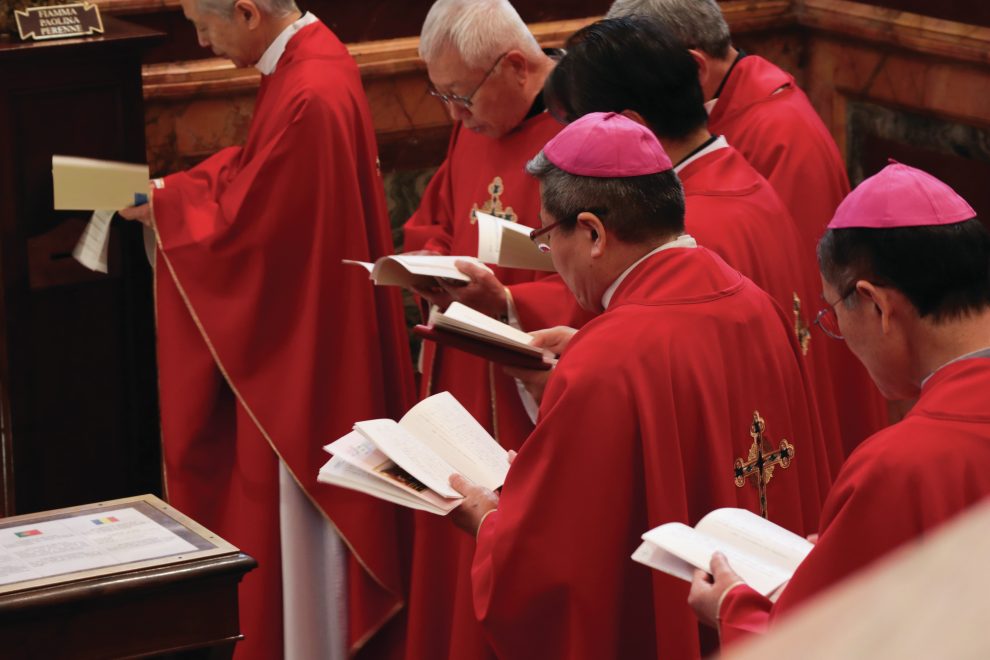
President Donald Trump has discovered a number of ways to divide his fellow Americans. In attacks on American universities and threats to withhold federal monies from out-of-favor cities and states, he’s fostered regional and academic divides. In speeches and off-the-cuff comments, he’s stoked animus between MAGA Americans and so-called elites. His policies have turned neighbor against neighbor after raids on “Democrat” sanctuary cities. But there is one body of Americans that Trump has managed to unite: the U.S. Conference of Catholic Bishops.
Since the election of Pope Francis in 2013, Catholic commentators have been subdividing the USCCB between “Francis bishops” and episcopal culture warriors. The divide may exist more forcefully in the imagination of Vaticanistas than in reality, but it offers a general guideline on who among the U.S. bishops can be counted on to embrace the late pope’s emphasis on pastoral mercy, care of creation, and economic justice. But current policies have resulted in a moral emergency on which the conference can unite.
The bishops have joined hands to confront White House policy that obliterated refugee resettlement and U.S. humanitarian aid programs and have spoken out against the administration’s explosive handling of Venezuelan and Caribbean drug traffickers. But they have come together most strongly in resistance to a major component of the president’s agenda: his mass deportation campaign.
At its fall meeting last November, the USCCB voted in near unanimity to endorse a “special message” that deplored the Trump administration’s rampaging interdictions of immigrants and the “climate of fear and anxiety” and “vilification of immigrants” it had engendered. Insisting that human dignity be protected, they urged Americans to remember the “enormous contributions to the well-being of our nation” made by generations of immigrants “despite obstacles and prejudices.”
The White House had at first promised to focus on “the worst of the worst” as its deportation program gathered steam, but it was not long before a quota system essentially mandated a near indiscriminate round up. At the same time, the administration terminated protected status for thousands and encouraged Immigration and Customs Enforcement (ICE) officers to ignore previous “hands off” policies for undocumented people when they visited schools, hospitals, churches, or courts.
Those policy shifts left immigrants locked inside their homes because of the possibility of being swept up by ICE or border patrol agents. But while the bishops have grown more united, the same can’t be said for the broader Catholic community.
The bishops and other Catholics who demonstrated against the deportation effort have endured scorching criticism from Catholics who support the clampdown. There have been the usual admonishments that church leaders “stay in their lane,” as if there were no moral or spiritual implications of a nationwide dragnet of undocumented residents. But other attacks from Catholics on the political right express stark racism and a rejection of fundamental gospel obligations.
The Public Religion Research Institute reports that 59 percent of white Catholics approve of how Trump is handling immigration. That figure is far above the 43 percent support reported among the general public and the 30 percent of support found among Hispanic Catholics. It’s a dismal indicator of how much work U.S. bishops have ahead of them.

The bishops must build on their new unity and persuade the people in the pews of their moral obligations during this time of indifference, xenophobia, and cruelty. American Catholics come from a pilgrim, immigrant church that has helped forge this great nation. We forget that to our ecclesial and national peril.
This article also appears in the March 2026 issue of U.S. Catholic (Vol. 91, No. 3, page 42). Click here to subscribe to the magazine.
Image: cathopic.com/encaminados vamos




Add comment