

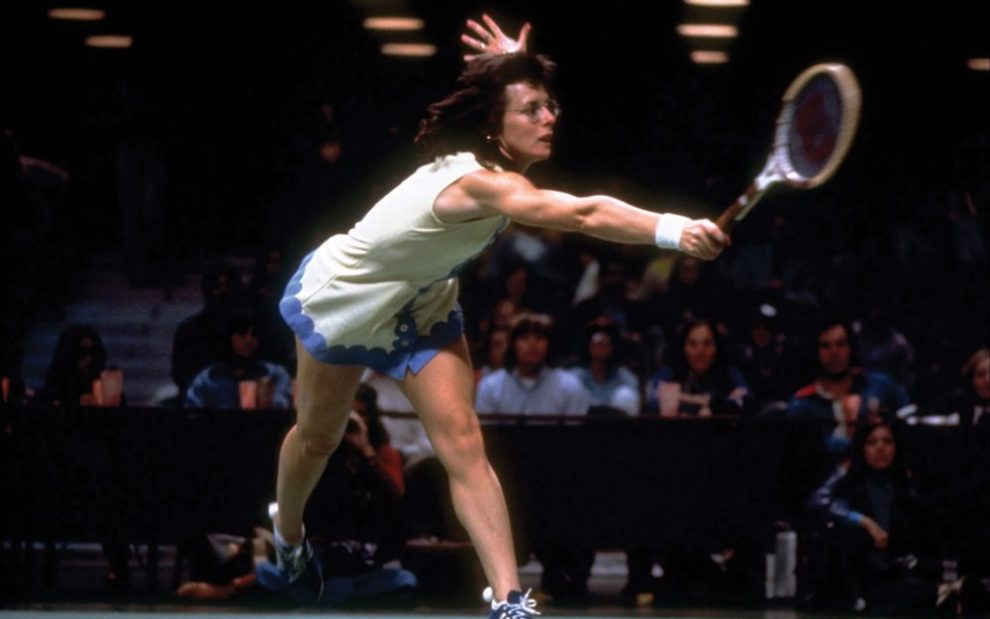
There are few more energizing contemporary figures than Billie Jean King. Wimbledon tennis champion at the age of 17, winner of 39 major championship titles, Presidential Medal of Freedom recipient, founder of the Women’s Tennis Association, influential advocate of women’s sports worldwide, staunch promoter of women’s rights, and subject of feature films such as The Battle of the Sexes. King, at 82, continues to break boundaries.
Life magazine named King one of the “100 most important Americans” of the 20th century. Her legacy of standing up for human dignity and equality continues to inspire entertainment and creative endeavors, such as ESPN’s upcoming 30 for 30 documentary on King’s legacy and a theatrical stage production, Billie Jean.
In addition to all of this—and perhaps more important for us today—is her witness to reconciliation. King, a person of deep religious convictions, has consistently worked for the common good, with a particular eye toward lifting up the voices of those who are treated unjustly due to gender or race. First gathering her fellow women’s tennis players to fight for just payment, then expanding in ever wider circles to include equal treatment for all people, especially in sports, King is atypical in our world today for befriending her adversaries and building a better future for everyone. Her path, however, has been an arduous one.
When King began playing tennis in the 1950s, notwithstanding its international popularity and profitability, tennis was considered an “amateur” sport by the tennis establishment. Tennis players didn’t earn money for their hard work, and players without financial support couldn’t travel to compete. Even after her first Wimbledon title and a national ranking in the top five, King still wasn’t given a college sports scholarship in 1961; lesser ranked men were. Such was the gender and sports landscape in the early 1960s.

In the HBO documentary Billie Jean King: Portrait of a Pioneer, she says of her motivation: “If God gave me this gift, I was going to do everything in my power to make this world a better place.” Instead of focusing solely on tennis success, King prioritized fighting for tennis to gain professional status for the benefit of all athletes. Consider that women at that time could get fired due to becoming pregnant, as King observes in her autobiography All In (Knopf), and you get a glimpse of the uphill battles she faced.
At the age of 13, she felt something deeply wrong when she sat in the stands of a tennis tournament and noticed that not only were all the players wearing white, but only white players were competing. Even today her definition of feminism is “equal rights and equal opportunities for everyone.”
King crossed swords with some of the most powerful establishment tennis figures of her time. These include Jack Kramer, an influential leader in the professional tennis arena who vehemently opposed women’s equal pay, and tennis legend and pioneer Arthur Ashe, who changed the narrative of tennis by being the first Black man to be ranked number one in the world. He fought racism internationally, yet belittled women’s tennis. But her most notable opponent was former tennis champion Bobby Riggs, who degraded women with statements like, “Women belong in the bedroom and the kitchen, in that order.”
Riggs famously challenged King to a match dubbed “The Battle of the Sexes.” The stakes were much higher for King than Riggs, and she felt it. A loss could set back women’s sports and embolden the negative sexist attitudes of the time. As she recounts in her autobiography, her victory not only lifted the stature of women’s sports, but also inspired women to stand up to the chauvinism and inequalities they faced in the workplace and elsewhere. With an estimated 50 million viewers, she immediately became an international figure, lionizing equality.

All this is sufficient reason to celebrate King’s life. Yet King also models a heroic capacity to engage meaningfully with her opponents and persuade them to embrace a more inclusive vision. If King had refused to engage Riggs after such a match, this would have been understandable. But not only did King eventually befriend Riggs; the two of them played a 20th-anniversary “rematch” in 1993 to raise money for AIDS education and treatment.
In her autobiography, King touchingly recounts how at the end of his life, Riggs came to see the value of their match. As she said goodbye to him before he died, she said, “I love you Bobby,” and he replied, “I love you.”
This is not the only noteworthy reconciliation in her life. She eventually befriended Kramer and became a friend, coworker, and advocate of Ashe. King became his confidante when the media discovered, against his wishes, that he had contracted AIDS through a blood transfusion, which caused Ashe media scrutiny. These friendships didn’t keep her from expressing disappointment with what had transpired in their pasts, but she didn’t define the relationships by opposition. Instead, she acknowledged her opponents’ strengths and accomplishments, and their ability to grow and change.
Such a message is essential to a Christian worldview. Jesus challenges those people, like the Pharisee in Luke 7:36–50, who fail to see the potential for change in others. This is also why Pope Francis was opposed to people receiving life sentences without the possibility of parole. A better future for all means embracing the hope that change, reconciliation, and growth are possible.
Moreover, a Christian ethos includes the foundational belief that God desires the flourishing of all people. Without reconciliation, there is no true path forward for everyone, which is something one of King’s own heroes, Nelson Mandela, powerfully taught.
While some Catholics might not agree with all of King’s political stances, this should not cloud the lessons she can teach us about human dignity, equality, and reconciliation. Her hope at the age of 13 was for equal opportunity for all in the sport she loved. She so desired the good of all that before every match she said a prayer for both herself and her opponent to play their best.
To pray for the good of others, even when we are on opposite sides, is a lesson the world needs. King’s witness can inspire our culture to focus less on winners and losers, and more on appreciating the gifts of all, especially those who build bridges.
This article also appears in the January 2026 issue of U.S. Catholic (Vol. 91, No. 1, pages 36-37). Click here to subscribe to the magazine.
Image: ESPN Films/Ellen Griesedieck









Add comment