• Digital Edition
  • Newsletters
  • Donate
  • Renew
  • Subscribe
U.S. Catholic
  • About
    • Mission
    • Who We Are
    • Contact U.S. Catholic
    • Write for Us
    • Advertise with Us
    • FAQ
  • Sections
    • Arts & Culture
    • Catholic Voices
    • In the Pews
    • Our Faith
    • Peace & Justice
    • Poetry
    • Religion
    • Saint Calendar
    • Spanish Content
  • Podcasts
  • Magazine
    • Current Issue
    • Issue Archive
    • Digital Edition
    • Advertise
    • Subscribe
    • Renew
  • Giving
subscribe
U.S. Catholic
  • About
    • Mission
    • Who We Are
    • Contact U.S. Catholic
    • Write for Us
    • Advertise with Us
    • FAQ
  • Sections
    • Arts & Culture
    • Catholic Voices
    • In the Pews
    • Our Faith
    • Peace & Justice
    • Poetry
    • Religion
    • Saint Calendar
    • Spanish Content
  • Podcasts
  • Magazine
    • Current Issue
    • Issue Archive
    • Digital Edition
    • Advertise
    • Subscribe
    • Renew
  • Giving
subscribe
U.S. Catholic
subscribe
  • About
    • Mission
    • Who We Are
    • Contact U.S. Catholic
    • Write for Us
    • Advertise with Us
    • FAQ
  • Sections
    • Arts & Culture
    • Catholic Voices
    • In the Pews
    • Our Faith
    • Peace & Justice
    • Poetry
    • Religion
    • Saint Calendar
    • Spanish Content
  • Podcasts
  • Magazine
    • Current Issue
    • Issue Archive
    • Digital Edition
    • Advertise
    • Subscribe
    • Renew
  • Giving

SHARE

FacebookXEmail
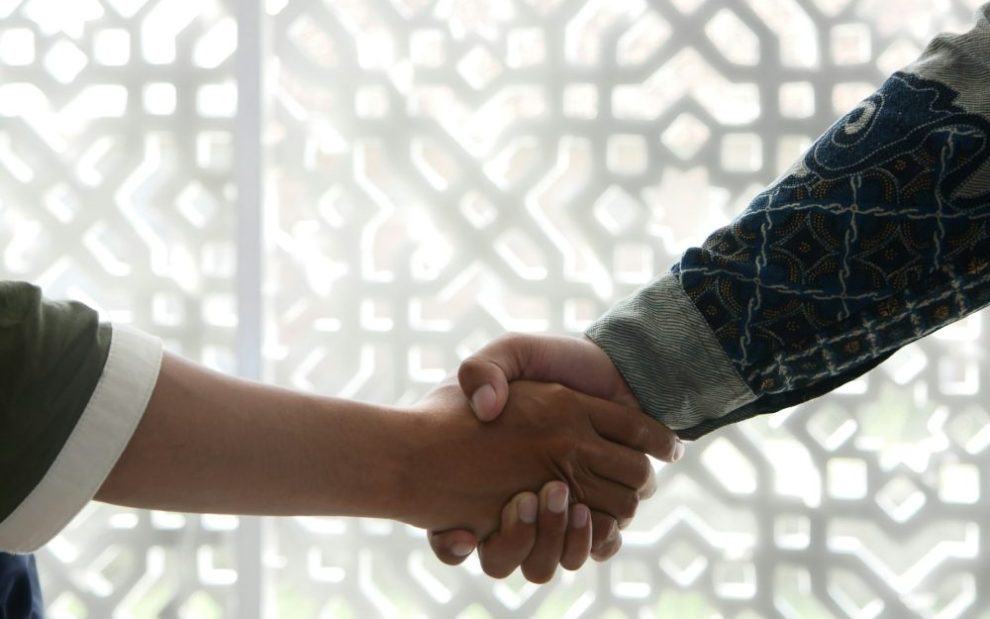
u-s-catholic-two-people-shaking-hands

What is solidarity?

Solidarity demands concrete actions to address any dysfunction in a social system that thrives on inequity.
Our Faith
Kevin P. Considine
Published September 1, 2025

Several years ago, my youngest son decided he wanted to fast during part of Ramadan. He wanted to support his friend, who is Muslim. They both were elementary students in public school. So, he got up before sunrise, had breakfast, fasted all day from food and water, and did not eat until dinnertime. He got up and did it again the next day. And the day after. And has continued to do so during a part of Ramadan every year since.

It was not a “perfect” fast. But I was proud of him, he was proud of himself, and his friend and their parents felt seen and supported. Herein lies the importance. Especially in a society where Islamophobia is a sad reality and Christianity has a kind of privilege in public life, this act of friendship was also an act of solidarity with a community that experiences harm and marginalization, often at the hands of so-called Christians.

This is a small example of what Catholic social teaching calls solidarity. It is an idea and practice meant to create equity and mutuality in human relationships when there is a power imbalance in the larger society. Solidarity requires more than nice social media posts. It demands concrete actions to address any dysfunction in a social system that thrives on inequity.

Catholic social teaching is connected to the sibling terms human dignity, the common good, and the preferential option for the poor. The first term reminds us that every person carries the very image and likeness of God that needs both protection from harm and avenues for full expression. The second term reminds us that all individuals’ well-being is intertwined with the well-being of the larger society of which they are members. The third term reminds us we have a mandate to prioritize the needs of the oppressed, marginalized, and wounded. As Dorothy Day paraphrases St. Paul, when one member is sick, the entire body suffers.

Advertisement
Advertisement
ad promoting Claretian Mission Campaign

Solidarity, then, flows from these terms, and together they paint a portrait: I, the individual person, am already incorporated into the larger living organisms of social groups and nations. Or, as the saying goes, “I am because we are.”

Pope Francis points this out in Fratelli Tutti (On Fraternity and Social Friendship). He writes that solidarity “means thinking and acting in terms of community. It means that the lives of all are prior to the appropriation of goods by a few. It also means combatting the structural causes of poverty [and] inequality.” When solidarity is present, as St. Pope John Paul II says in Sollicitudo Rei Socialis (On Social Concerns), “the exploitation, oppression and annihilation of others are excluded.”

My son may not yet understand the word “solidarity.” Heck, many of us adults don’t understand it. But he is pointing a way for creating a more just and equitable society where “I am because we are” can become the social norm—even an interreligious norm. He is on the road to solidarity.


This article also appears in the September 2025 issue of U.S. Catholic (Vol. 90, No. 9, page 49). Click here to subscribe to the magazine.

Advertisement

Image: Unsplash/Masjid MABA

TagsCatholic social teaching Glad You Asked
ad offering InterVarsity Press' book titled
ad for Catholic Relief Services - Faith in Action. Help safe lives today

About the author

Kevin P. Considine

Kevin P. Considine is the director of the Robert J. Schreiter Institute for Precious Blood Spirituality and adjunct assistant professor in systematic theology at Catholic Theological Union in Chicago.

You may also like

Painting of children playing

Why Catholics should teach kids to understand their bodies

Emma Goff
Kate Ott on the Glad You Asked podcast

How important is sex in a Catholic marriage? | Kate Ott

The Editors
Shakers Near Lebanon illustration by Nathaniel Currier

4 things Catholics can learn from the Shakers

Cassidy Klein
    Share This!
    Share
    FacebookXEmail
ad offering 25% off to celebrate U.S. Catholic redesign

What’s trending

    Mary Parks reflects on the readings for August 2, 2026
    Catholic Voices

    A Sunday reflection for August 2, 2026

    Mary Parks
    Hammer carved with scripture used for Ploughshares action
    Peace & Justice

    Why one priest risked everything for peace

    Tom McGann, C.M.F.
    Matt Damon as Odysseus in The Odyssey
    Arts & Culture

    Nolan’s ‘The Odyssey’ links ancient codes to Christian precepts

    Steven D. Greydanus
    Patti Smith-Rockpalast 1979 in Essen - US Catholic - Images
    Arts & Culture

    Patti Smith: An unlikely religious poet

    Sean Wild

SUBSCRIBE

DONATE

RENEW

SIGN UP FOR FREE NEWSLETTERS

Quick Links

  • Mission Statement
  • Who We Are
  • Reprint Policy
  • Job Opportunities
  • AI Policy
  • Advertise
  • Contact
  • Submissions
FOLLOW US
  • Facebook
  • Twitter
  • Instagram
  • Youtube
Copyright © 2026 US Catholic. All Rights Reserved | Terms of Use | Privacy Policy
a small white version of the USC logo