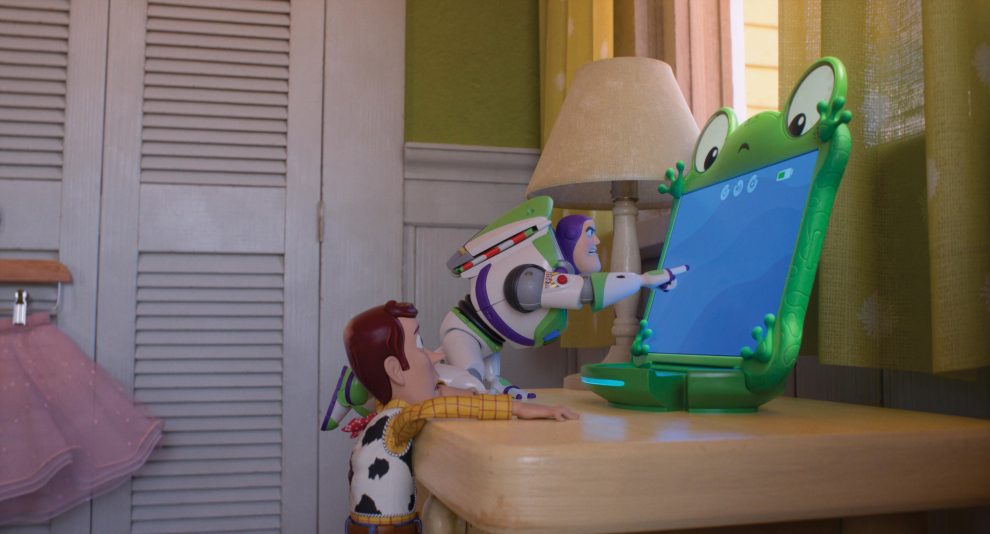
“Do you want to play?” Leave it to the endearing and ever insightful Toy Story series to turn such a childhood question into a fraught and penetrating examination of our times.
Play—it’s just something children naturally do, isn’t it? The United Nation’s webpage for the International Day of Play says play “helps children develop the cognitive, physical, creative, social, and emotional skills they need to thrive in a rapidly changing world.” More than this, play nurtures “social inclusion, conflict prevention, and peacebuilding.” Sadly, while there’s significant consensus that children ought to be free to play, technological, cultural, and political obstacles increasingly hinder them from doing so. The situation has escalated to such a degree that the U.N. created an International Day of Play in 2024 to draw attention to this worldwide crisis.
Enter the toys. You know the ones: Woody, Buzz Lightyear, Jessie, Mr. and Mrs. Potato Head, Bo Peep, Rex, Bullseye, Slinky Dog, Hamm, and friends. Whether foiling a bank robbery, defending the planet from the evil Emperor Zurg, or getting embroiled in a telenovela-style wedding drama, these toys know just what their kids need. In fact, helping children learn to play is not only their raison d’être, but their source of joy and fulfillment.
The beloved Toy Story series has centered upon issues children may struggle with, such as processing the challenging emotions of growing up, dealing with change in a positive way, or the fear of separation and loss, all while highlighting the value of playing together. Toy Story 5 breaks new ground by raising a mirror to society, questioning the manner in which technology (or tech, as the toys call it) affects children and their inclination to play.
All this transpires when Bonnie, a young girl who has trouble making friends, is given a children’s computer/smart device named Lilypad. Not unlike previous Toy Story films where conflict emerges upon the introduction of new characters, new and old toys need to find a way to work together. They all want Bonnie to be happy and have healthy friendships. But Lilypad believes the best thing for Bonnie is to connect with other young girls online. She disregards the advice of the traditional toys, who think friendship should be built on shared values instead of online “likes” and popularity. With Lilypad, Bonnie soon forgets her other toys and discovers a world of social media, video games, and online bullying.
Jessie and her friends find the same early abandonment happening to toys throughout the community. They’re concerned that tech is making children grow up too fast and stealing the value of play from them. What’s different here than in previous Toy Story films is the scope of the challenge. Where in previous films threats to playtime were isolated to certain characters or locations, Toy Story 5 makes clear the trend toward a life consumed by tech is widespread. When the scene pans across the neighborhood at night to show everyone—children and adults alike—in separate rooms on their own devices and not engaged with one another, it’s not lost on adult viewers that this is a real problem. Still, the film doesn’t shame tech use. Bonnie’s parents gave her Lilypad with the best of intentions, hoping it would help their lonely daughter connect with her peers. What went wrong?
Science fiction writer and scientist Isaac Asimov once said, “The saddest aspect of life right now is that science gathers knowledge faster than society gathers wisdom.” That observation has become increasingly relevant. The proper and healthy application of such rapidly advancing technology, especially for children, is a question Toy Story 5 deems timely to ask.
Pope Leo XIV has taken up this theme through his encyclical Magnifica Humanitas (On Safeguarding the Human Person in the Time of Artificial Intelligence), asking society to reflect more deeply on emerging technologies, especially artificial intelligence. Lilypad eventually learns to collaborate with the other toys to help Bonnie. And while this is a healthy message about reconciling differences and working together, the issue of the impact of new technologies upon society is a much larger one that requires the world’s attention.
Following Pope Francis, Pope Leo has promoted the Vatican initiative, “From Crisis to Care: Catholic Action for Children,” which focuses not only on listening to children but also on identifying children’s rights, one of which the committee identifies as the “child’s right to free time and leisure.” Children need to play and require the free time, leisure, and space to do so. While various things may stand in their way, the Toy Story series reminds us again and again of the necessity of play and its positive attributes in childhood development.
Play stirs creativity and nurtures relationships. It requires vulnerability to enter into an unencumbered topsy-turvy imaginative world, where a piggy bank can become a dastardly villain named Evil Doctor Porkchop and a plastic fork and a plastic knife can fall in love and get married. In Toy Story 5, it’s another young girl’s lighthearted demeanor and vulnerability (in real life, not online) that helps ease Bonnie’s fears and creates the possibility for friendship.
Toy Story 5 may take risks in challenging its audience to consider the possible negative impact of technology upon children and society; however, it never loses the series’ identity of foregrounding conflict resolution and growth and highlighting something valuable children have always done with toys: play.
This article also appears in the October 2026 issue of U.S. Catholic (Vol. 91, No. 10, pages 34-35). Click here to subscribe to the magazine.
Image: Pixar