Listen on: Spotify | Apple Podcasts | YouTube
History and literature are full of dramatic stories involving deathbed conversions and the administering of what is often called last rites. So perhaps it’s understandable that many people, when they think of the sacrament of anointing the sick, assume it is something reserved for those who are gravely ill or injured, or on the brink of death. Alternatively, they might imagine that the purpose of the sacrament is to pray for a miraculous healing.
The sacrament of anointing the sick is called a sacrament of healing—but so is the sacrament of reconciliation. So what Is anointing the sick primarily about? Is it intended to cure people? Is it only for those in danger of imminent death?
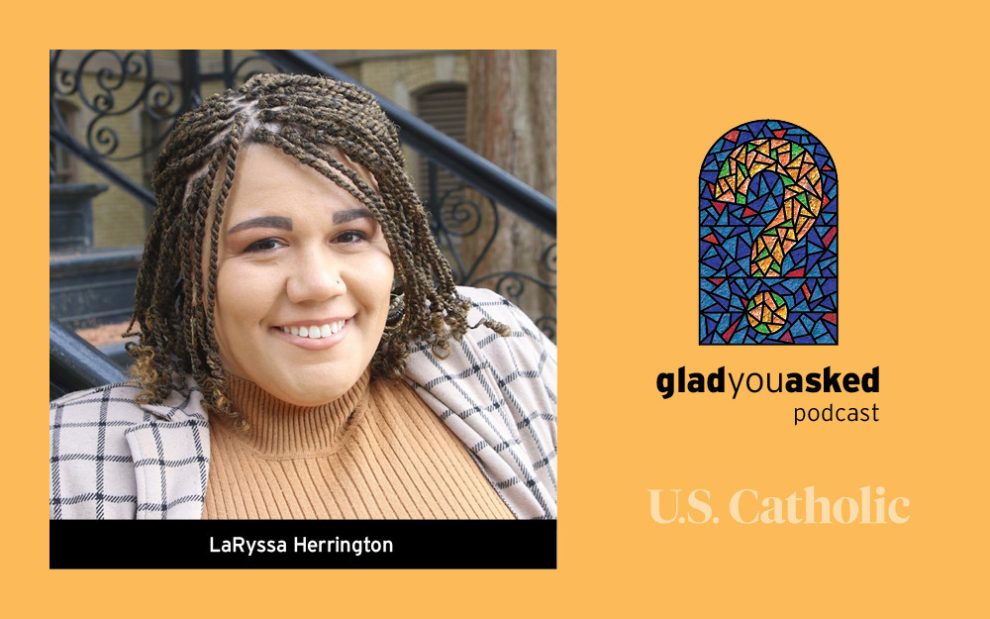
On this episode of Glad You Asked, theologian LaRyssa D. Herrington talks to the hosts about the significance and purpose of this widely-misunderstood sacrament. Herrington recently completed her doctoral studies in Systematic Theology and Liturgical Studies at the University of Notre Dame. She is the author and co-author of several peer-reviewed articles and has written popular articles for the National Catholic Reporter and here at U.S. Catholic.
Learn more about the topic and hear more from Herrington using these links:
- “Why do Catholics anoint the sick?” by Anne McGowan
- “The church must listen to disability justice advocates,” by Allison Connelly-Vetter
- “Disabled Catholics deserve more than parish accessibility,” by Madison Chastain
- “Should we celebrate more sacraments at Mass?” by John Kyler
- “Why did God choose Mary?” by LaRyssa Herrington