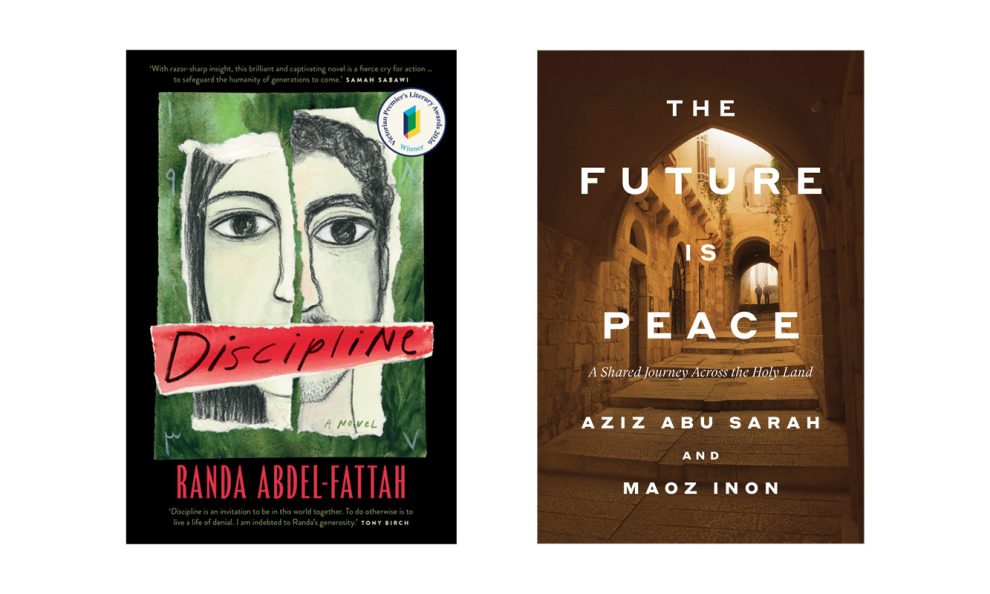
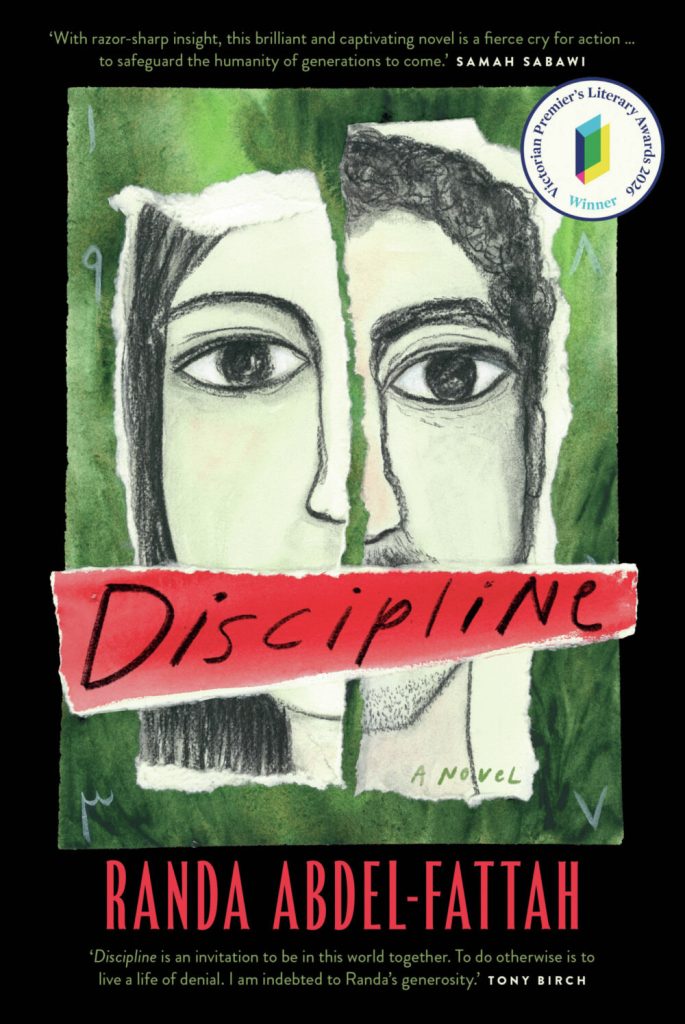
Discipline
By Randa Abdel-Fattah (University of Queensland Press, 2025)
Randa Abdel-Fattah’s Discipline takes place in Sydney, Australia over a few days in 2021—the same time as Israel’s devastating 11-day attack in Gaza that killed at least 261 people.
The novel follows two Palestinian Australians navigating institutions that claim to be on the side of truth—journalism and academia—while aggressively managing whose truth gets told. Hannah is a young journalist trying to fight for her community. Ashraf is a middle-aged academic trying to preserve his career. Both are learning what it means to exist inside a system that requires conformity.
The novel balances its characters’ humanity with the enormity of what’s happening in Gaza. Describing Hannah and her husband breaking their Ramadan fast after getting a text from his mother, Abdel-Fattah writes: “Jamal fried eggs, Hannah prepared a dish of oil and zaatar, and Gaza burnt under Israeli airstrikes.” That cognitive dissonance—the need to live, to eat, to parent while the world burns—runs through the book.
The novel is honest about the uncomfortable arithmetic of solidarity: Movements often involve people who don’t agree on everything. It’s also unsparing in addressing the role capitalism plays in coalition building. At one point, Ashraf muses that every time one person gets a little freer, another becomes more tightly bound.
Many Catholic readers will find these characters’ faith familiar. For all of them, observant Muslims or not, faith is less about doctrine and more about their center of gravity. It shapes marriages, relationships, parenting, friendships, and communities.
“How do I raise a Palestinian child while they’re killing Palestinian children?” Hannah asks her mother. This question demands an answer from all of us. Discipline makes it clear that claiming neutrality is its own moral choice. It’s not a comfortable read. It shouldn’t be.
— Emily Sanna
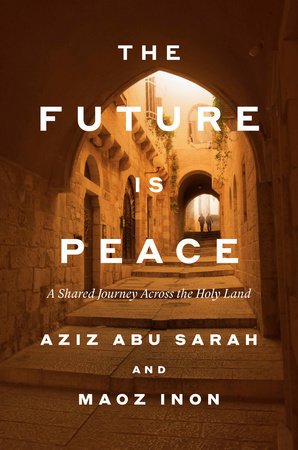
The Future Is Peace
By Aziz Abu Sarah and Maoz Inon (Crown Publishing, 2026)
Given the state of the world as I write this, it might be easy to scoff at a title like The Future Is Peace. Yet in this slender volume, Aziz Abu Sarah and Maoz Inon present a convincing argument for hope, born out of an often-painful witness to shared humanity.
Abu Sarah and Inon, travel entrepreneurs from opposing sides of the Israel-Palestine conflict, have risen to international prominence as peace activists. The Future Is Peace is an account of their eight-day journey together across the Holy Land, from the Negev Desert in the south to the Sea of Galilee in the north.
The authors are united in loss as well as mission. Abu Sarah is a Muslim Palestinian from Bethany, the village where Jesus raised Lazarus from the dead, now part of the Jerusalem suburb Al-Eizariya. His elder brother Tayseer died after being tortured in an Israeli prison. Catholic readers will hear, in his dying brother’s account of being blindfolded and told to guess which interrogator had punched him, an echo of Jesus’ passion.
Inon, a Jewish Israeli, was raised in the agricultural communes of the Negev, within sight of Gaza. On October 7, 2023, Hamas murdered his elderly parents. “Our father’s body was so badly burned, it would take fourteen days to identify his remains among the ashes and rubble of our childhood home. Of our mother, nothing remained,” he writes. Abu Sarah’s cautious outreach, a simple text message of condolence, sparked their friendship and their journey.
The book is foremost a story about the people inhabiting these ancient places. “The stories we heard over the next few days left us speechless,” Inon writes of their listening sessions in the West Bank. An open-hearted reader will find in The Future Is Peace an accessibly written, acutely human introduction to Israel and Palestine.
— Alison Shely
Briefly noted
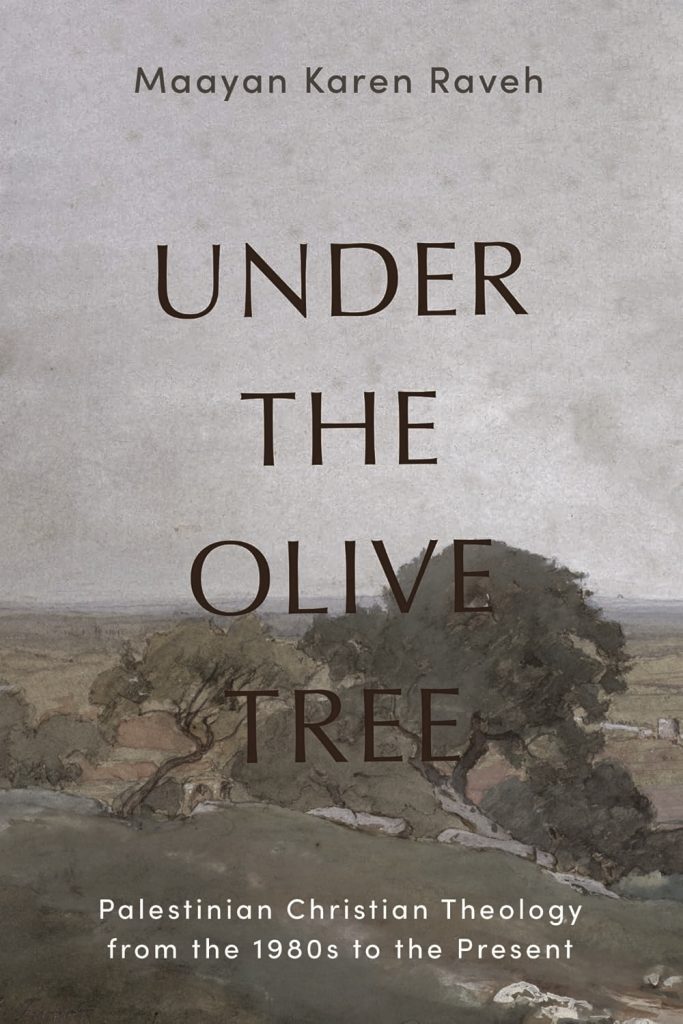
Under the Olive Tree
By Maayan Karen Raveh (Baylor University Press)
Through an exploration of Palestinian Christian history, Raveh engages Indigenous identity and the past shared by Palestinians and Jews, wrestling with questions of heritage that remain central to battling oppression in a nation of turmoil.
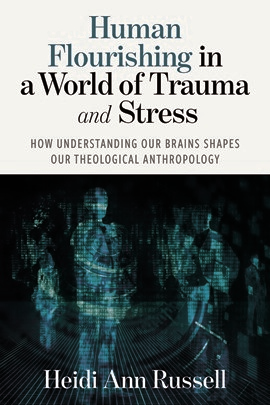
Human Flourishing in a World of Trauma and Stress
By Heidi Ann Russell (Liturgical Press)
Heidi Ann Russell unpacks what it means to serve during a time when our world is riddled with external pressures that affect the psychological well-being of communities.
This article also appears in the May 2026 issue of U.S. Catholic (Vol. 91, No. 5, pages 36-37). Click here to subscribe to the magazine.