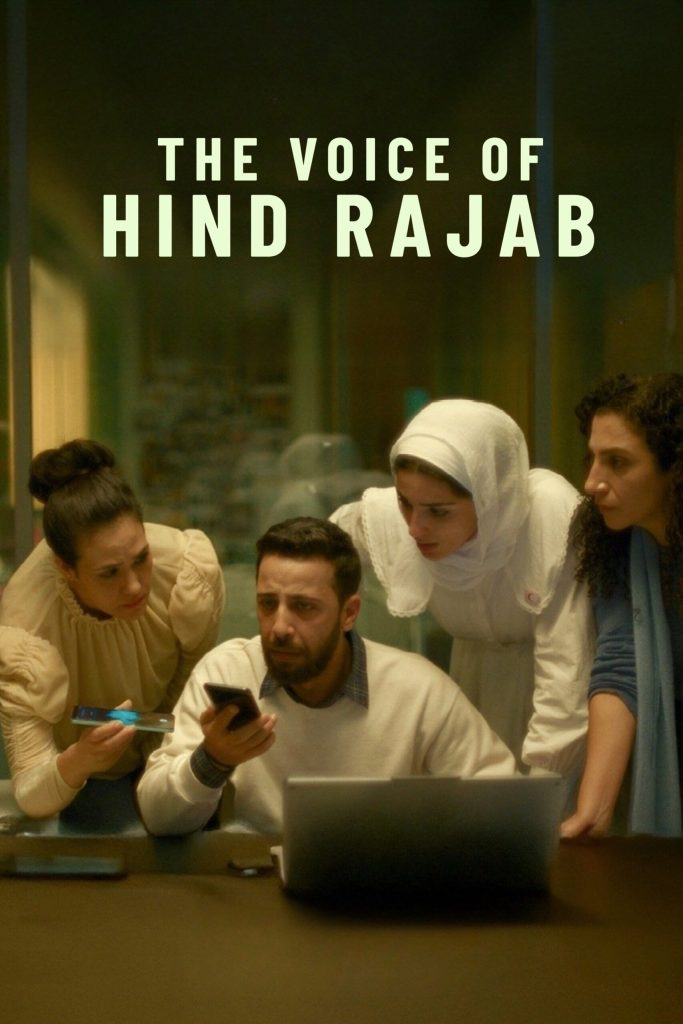
The Voice of Hind Rajab
Directed by Kaouther Ben Hania (Jour2Fête, 2025)
In February, The Nation magazine ran “A Day for Gaza,” devoting their website “exclusively to stories from Gaza and its people” in the absence of broad media attention to the still unfolding catastrophe. Amid our domestic political chaos and the Gaza “ceasefire”—hundreds of Palestinians in fact have been killed since it was declared in October—attention to Palestine has continued to fade.
Stepping into the void are several movies that share Palestinian stories even though it can be hard to find ways to watch them. The 2025 Oscar-winning No Other Land documentary depicting the mass expulsion of Palestinians by Israeli settlers and authorities in the Masafer Yatta area of the West Bank was self-released, never picked up by a U.S. film distributor. When Palestine-related movies do hit theatres, such as The Voice of Hind Rajab, they play largely in major cities. In late December, I drove from Scranton to New York City to watch the Tunisian-French produced film (fortunately, both films are now available on streaming platforms.)
Many will recall Hind’s story and remember her sweet 5-year-old face, often pictured with a wreath of white and light pink flowers framing it. She was with relatives fleeing the Israeli military evacuation of their northern Gaza neighborhood when the car came under fire.
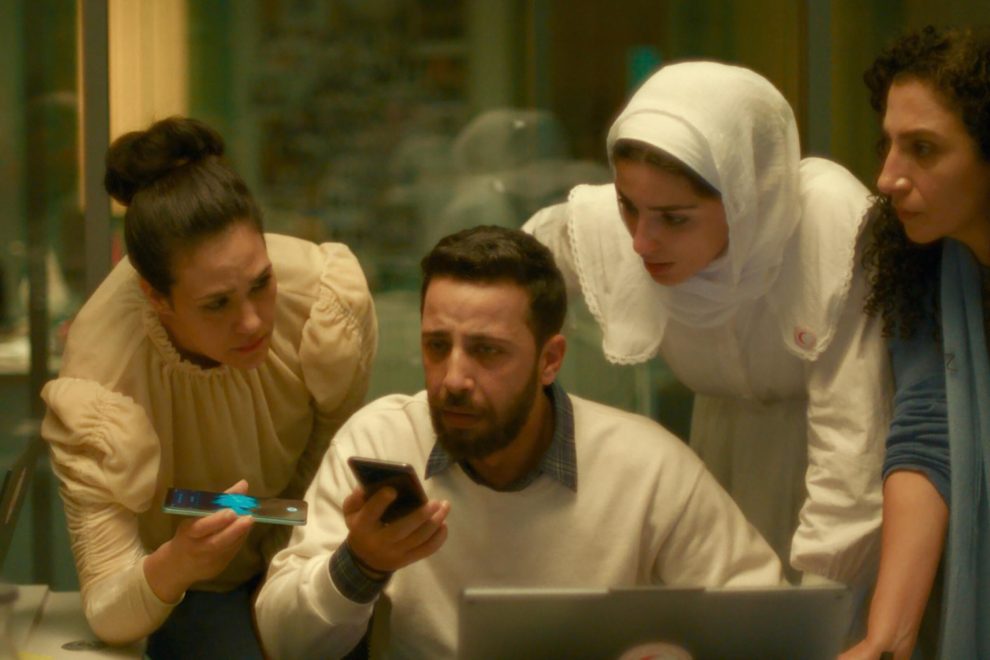
The film centers around the four Red Crescent volunteers who respond to Hind’s emergency call and have the painful job of talking her through the waiting that ended in her death. They fruitlessly try to arrange the “coordination” with the Israeli army to secure a safe rescue route. They fail with all the rage and distress of adults powerless to protect an innocent child.
The movie has the feel of a thriller. Although we know how it tragically ends, we still hope desperately for a different outcome, one where Hind is rescued and the paramedics en route survive, one where President Biden stops the unconditional flow of weapons to Israel, one where the Gaza genocide didn’t proceed.
The film is acted masterfully but also uses real audio from the horrific day’s calls. “I’m so scared… come take me,” Hind says. We live these moments with the emergency dispatchers—accompanying them as they wait for Hind’s voice to be audible again, come up with random topics to take her mind off being in a car surrounded by bloodied corpses, recite verses from the Quran, and hear the bullets and explosions… and finally the silence.
The theatre was thick with its own silence when the credits rolled, shattered only by sniffles and sobs. The act of presence and accompaniment doesn’t always help secure the safety of those being oppressed, but it does keep us safe from apathy. In keeping with one of the universal apostolic preferences of the Society of Jesus, the film enables us to “walk with the excluded.”
Hind was excluded from the right to life. As a Palestinian child, her dignity was violated by unjust systems—Israel’s occupation, apartheid and now genocide—that are making a shared future for Palestinians and Israelis in that land impossible. The Voice of Hind Rajab is an invitation to further walk the path toward justice, equality and peace in Israel-Palestine—to bear witness and to act. As her mother Wesam recently pleaded: may Hind’s voice be “the one that moves the world to finally see that the children of Gaza have the right to live, grow and dream, just like all other children.”
You can stream The Voice of Hind Rajab on Hulu.
This article also appears in the May 2026 issue of U.S. Catholic (Vol. 91, No. 5, page 37). Click here to subscribe to the magazine.
Image: still from The Voice of Hind Rajab (Willa)