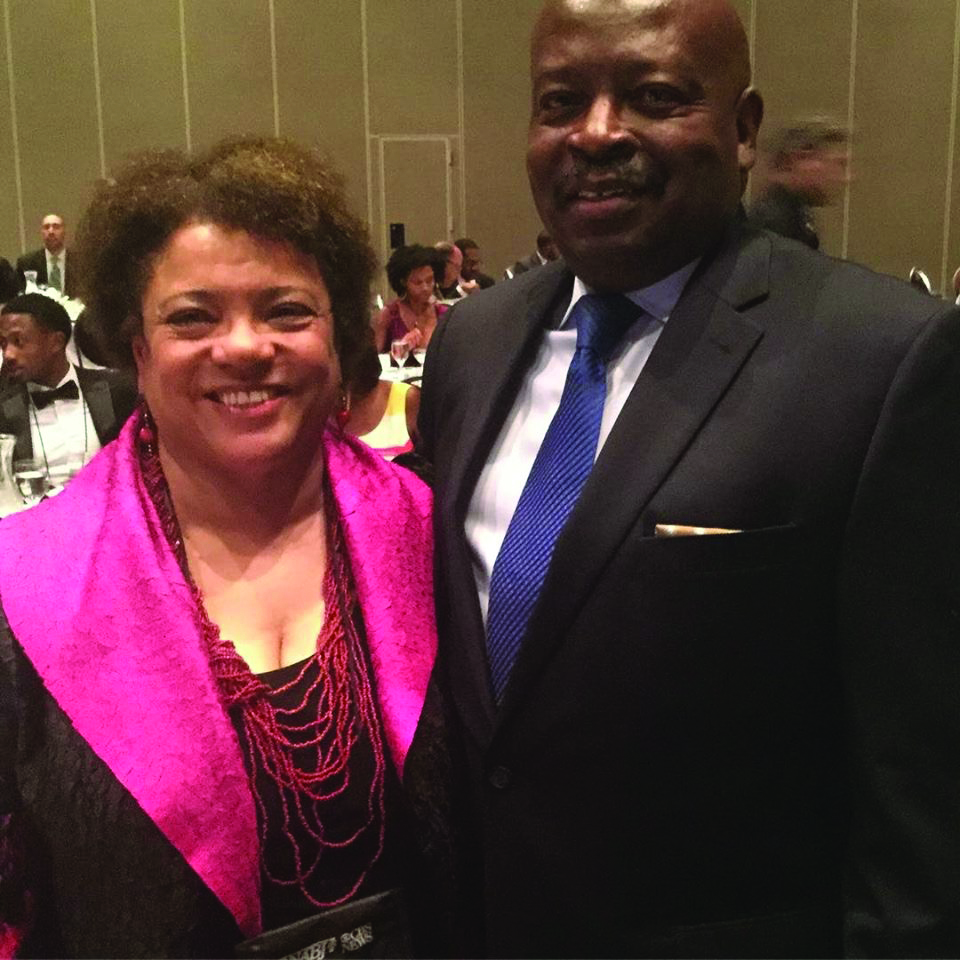
When Angela P. Dodson and her husband, Michael I. Days, were asked by their publisher to mark the 250th anniversary of the Declaration of Independence, they didn’t want to write a conventional history. Instead, the two veteran journalists—Dodson is a former senior editor at the New York Times and Days was the former editor of the Philadelphia Daily News—shaped their book around the movements that have pushed America toward, and sometimes away from, its founding promises. Days died suddenly in October 2025, during the book’s final stages of production.
We’ve Been Here Before: How Rebellion and Activism Have Always Sustained America is a love letter to our country from a pair of seasoned journalists. The book takes seriously both the country’s audacity and its failures, tracing the arc of advocacy for justice from the original patriots to contemporary activists.
The title of the book deliberately highlights the paradoxes in American history and identity. “We’ve been here before” is a caution and a comfort at once; it’s a reminder that today’s crises feel familiar because they are, but also that people have survived and pushed the nation toward equality by showing up, encouraging the country to be the best version of itself.
The title of your book is striking. It manages to be both reassuring and cautionary. Was this intentional?
There’s a certain irony in it, I guess. We’ve been here before, and in that sense it’s a kind of warning. But it’s also hopeful; we overcame those prior challenges. There have always been people willing to take the chance of leading a movement, of protesting the conditions that were going on at the time.
The subtitle also holds that tension: “How rebellion and activism have sustained America.” Sustained has really positive connotations; it implies feeding and nurturing. What do you hope people take away about how to be sustained by struggles for justice?
For one, I hope they’ll take away the desire to protest. At this moment in history, it seems like we need these people again who are willing to rebel, willing to put themselves forward and take risks. People like the original founding fathers, who wrote the Declaration of Independence; their very lives were at stake, and yet they were willing to found a new nation.
The other thing I hope people take away is the actual tactics people used to protest. They had parades, they wrote letters, they stormed the White House. I hope people use these historical examples as ideas to build or improvise on.
Many people who have not led a life of protest or activism—as so many of the people we write about did—may not know how to proceed. I hope the book offers some food for thought on where to start, what you can do. Will it involve a starvation plan, like some in the women’s suffrage movement did? Or what about picketing the White House every day? Will it look like John Brown’s capturing of the armory? There’s all sorts of ways people engaged in activism in the book; some of them even surprised me.
What’s an example of something that surprised you?
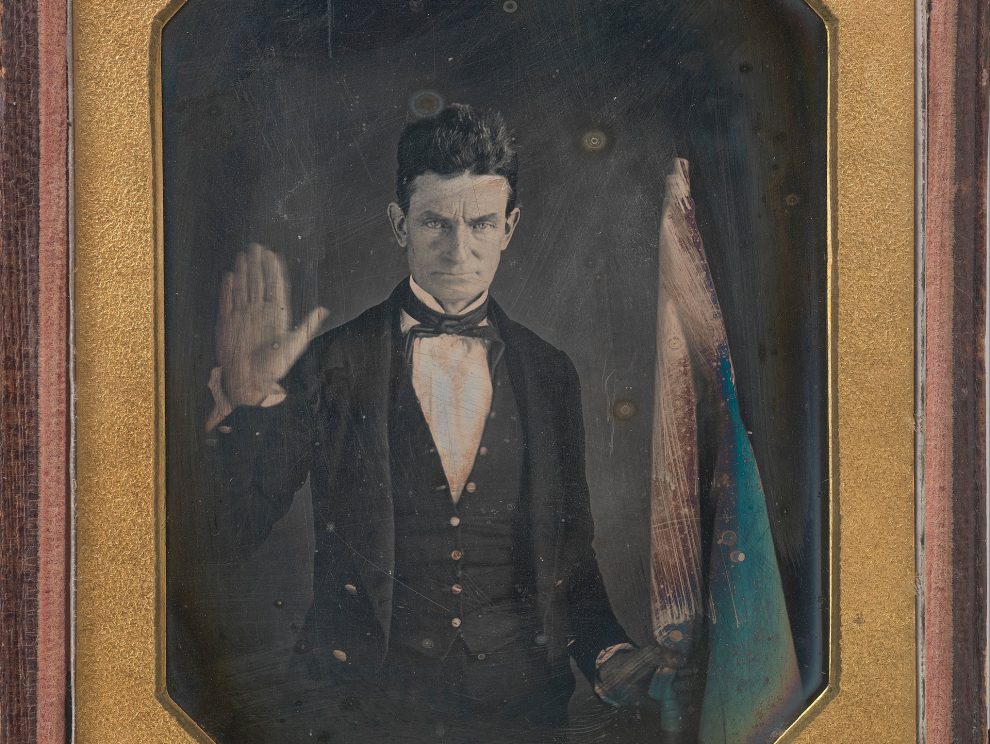
I mentioned John Brown. I’m a West Virginian by birth, so I had certainly heard of him and knew vaguely what he had done, but I didn’t really understand his entire plan. He didn’t originally target Harpers Ferry as the place where he would start his rebellion. He eventually decided on that location because there was a federal arsenal there. He thought that by taking the arsenal, he would then be able to free some of the enslaved people in the area, and then other enslaved people from all over the South would become inspired and join his movement.
In the end, he probably only freed a few dozen people before he was captured. But he had planned to capture the city; he would go up into the hills with the people he had freed, and then with the weapons he had taken they would be able to fire down upon anybody coming at them. And then, he thought, they would miraculously be joined by thousands of people coming from throughout the South. That didn’t happen. But I was surprised by the amount of planning he put into the whole thing.
You write in the introduction, “It’s taken nearly all these 250 years to break through some of the chains of oppression, and at this juncture, the nation seems poised to retrench.” what gives you hope when you see the constant retrenchment?
What gives me hope is things like what’s going on in Minnesota with people rising up to come to the defense of immigrants. They’re out in the streets in zero-degree weather, delivering food to people who are too afraid to come out and protecting school children. It gives me hope that the spirit of helping one another and protesting is still present. And people are willing to use that spirit at great cost to themselves, even resulting in a loss of life.
In each chapter, you name well-known activists, but you also highlight lesser-known figures. What role do ordinary people play in activist movements? Are we all called to be Harriet Tubmans?
No. There are people whose names we don’t know who were willing to go along with Harriet Tubman. Supporters, people who were at least willing to be at the meeting or in the march. We will never know many of these people’s names: the people who attended the marches for women’s suffrage, the people who first went out to vote after getting the right, the first women willing to show up at the first election.
People like that also serve. Without them, you couldn’t do anything. The women who picketed the White House did it for days on end—months. In all kinds of weather, they came from all over the country. They represented different fields, like nursing, teaching, and labor organizing.
I’ve written a lot about the women’s movement before. I have a previous book titled Remember the Ladies: Celebrating Those Who Fought for Freedom at the Ballot Box that came out almost eight years ago. But when I was researching for this book, I found a lot of heroes who I had never heard of. Or maybe I had written about them, but I found new quotes or actions that I didn’t know about the first time.
I think there are a lot of ways to be activists. I’ve been a journalist for most of my life, so I haven’t been able to participate in actual protests or be on the front lines in that way. What I can do is write; that’s my contribution. That is a form of activism in and of itself. People like Frederick Douglass could do both. He was not constrained in that way by modern standards of journalism. He could be at the meeting and he could speak, and then he could go home and write an editorial about it. Most modern-day journalists do not have that privilege.
Can you talk about one of these lesser-known figures you found really inspiring?
One of the people I became fascinated by is Lucy Stone, who is well-known in the women’s suffrage movement, but I don’t think I have ever seen her role emphasized. She worked for six years to be able to pay for tuition to Oberlin College, which was the first coeducational college when it opened in 1833. Her father wouldn’t pay for her education, even though he had educated her brothers. So she saved the money and then took carriages and trains and whatever else to get to Oberlin from her home in upstate Massachusetts.
Then, she graduated with honors. She was asked to write a commencement speech, but she wasn’t allowed to read it, because women weren’t allowed to speak in public. She had to ask a male professor to read it for her. And yet, after college she became one of the most famous orators for abolition in the country.
For years, she resisted marriage, because she didn’t want to be submissive to a man. She eventually agreed to get married, but she never took her husband’s name. She was famous for that. Women who didn’t take their husband’s name were known as “Lucy Stoners.”
The book is framed as a celebration for our nation’s 250th anniversary. What does it look like to celebrate the founding of our country when, as you put it, “from our very beginnings, there has been this tension between disenfranchisement and the struggle for rebellion and activism”?
It is contradictory. We had to think through that a lot during the writing process. The actual founding of our nation is a period of history that has always fascinated me. When I was in graduate school, I took a special one-time lecture course on the early presidents. I read a lot about the individuals during that time, and I sort of became a follower of Thomas Jefferson. Inspired by that class, I think I’ve read almost every book about Jefferson and Sally Hemings.
So, the patriots are people I know very, very well. I knew a lot of the contradictions going in. And as a Black person, I realized, of course, that the founding fathers came out of that meeting where they wrote the Declaration of Independence perfectly content to leave Black people enslaved. There was some discussion against it, but that didn’t last long. And they came out of there without giving women any rights—or even considering them at all.
I once had an editor ask me, “Why didn’t the founding fathers give women rights?” And my answer was: It was as if women were part of the furniture. They didn’t think about women at all. Women were just there to serve them. They didn’t think about women, and they didn’t think about Black people. Not all of the founding fathers were slaveholders, but the slaveholders prevailed in that meeting and in the final wording of the Declaration. And they would prevail for another 80-some years.
So yes, our nation’s history is conflicted, but it’s still worth celebrating. Because without the founding of the nation and the creation of a platform where freedom could be possible, at some point we’d all be in trouble. We might still all be under the English crown and paying taxes without a vote or any control over our lives.
So that’s what we celebrate: that created a process and a foundation where liberties could be worked for and could be gained at some point in our history. It took a long time, and it took women longer than it did emancipated Black people. But it gave us a format, a foundation for the nation that we’ve created.
Given this complicated legacy, what does patriotism look like?
Sometimes patriotism is protest. We need to expect better of this nation; we have to keep pushing it to be what it says it is, or to be what it could be. I think there’s hope in that, that there are still people willing to go out and say, “Oh hell no. This is not happening in my country.”
Do you think activists are, by definition, patriots?
Oh, I think so. If we didn’t love our country, we wouldn’t consider it worth saving. Of course, there are some people who don’t consider it worth saving, and these people have always left the country or exiled themselves in other places. Those of us who stay and work expect better of the country.
That is love. Just like you expect better of your child. You don’t allow them to misbehave without intervening in some way. We’re not going to let our country misbehave without some action on our part.
Your book challenges a lot of the typical myths we tell about U.S. history. What are some of the myths that you think are doing the most damage right now?
Well, for example, I don’t think I was ever taught in school that the original settlers in Jamestown starved to death. At least one of them—that we know of—resorted to cannibalism. They were ill-prepared for the job; most of them were noblemen who had never planted anything in their lives, and they didn’t bring any women initially. Most of them weren’t used to cooking for themselves, taking care of themselves, all that kind of stuff. They also picked the worst plot of land they possibly could: a swampy area where you couldn’t grow anything. All kinds of things went wrong. We never think of them as stupid, but they really were to create a colony in such an ill-prepared fashion.
Plymouth Colony was similar. They were really not prepared to feed themselves once they got there. So, there are all kinds of mythologies stemming from this glossed-over version of history many of us learned at school. And a lot of us don’t bother to research on our own after we leave school.
Faith communities show up throughout your book in different ways. What role do you see faith communities playing in how we remember the nation’s past and carry its legacy into the future?
I think faith communities can help teach history and push the true stories forward. We talk in one of the first chapters how religion motivated people to come here. Certainly the Pilgrims and the Puritans, but also Jews and Catholics fleeing persecution in Europe.
I am Catholic, as was my husband. Each year, during Black History Month, we teach Black history during Mass. This year we’re going to focus on music; traditional spirituals and freedom songs, civil rights anthems. But we’ve done presentations on Rosa Parks and on how drums were taken away from African Americans during slavery, because they were used in revolts to warn people and to marshal the forces and basically get people to come out for the rebellion. So most Southern states banned drums and other musical instruments for years, until after slavery ended.
What do you most want readers to carry forward with them after they read your book?
I want them to be inspired by the stories in the book and to think more about what they could be doing or how they could be doing it differently. I think sometimes that young people don’t know what’s gone on before. They don’t know that this movement tried this or that movement did that. The great teach-ins of the Vietnam War protests were probably some of the most successful protest tactics ever.
And then there’s the women’s movement, where they were willing to picket and then go to jail for their beliefs and even go on hunger strikes. It’s inspiring. Not that I would recommend everybody go on hunger strikes, but sometimes, when it comes down to it, you have to take the most radical next step. Martin Luther King, Jr. was willing to go to jail and stay there. People were willing to ride the freedom buses. A white woman from Detroit, Viola Liuzzo, was killed for giving a civil rights worker a ride. She came all the way south to help and do something. And if all she could do was drive a car, she was willing to do that.
This article also appears in the May 2026 issue of U.S. Catholic (Vol. 91, No. 5, pages 30-33). Click here to subscribe to the magazine.
Image: Augustus Washington, daguerrotype of John Brown