Since his return to office a year ago, President Donald Trump has devoted a lot of energy to reversing initiatives favored by his predecessor, Joe Biden, particularly those related to clean energy that had been jumpstarted or accelerated by Biden’s Inflation Reduction Act.
Using a dubious declaration of a national energy emergency, Trump demolished the progress made by Biden, freezing or canceling even projects already under construction or in the pipeline.
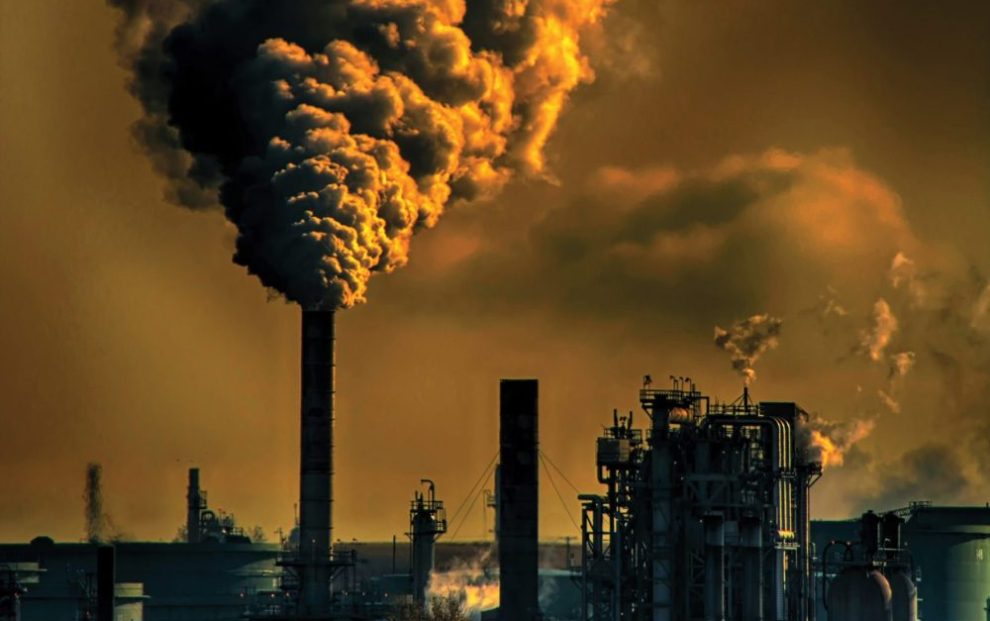
The Trump administration claims it is ending “preferential treatment” for wind and solar development. It’s instead rushing back to a future that offers a preferential option to burning fossil fuels, hoping to reanimate the long moribund coal power sector.
The problem is, practically no one outside of the White House is interested in reviving coal. Trump may succeed only in driving up energy costs for American consumers, who will be deprived of new capacity from what had been a rapidly expanding clean energy sector, without generating any new power from a zombie coal energy sector.
Far larger market forces are propelling sustainable, clean energy. China is setting a pace that the rest of the world must chase. Although the country remains a giant consumer of coal energy, that era is ending because of air-quality concerns. China’s President Xi Jinping set a target for the country’s net carbon emissions to decrease every year after 2030, and for the nation to achieve carbon neutrality by 2060, which means the country will absorb as much carbon as it emits into the atmosphere. Xi is putting state resources behind that commitment.
In 2024, China invested as much as $940 billion in clean energy development, more than a third of total global clean energy spending. That kind of commitment can command the direction of worldwide energy production.
What’s happening in the United States?
The Rhodium Group, an independent public policy and economic analysis group, reviewed the “Big, Beautiful Bill,” the administration’s 2025 budget reconciliation legislation which Trump signed into law on July 4. It estimates the law will increase U.S. average household energy bills by $78 to $192 a month and increase total industrial energy expenditures by $7 billion to $11 billion by 2035. The budget bill will reduce the build-out of clean power generating capacity by almost 60 percent over the next decade, according to Rhodium.
While solar and wind projects are being canceled, the U.S. Department of Energy announced $100 million in federal funding to help “modernize” the nation’s remaining coal plants. They better hurry. Nearly half of those plants are scheduled to close by 2030. Continuing on this retrograde path means the United States will fall further behind on innovation and competitiveness.
Creating the production and delivery infrastructure for an emerging clean energy future is a pillar of the integral economy envisioned by the late Pope Francis in Laudato Si’ (On Care for Our Common Home) and Laudate Deum (On the Climate Crisis). The moral and practical necessity of a global transition to clean energy has been consistent church teaching since the “Green Pope,” Benedict XVI, ordered the construction of a solar array on Vatican rooftops. In 2025, the Vatican began work on a 1,000-acre solar farm north of Rome that will generate enough clean power for Vatican City to become the world’s first carbon-neutral state.
Political and industrial leaders in the United States should bypass the president and follow the Vatican’s lead. While Trump backpaddles on progress, the key to sustainable, clean energy that will propel the future is all around us.
This article also appears in the January 2026 issue of U.S. Catholic (Vol. 91, No. 1, page 42). Click here to subscribe to the magazine.
Image: Unsplash/Chris Leboutillier