Listen on: Spotify | Apple Podcasts | YouTube
For many years, the standard western practice for disposing of human remains has involved burial in some form of cemetery. But now, with interest in non-traditional funerals on the rise, people are looking not only at cremation as an alternative, but at green burials, human composting, and even more unusual methods, like cryogenics. Additionally, people are growing more aware of the fact that different cultures have, throughout history, developed an array of practices for honoring their dead while also dealing with their physical remains.
But which of these diverse methods are acceptable in the Catholic Church? Can Catholics have green burials? Can they donate their bodies to science? And if a loved one is cremated, what are Catholics allowed—or not allowed—to do with their ashes?
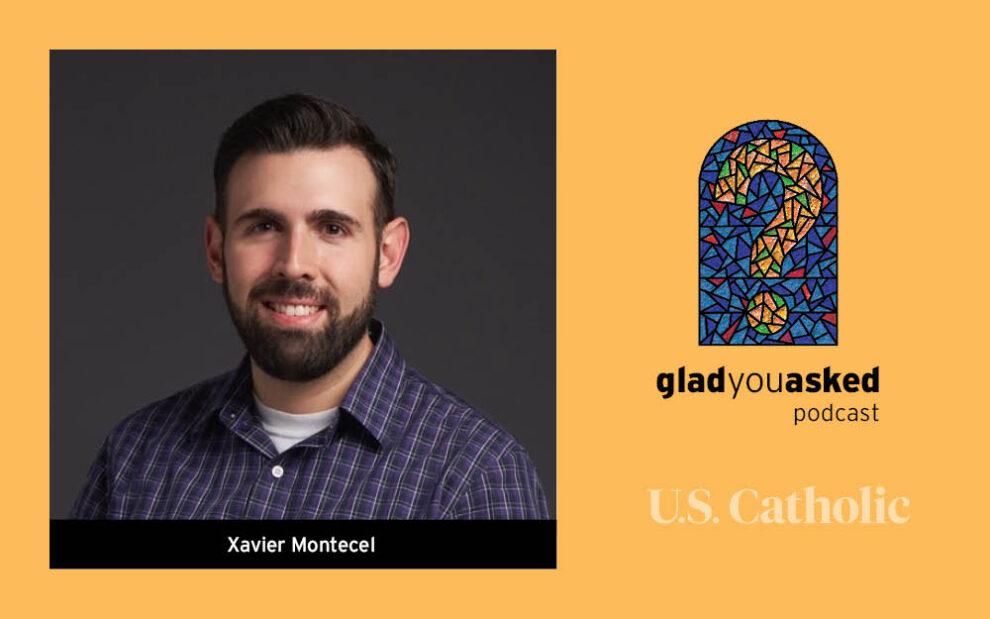
On this episode of Glad You Asked, hosts Emily Sanna and Rebecca Bratten Weiss talk with moral theologian Xavier M. Montecel about the Catholic rules around burials. Montecel is an assistant professor of Catholic theological and social ethics and theology graduate program director at St. Mary’s University in San Antonio. His research focuses on the relationship between liturgy and ethics, applied ethics, LGBTQ+ issues, the environment, migration, and technology. His book Becoming Communion: Eucharist, Virtue, and the Promise of Holiness is forthcoming from Fordham University Press.
You can learn more about this topic and read some of Montecel’s writing in these links:
- “Who can have a Catholic funeral?” by Xavier Montecel
- “More Catholics choose ‘green burials’ hoping for a lighter footprint,” by Valerie Zehl
- “How do you want to be buried? Readers weigh in.” by Herman Stark
- “Grassroots movements seek to change how we talk about death,” by Cassidy Klein
- “Kids deserve honest, empathetic conversations about death,” by Liuan Huska