Since ChatGPT was unleashed upon us in 2022, we’ve heard dire warnings about the ultimate effect of artificial intelligence (AI) on human society and even the human species. In 2024, the International Monetary Fund said that AI would eventually affect 40 percent of the jobs currently done by humans. A fundamental goal of AI development, according to IBM’s website, is artificial general intelligence (AGI)—an AI that can think, make decisions, and act on its own. Some people—including various tech executives and a Nobel prize winner in physics—are concerned AI could become capable of wiping out humanity.
Given those stakes, it may be difficult to muster much concern about the impact AI is having on art and culture. But at its heart, the entire debate over AI is about whether human dignity takes precedence over efficiency and profitability. And for that, art matters.
There’s already evidence that online life is changing not just our attention spans and anxiety levels, but the very wiring of our brains. Unused capacities—such as deep reading of lengthy texts—are eventually lost. The same could happen in the arts. As we increasingly accept machine-generated copies of what’s come before, we will lose our capacity to express ourselves or to imagine a different future.
The outlines of an AI-generated culture are already discernible today in the AI slop that permeates the internet. Entirely AI-generated songs are topping pop and country music charts and being integrated into algorithmic playlists. AI-generated videos are everywhere, from the darkest depths of online pornography to the U.S. president’s Truth Social account.
Most of these fakes can still be identified by a discerning audience. But the technology is improving. In February, AI-generated video clips appeared of Tom Cruise and Brad Pitt having a fist fight. The realism of the clips set off a panic in Hollywood that led one prominent screenwriter to opine, “It’s likely over for us.”
The AI plague has also struck literature. Self-published, AI-generated novels are not unusual and legitimate publishers are buying the rights to successful self-publications. That’s what happened earlier this year, when Hachette UK published Shy Girl, a horror novel by Mia Ballard. Almost immediately, reader complaints surfaced that parts of the book seemed AI-generated. Belatedly, an expert ran an AI check, and Hachette pulled the book from the market. Its U.S. publication was canceled. Anonymous sources told the New York Times that there have been many close calls with AI writing, and the industry doesn’t know what to do about it.
In the visual arts, AI is already displacing human artists on a large scale. Until 2023, the market for digital images was the sole province of human artists. According to researchers at the Stanford University Graduate School of Business, once AI images entered the market on a large website selling digital images, the “total number of images for sale skyrocketed, while the number of human-generated images fell dramatically.” Consumers seemed to prefer the AI-generated images, even with options clearly labeled “human” or “AI.” Human creators who rely on the site to sell their images for income are simply out of luck.
The main resistance to AI-generated cultural production is, at this point, coming in the form of lawsuits over copyright. AI programs are trained on the work of human beings. Some of them consume the entire internet—from scholarly journals to weird subreddits—and analyze it for patterns. Much of this material is covered by copyright, and many AI companies do not pay creators or ask permission to use their work. As a result, some are being sued by journalistic and cultural organizations, from the New York Times to the Authors Guild. However, these lawsuits will take years to be decided. Meanwhile, the AI platforms can continue to use creators’ work without compensation or credit.
The Screen Actors Guild and the Writers Guild of America have had more success defending themselves against AI exploitation. A union actor’s image can’t be used without permission, and if AI-generated footage of an actor is used, the actor must still be paid the real-time, in-person rate. Meanwhile, screenwriters can’t be required to use AI in their writing process, but they are allowed to use AI tools so long as they comply with the production company’s policies. Screenwriters asked to rewrite AI scripts must be compensated as first writers.
An argument can be made that human-generated art, too, is influenced by and built upon what has gone before. But the human artistic process adds something that today’s AI cannot—a new sound, an ironic recontextualization, some eccentric personal stamp that enriches the tradition. I think of the many versions of Appalachian death ballads. You may think of the literary dialogue between Toni Morrison and William Faulkner. Or we could consider how the song “We Shall Overcome” went from a fairly obscure Protestant hymn to an anthem in struggles for human dignity and human rights from Birmingham to Belfast to East Berlin.
Today’s AI just slices and dices and repackages. And the more AI-generated content that exists online, the more the cultural gene pool will be depleted as AI pulls again and again from its own recreations. While currently still a hypothetical development, the promise of AGI is that it will be able to create new material, not just regurgitate its training. Or maybe that’s the threat.
Ever since our prehistoric ancestors painted cave walls, humans have sought to understand the world and our place in it through creative expression. If we lose the human connection to our stories, songs, and pictures, we lose a significant piece of who we are, what makes each of us distinctive, and what binds us to one another.
This article also appears in the August 2026 issue of U.S. Catholic (Vol. 91, No. 8, pages 34-35). Click here to subscribe to the magazine.
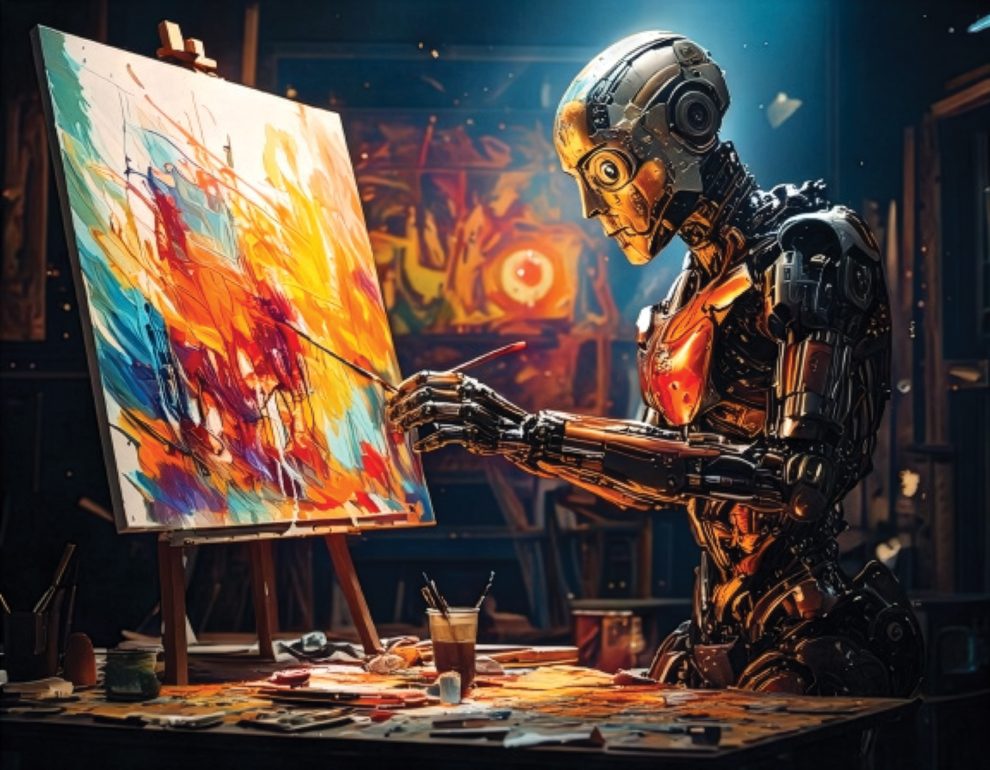
Image: Created with Adobe Firefly. Adobe Firefly models are trained on a dataset of licensed content. Adobe compensates contributors for the use of that content.