

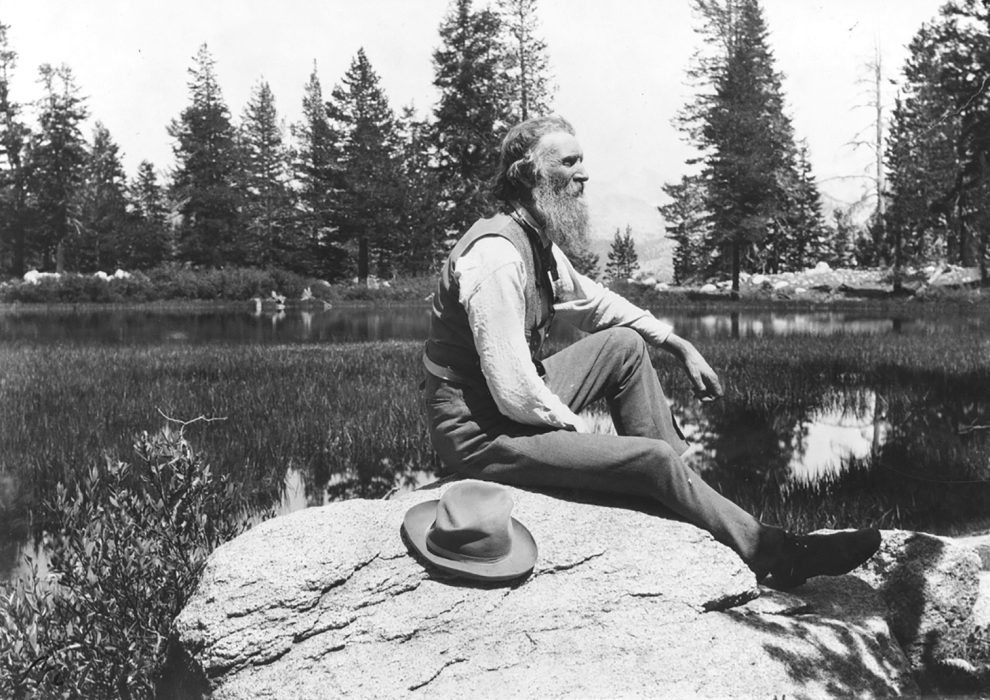
From Alaska’s pale blue glaciers to Florida’s coral reef, from Iowa’s lush wheatfields to California’s giant sequoias, from the vast Great Lakes to the adobe tint of the Sangre de Cristo mountains at twilight and the towering precipices of Jackson Hole, the Creator has given this land beauty in rich and varied forms. As John Muir said, “The forests of America must have been a great delight to God, for they were the best [God] ever planted.”
And from different locales, U.S. writers have responded, praising creation in unique forms. Just as English has different accents in Maine, Georgia, and Minnesota, so the climates and terrains of various regions differ. Each writer brings a singular voice, shaped by specific contours—from the sweep of the Sierra Nevadas to a garden in Indiana.
North American writers have enlarged and enriched a long tradition of creation spirituality, flowing from the psalms and St. Francis through Hildegard of Bingen, Teilhard de Chardin, Wendell Berry, Ilia Delio, and contemporary environmentalists. This approach finds God shining throughout creation: in hills, fields, skies, and lakes.
We need the thread of Christianity that followed Peter, finding God in church, sacraments, and liturgy. But the rules-based morality that worked in the Roman Empire failed in Ireland. There, saints waded into the sea to pray, creation their cleansing font. The Celts saw nature as God’s temple, with God’s fingerprint in wells, animals, leaves, and shells. Modern science has further informed and alerted us to exquisite marvels, like the mycorrhizal network through which trees communicate.
Creation spirituality gives us a framework for our own experiences of nature. Its beauty then leads into contemplation and recognition of how small our concerns can seem beside its vastness. Or, as John Muir writes of years in the wilderness, primarily in Yosemite, “No pain here, no dull empty hours, no fear of past . . . or future. These blessed mountains are so filled with God’s beauty, no petty personal hope or experience has room to be.” When we’re anxious or depressed, it’s often nature that revives and refreshes—or God doing so through stream, meadow, and fragrant cypress.
Annie Dillard marvels at the creator’s extravagant care: “The texture of the world, its filigree and scroll work . . . means a beauty inexhaustible in its complexity.” As evidence, she points to a big elm in a single season making 6 million leaves, tiny capillaries heaving a ton of water a day up a tree trunk, climbing 150 feet an hour. She continues, “the Creator’s exuberance would seem to be unwarranted . . . the creator loves pizzazz.” How could we, observing our own patches of this rich scene, not marvel too at creation and its Maker?
John Muir
As climate change jeopardizes our planet, we must return to reverencing the cathedral of earth, sea, and sky. An early voice in the U.S. chorus of praise is John Muir’s, who writes, “One cannot be lonesome where everything is wild and beautiful and busy and steeped with God . . . every particle of rock or water or air has God by its side leading it.” He adds: “It is a blessed thing to go free in the light of this beautiful world, to see God playing upon everything, as a man would play on an instrument, fingers upon the lightning and torrent, and every wave of sea and sky, and every living thing, making all together sing and shine in sweet accord, the one love-harmony of the universe.”

Rachel Carson
Rachel Carson writes about the sea around us, which covers three-quarters of the globe, in her book The Sea Trilogy. Returning to the Maine shore after a long absence, she feels delight in the first scent of low tide. Attuned to the ethereal chorus of birds at dawn, she leads parents to share their discovery of nature with children: “If I had influence with the good fairy who is supposed to preside over the christening of all children, I should ask that her gift to each child . . . be a sense of wonder so indestructible that it would last throughout life, as an unfailing antidote against the boredom and disenchantments of later years, the sterile preoccupation with things that are artificial, the alienation from the sources of our strength.”

Sadly, we might easily miss a night of stargazing: “If this were a sight that could be seen only once in a century or even once in a human generation, this little headland would be thronged with spectators. But it can be seen many scores of nights in any year, and so the lights burned in the cottages and the inhabitants probably gave not a thought to the beauty overhead; and because they could see it almost any night perhaps they will never see it.”
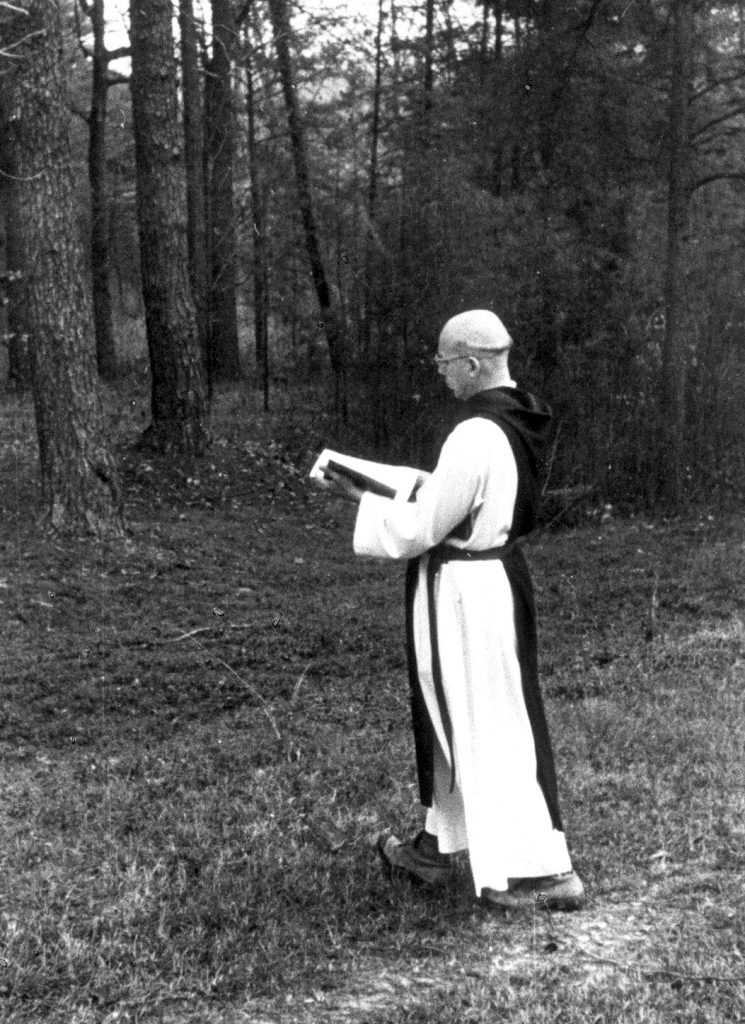
Thomas Merton
Carson could’ve been describing Thomas Merton when she writes, “Those who dwell, as scientists or laymen, among the beauties and mysteries of the earth are never alone or weary of life. Whatever the vexations or concerns of their personal lives, their thoughts can find paths that lead to inner contentment and to renewed excitement in living. Those who contemplate the beauty of the earth find reserves of strength that will endure as long as life lasts.”
When the Trees Say Nothing, a compilation of Thomas Merton’s writings on nature, starts with the concrete then moves to the spiritual insight. For instance, “Crows swear pleasantly in the distance, and in the depths of my soul sits God.” Despite years as a Trappist, Merton could look beyond customary religious observance: “Watching birds was a food for meditation or a mystical reading. Perhaps better. ”
Merton sets the stage in the Creator’s imprint: “Seeing the multitude of stars above the bare branches of the wood, I was suddenly hit, as it were, with the whole package of meaning of everything: that the immense mercy of God was upon me, that the Lord in infinite kindness had looked down on me. . . . This flower, this light, this moment, this silence: Dominus est [God is here], eternity.” Observing deer, their “deerness” sacred and marvelous, Merton “saw again how perfect a situation this is, how real, how far beyond my need of comment or justification.”
Ross Gay
Poet and professor at Indiana University, Ross Gay’s community garden is a refuge from racism and a source of delight. His language in the Book of Delights (Algonquin Books) becomes almost liturgical as he describes natural beauty: For instance, a pawpaw grove, its name linked to papa or grandpa. Standing inside it midday, “when the light limns the big leaves like stained glass and suddenly you’re inside something ancient and protective.” A lily was the first flower he planted there, and he prays daily when “it offers up its pinkish speckling by getting on my knees and pushing my face in.” Then the “lily will resurrect you, your lips and nose lit with gold dust, your face and fingers smelling faintly all day of where they’ve been, amen.”

Robin Wall Kimmerer
Where Muir sees the broad sweep, Robin Wall Kimmerer sees the close-up. A scientific professor, researcher, and member of the Potawatomi nation, Kimmerer weaves together her doctorate degree in botany and Indigenous ways of knowing to heal our broken relationship with the natural world. Her deep appreciation for the sacred land and its plants has been sharpened by their being wrested away so painfully. When her people were “removed from Wisconsin to Kansas and Oklahoma,” she wonders poignantly “if they looked back for a last glimpse of the lakes, glimmering like a mirage.” The generosity of pecans and strawberries, the reciprocity of the “three sisters”—corn, beans, and squash—the sophisticated system by which maple trees detect spring and send sap to buds, becoming our maple syrup: All are everyday miracles, described with precision and grace in her book, Braiding Sweetgrass (Milkweed).

Camille Dungy
When poet and professor Camille Dungy starts a “prairie project” in her Fort Collins, Colorado, home, she stands in a long tradition. Because Black people weren’t allowed to buy flowers from white florists, they “grew their own beauty” in private gardens. “They dug in and continued digging,” as she must when she converts a lawn to a pollinator garden. She sets out to change the rigid, homogenous, monochromatic order of most suburban yards, starting with the hard work of removing rocks and plastic landscaping fabric, amending the soil, and salvaging the earthworms.
When someone asks her what hope looks like, she responds, “my garden.” Seven years of work eventually pay off, in snapdragons, larkspurs, birds, bees, and rabbits—a process described in Soil: The Story of a Black Mother’s Garden (Simon & Schuster). Like a theologian with muddy hands, she says: “If I understand God as separate, as above all creation, then what happens elsewhere, to others, may not matter much to me. But let me believe God is in all creation, that birds and beasts and boulders and streams are all part of God’s body. How much better might I treat the lives around me?” That consideration begins with eliminating herbicides; the United States applies a billion pounds of them annually to forests, parks, and lawns.
She savors the pleasure of digging in the dirt with her hands—“how good it feels to welcome growth,” especially knowing that black-eyed peas like those she plants journeyed from West Africa with enslaved people. In “simultaneous legacies of trauma and triumph . . . some ancestor kept okra seeds in her hair through the long trial of the Middle Passage and onto, into American soil.” With unique perspective on “flourishing through desolation,” she continues: “I dig up a lot of awful history when I kneel in my garden. But, my god, a lot of beauty grows out of this soil as well.” A glimpse of God’s abundance—in our mountains, seas, gardens, and stars.
This article also appears in the March 2026 issue of U.S. Catholic (Vol. 91, No. 3, pages 23-25). Click here to subscribe to the magazine.
Header image: Photograph by Helen Lukens Jones, John Muir, 1902, loc.gov







Add comment