

Like most pet owners, I know that my three-year-old Siberian Husky named Rahner (yes, after the German Jesuit theologian Karl Rahner) has a distinctive personality. She is typically playful and loving but can also be stubborn and disobedient. Unlike some dogs, she prefers the company of humans to dogs or cats. She has strong preferences, including which path to take on her walks. And she has idiosyncrasies too numerous to list here, further affirming the individuality of her personality. You would never mistake Rahner for some other dog, no matter how much they might resemble each other.
Not only do I think that Rahner and other nonhuman animals have distinctive personalities, but I also think that there is good reason to assert that they are persons. For centuries, we humans have gone to great lengths to separate ourselves from the rest of creation, including our nonhuman animal neighbors, and insisted we homo sapiens are the only ones who truly matter.
I believe we need a theological and spiritual renewal when it comes to our understanding of ourselves and other animals within God’s community of creation. One way to do that is expand our understanding of who counts as a person.
It might strike some people as absurd to claim that nonhuman animals—like dogs, apes, whales, or dolphins—are persons. To these skeptics, there is a longstanding presupposition that only human beings are persons, and such personhood is determined according to capacities and behaviors distinctive to our species. Such capacities could include rationality, self-awareness, social relationships, tool usage, language, making moral judgements, and practicing rituals, among others. But ethologists and other scientists have consistently shown that many nonhuman animals demonstrate the same or comparable capacities when it comes to virtually every characteristic widely held to be exclusive to humanity and, therefore, none of these properties mark an absolute divide between human and nonhuman animals.

Last year, Christine Webb, a primatologist at New York University, published a book titled, The Arrogant Ape: The Myth of Human Exceptionalism and Why It Matters. Drawing from decades of personal experience in field and lab research, as well as hundreds of studies on animal behavior and comparative psychology, Webb dismantles common scientific justifications for what she calls “human exceptionalism” or the widespread human belief in our unique status as persons in this world.
Webb writes: “There are untold examples of other species showing capacities superior to ours for such complex tasks as memory, spatial learning, causal reasoning, rationality, cognitive flexibility, and others. The more we learn, the more we appreciate that cognitive complexity takes manifold forms in our world, and that other lifeforms exhibit many different kinds of intelligence, some of which humans do not possess.”
Others may believe that only humans are persons because they connect personhood with theological claims about being created in the “image and likeness of God” (Gen 1:27) or having an immortal soul. However, these propositions serve primarily as placeholders for a previously held belief in human exceptionalism. Genesis 1 says human beings are created in God’s image and likeness, but does not say that we are are the only creatures that do. Nor do we have to believe other animals lack immortal souls.
In addition to notable recent scientific advances, legal scholars have made efforts in civil courts to affirm nonhuman animal personhood. One such case, that of Happy, an Asian elephant in the Bronx Zoo, was reported on at length by Lawrence Wright of The New Yorker in 2022.
In the context of Christian theology, recognizing nonhuman animal personhood requires at least three steps.
The essential dignity of all creatures
First, we must recognize the intrinsic dignity and value of nonhuman animals independent of our own self-interest or instrumental use. Pope Francis, in his 2015 encyclical letter Laudato Si’ “On Care for our Common Home,” affirms: “Each organism, as a creature of God, is good and admirable in itself; the same is true of the harmonious ensemble of organisms existing in a defined space and functioning as a system.”
Every creature is lovingly created and sustained by God and, like each of us humans, part of our community of life. Pope Francis notes that we humans are quick to ignore our own dependence on the more-than-human world. “Although we are often not aware of it, we depend on these larger systems for our own existence. We need only recall how ecosystems interact in dispersing carbon dioxide, purifying water, controlling illnesses and epidemics, forming soil, breaking down waste, and in many other ways which we overlook or simply do not know about,” the pope added.
Looking past merely human categories
Second, we need to affirm the distinctive capacities of nonhuman animals, on their own terms and within their own contexts. One important thing Webb notes in The Arrogant Ape is that, for a very long time, we’ve studied nonhuman animals according to exclusively human terms and conditions. We assumed that intelligence, social behavior, language, and tool usage were singularly human attributes. Comparative psychologists, evaluated nonhuman animals on a curve determined by human expectations and standards. Research questions rarely considered the distinctive animal’s native context, environment, and evolutionary worldview, but relied on the simplistic query: how good or bad is this animal at doing this or that human-like thing? As Webb explains, “When we overrate skills that are human-like, we miss the incredible diversity of cognitive adaptations that exist all around us.”
Scholars have continually challenged humans to see our nonhuman animal neighbors differently, to observe how complex and fascinating their inner lives and social behaviors actually are, independent of our hubristic assumptions that they are inherently lacking unless they think, relate, or communicate exactly like us.
Two insightful and accessible books making this point in recent years are renowned primatologist Frans De Waal’s 2016 book Are We Smart Enough to Know How Smart Animals Are?Pulitzer-Prize-winning journalist Ed Yong’s 2023 book An Immense World: How Animal Senses Reveal the Hidden Realms Around Us.
How animals relate to their world
Third, we need to respect the truth that nonhuman animals are meaning-making agents who move through the world with their own “joys and hopes, griefs and anxieties” (Gaudium et Spes, no. 1). They think and love and communicate and make moral judgements. They are subjects in the world that form relationships with their kind and, often with their human friends, too.
Most nonhuman animals are much better at navigating the world than we are, yet we are quick to belittle or diminish them while puffing ourselves up. Webb situates this tendency within other beliefs we humans tend to hold as absolute. “Unchecked beliefs in human exceptionalism take many forms but fundamentally assume that humans possess uniquely complex ways of being, thinking, and feeling—rendering other species’ capacities, and thus their lives, inferior.”
Within the Christian tradition, we also often overlook the spiritual capacities of nonhuman animals. Do we really believe that God does not know, love, and relate to other animals? The Old Testament reminds us that not only are nonhuman animals created ha-adamah (from the “dust of the earth”) just as humans are (see Gen 2:7 and 2:19), but also that God enters into conventual relationships with nonhuman animals as we saw after the Great Flood (Gen 9:1-17).
In the gospels, Jesus often speaks of nonhuman animals. St. Paul in Romans 8:22 proclaims boldly that not just humans but all of creation longs for the day of salvation. And Revelation 21:1 speaks of not only of a new human community, but a “new heaven and a new earth.”
Nonhuman animal personhood is not about treating all creatures exactly alike, as if an earthworm and a human child were equally valuable or deserving of respect. Instead, recognizing the personhood of other animals is an affirmation that they are subjects, not mere objects to be treated as chattel or commodities. This shift in thinking would have significant implications for how we treat nonhuman animals, especially on farms and in labor. Such recognition poses a moral challenge to the human community to expand our sense of what and who matters in this world.
Considering my dog Rahner’s personhood is not only about recognizing her distinctive traits and behaviors. It entails acknowledging her intrinsic dignity as a fellow creature loved into existence by God. It means affirming her capacities on canine terms, celebrating her exceptional skills of recognition and communication even if they are different from mine. And it means seeing her not as an object but a subject with agency who has her own desires, fears, hopes, and dreams.
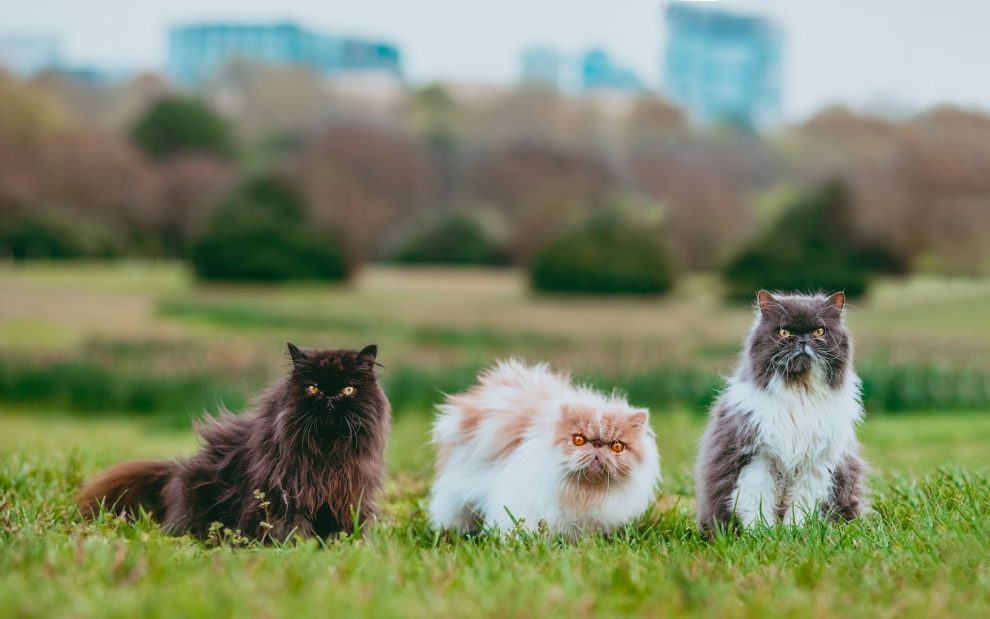
Image: Unsplash/Reba Spike







Add comment