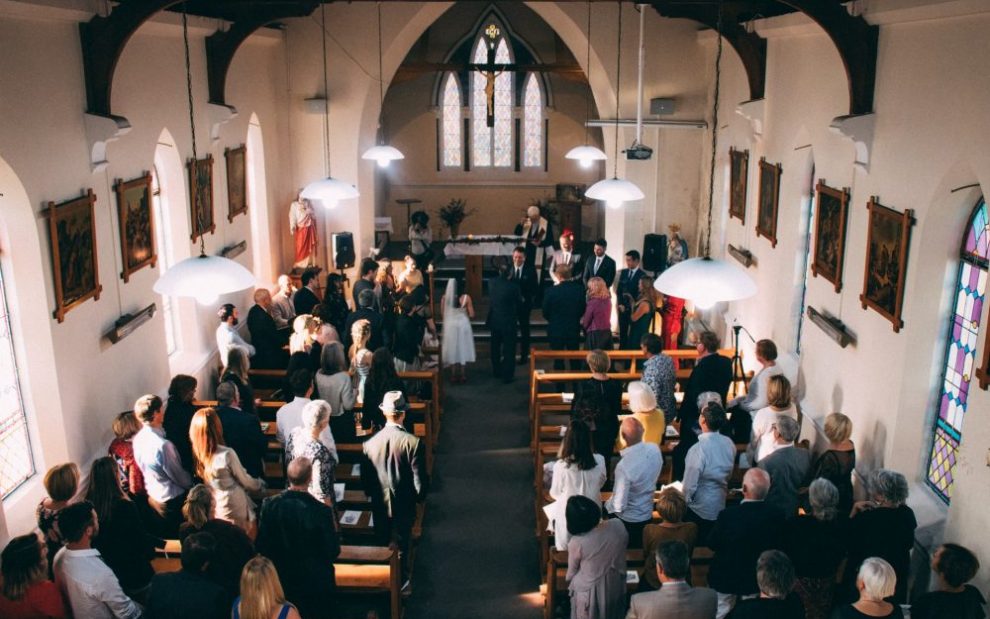
My husband and I married on a Saturday at the end of April, early in the Easter season and on the weekend dedicated to Divine Mercy. Connecticut was in full springtime bloom and the church was resplendent with Easter lilies. It was the perfect vibe for us: the peak of the church’s joy in the season celebrating Christ’s resurrection, new life exploding all around us. I come from a line of slightly superstitious Italian women, so to wed on April 27 when John had proposed on January 27 the year prior cemented the day as significant.
Saturdays are the most popular day of the week to be married, but they’re not the only options. In wedding decision-making, it is common for spouses-to-be to hold in tension a number of availabilities: the parish where the ceremony will take place, the reception venue, venues for photos, secular holiday weekends, inclement weather accommodations, and, of course, personal and family schedules.
Saturdays are the most popular day of the week to be married, but they’re not the only options.
The date a couple wants for their wedding might not be available. Many parishes have specific times when weddings can occur, so as not to conflict with regularly scheduled Masses. It is also important to consider other matters on the parish calendar such as first communion, confirmation, and parish events. These dates are usually chosen a year in advance, and engaged couples can work around them easily so that weddings will not be rushed or in conflict.
While weddings may technically be scheduled on any day of the week, some liturgical factors might influence a couple’s decision. A wedding scheduled on a Saturday evening (in the vigil Mass time frame) or on a Sunday must use the readings from the lectionary for that Sunday. That is to say, couples will not be able to choose their own wedding readings. (Sometimes that means a reading doesn’t quite fit a celebratory nuptial atmosphere!) If choosing specific readings from scripture is an important factor of the nuptial Mass for a couple, they should not choose to be married on a Sunday.
There are some off-limits dates for weddings in the church, such as Good Friday and Holy Saturday. (Couples might not want to share their wedding date with Easter anyway.) Weddings can be scheduled during some liturgically significant times, but couples might want to avoid certain times for the ideal atmosphere and wedding experience.
For example, during Lent the church observes a period of penance. Some parishes use practices such as shrouding statues and decorating the church in black or purple to mark the liturgical season. For those planning a wedding, which should be a joyful celebration of the love between two people, toning down said celebration to fit the liturgical season, which takes precedence above all things, might not be the right atmosphere.
Choosing a wedding date can be significant for so many reasons. It asks intentionality of all involved, no matter the day of the week.
This article also appears in the July 2021 issue of U.S. Catholic (Vol. 86, No. 7, page 49). Click here to subscribe to the magazine.
Image: Unsplash/David Vilches