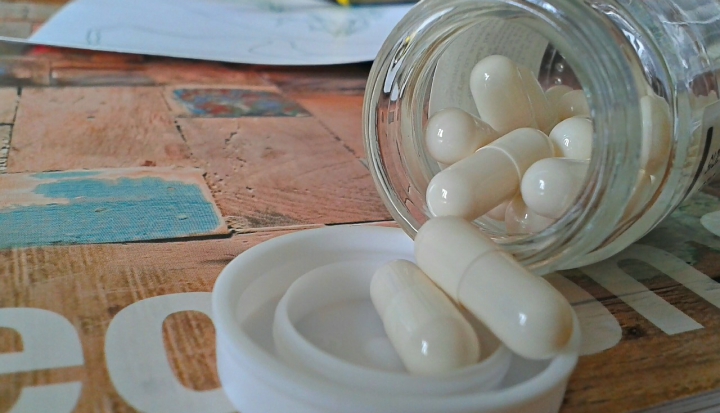
It begins with light sensitivity and a sudden inability to focus. Is there a storm coming? Did I get enough sleep the night before? These questions are futile, as often there is no warning or aura; the pain simply grows until all I can do is lie quietly in a dark room. Such is the unpredictability of life with migraines. While my experience with migraines includes a headache, the complex coalescence of pain and sensitivities defies clear explanation. It is both invisible and debilitating. Without medication, it can last for days.
Managing chronic conditions requires consistent access to health care and medication. With insurance, I have a $25 co-pay for a nine-pill prescription of Treximet; without coverage, it would cost $679, or almost $75 a pill.
This past summer controversy erupted when the pharmaceutical company Mylan dramatically raised the price of EpiPens. An EpiPen is lifesaving for those with severe allergic reactions. Public outrage was swift, and yet there is little to be done in the current health care system. Pharmaceutical companies enjoy significant patent protections and control of prices. In 2015 the price for Daraprim, a drug used to treat a parasitic infection in pregnant women and those with compromised immune systems due to cancer or HIV/Aids went from $13.50 to $750 per pill overnight.
High drug prices are also a global problem. Over the last 20 years, public pressure over the cost of and access to HIV/AIDS medications led to the development of the U.S. President’s Emergency Plan for AIDS Relief (PEPFAR), the Global Fund, and significant efforts by the Gates Foundation and others to provide medication access to sub-Saharan Africa. According to the Joint United Nations Programme on HIV and AIDS (UNAIDS), these programs have been successful, and more than six million patients now receive antiretroviral therapy (ART), the treatment recommended by the World Health Organization (WHO).
Despite challenges from India, Brazil, and South Africa the international patent system and industry-controlled pricing remains. Doctors Without Borders reported in the fall of 2015 that it is now 68 times more expensive to fully vaccinate a child in the developing world than 10 years ago. The underlying problems of health care costs and access to long-term treatment for chronic conditions in the developing world persist.
A 500-percent increase in the price of an EpiPen feels wrong to many Americans because of the lifesaving nature of the medication for millions of people, especially children. We may disagree about how we should structure, deliver, and finance health care; but the violation of human dignity when you can’t afford an EpiPen for your child is a point of convergence.
For Catholic social teaching this is a matter of human dignity, human rights, and the common good. Speaking to Medici con L’Africa (Doctors with Africa) in May, Pope Francis reiterated that health care “is not a consumer good, but rather a universal right, and therefore access to health care services cannot be a privilege.”
Medication is not just another consumer good. In Evangelii Gaudium (The Joy of the Gospel), Pope Francis implores us to reject the economy of exclusion and idolatry of money in which “we calmly accept its dominion over ourselves and our societies.” The top 10 pharmaceutical companies have profit margins between 10 and 42 percent, with some spending more money on marketing than research and development.
Pope Francis is not calling on the pharmaceutical industry to reject profits but on all of us to change the system. Catholic social teaching rejects the goal of maximizing profits at the expense of the common good. The growing public outrage over drug price increases is a place for hope, a moment for serious conversation about the nature of health care, and a time for us to work together for a more human system.
This article also appears in the January 2017 issue of U.S. Catholic (Vol. 82, No. 1, page 8).