It’s a cold, gloomy day in early spring. I’m sitting in the parlor by the guest rooms of the Benedictine college where I teach. I’m here to ask the monk in charge of guest lodging if I can spend a few nights in April staying on campus. Known for their charism of hospitality, the monks at my college have often let me stay overnight when I have an evening event. But this time, my heart is beating rapidly as I wait for Father Joe—the monk with whom, up to this point, I’ve only corresponded with via email—to appear.
When he does show up—a small, kind-faced old man in jeans and sneakers rather than the customary monk’s habit—I swallow the lump in my throat and explain the situation. I am hoping to stay on campus because throughout the entire month of April—coincidentally the busiest month of the academic year—I will be visiting a nearby facility for radiation treatments. “I have breast cancer,” I tell him. “Stage 2.”
Even after the horror of the diagnosis in October 2025, the lumpectomy surgery five days after Christmas, and the anxious back-and-forth around whether I’d need chemotherapy (I narrowly dodged it twice), it’s hard to name my illness out loud. When I tell people about my experience with cancer, I feel like I am talking about an old classmate, or a distant cousin, or a friend of a friend—not myself. Because up until recently, I somehow believed that cancer was something that happened to otherpeople. Not me.
But now, facing this gentle old monk, I also face the reality that yes, cancer has indeed happened to me.
After informing me that he is also a cancer survivor, Father Joe offers to pray for me. As he places his hands on my head, I am struck that in his prayer he does not ask God for a cure. Instead, he prays that I might know the fullness and depth of God’s love, and that my sins might be forgiven.
This prayer immediately reminds me of the passage in Matthew’s Gospel where Jesus, coming into his own hometown, heals a man suffering paralysis. The first thing Jesus says to him is, “Take heart, child; your sins are forgiven” (Matthew 9:2). Indignant, some teachers of the law in the crowd accuse him of blasphemy. Jesus asks them which is easier to say: “Your sins are forgiven” or “Stand up and walk”? (Matthew 9:5). We know the outcome of the story: The man gets up and walks, and the people take this miracle as evidence of Jesus’ authority to forgive sins.
But there is another layer to this passage, and indeed to all of Jesus’ healing miracles. Throughout history people with disabilities and chronic illnesses have faced stigma. Eager to imagine we are exempt from the misfortune that can befall anyone, we humans tend to blame others for the bad things that happen to them. Religious historian Kate Bowler, who was diagnosed with Stage 4 cancer in her mid-30s soon after giving birth to her son, has some choice words for those who believe that people deserve what happens to them, whether good or bad. A researcher of the prosperity gospel—the widespread belief among U.S. Christians that God rewards strong faith with health, wealth, and material comfort—she found it hard to reckon with the reality that all humans must face fragility and suffering. “My life is made of paper walls, and so is everyone else’s,” she states in her much-beloved TED talk.
While the prosperity gospel is a recent phenomenon, the tendency to stigmatize people with illness and disability is not. In all of Jesus’ healing miracles, the physical curation is incidental to the act of removing stigma. In a recent article for this magazine, Madison Chastain writes, “Jesus is primarily concerned with social outcasts who are separated from their communities because of their identities. By giving attention to a disabled person—and removing the obstacle to social belonging—Jesus returns each marginalized person back to their community.”
When I was diagnosed in October 2025, my first reaction was to keep a tight lid on the news. I didn’t want to have to see the shock, pity, and fear in friends’ faces. I didn’t want to be treated differently at work or passed over for opportunities. Most importantly, I didn’t want to deal with the clichés that so many people lean on when talking about cancer, particularly breast cancer.
I had no use for pink ribbons, whose origin lies in a corporate advertising gimmick. I didn’t want to be told to think positively. I was infuriated by the systemic conditions that have given rise to increased cancer among younger people. I was frustrated that while research into cancer treatment has advanced wonderfully, there is comparatively little investigation into prevention.
Along those lines, I was outraged to learn how financially costly it is to deal with cancer in a country with no universal healthcare. Even with the insurance my full-time job provides, I’ve still had to pay thousands of dollars out of pocket for treatment. The privileges of intergenerational wealth and family support have kept me from falling into deep medical debt. Most cancer patients aren’t so lucky. In the context of our profit-driven, grossly inequitable health care system, talk of “breast cancer awareness” rings hollow when only those with money get a real chance to save their lives.
Above all else, my new physical vulnerability gave me a strong sense of solidarity with other vulnerable people. Suddenly aware of my mortality, I felt an unexpected kinship with civilians victimized by the many ongoing global wars. Confronted with uncertainty about my future, I felt connected to the undocumented immigrants in the United States—some of my personal friends among them—facing the brutality of detention and deportation.
Seeking to make sense of my cancer in the context of our current political climate, I began reading the diaries of poet and activist Audre Lorde, who saw a clear link between her struggle with metastatic breast cancer and her lifelong commitment to justice. “Of course cancer is political,” she states in her 1988 essay, “A Burst of Light.” “The aggressor must conquer, but the resisters need only survive. Our battle is to define survival in ways that are acceptable and nourishing to us, meaning with substance and style. Substance. Our work. Style. True to ourselves.”
Perhaps my anger at the environmental and political conditions in which my diagnosis arose was what gave me such little patience for the clichés that exist around this frightening and often stigmatized illness. I still cringe at the phrase “cancer journey.” I’ve yet to meet a cancer patient who sees this illness as a pilgrimage or vacation. Cancer is an ordeal that affects all areas of life, from relationships to finances to faith. Cloaking it in euphemism does not lessen its impact.
While the phrase “battle against cancer” is helpful to some—including Audre Lorde—it’s another cliché that leaves me uneasy. I have strongly resisted the use of military metaphors to describe my treatments. There are wars raging in Ukraine, Gaza, Iran, Sudan, Yemen, and many other parts of the world. I refuse to let my body, which so desperately needs healing and care, become a metaphorical battlefield. And when I do ultimately reach the end of my life, as all of us must, I pray no one says that I have “lost a battle.”
Still another cliché I’ve often heard is that cancer is a “full-time job.” But when I was diagnosed, I already had a full-time job, and I was determined that cancer would not become another. I taught a full course load, wrote and published articles for this magazine and others, presented at three international conferences, and got tenure at my college. I say this not to boast, but to make the point that for me, leaning into work has been essential for my treatment and recovery. It is absolutely crucial to remain connected to the community that over the past four years has become my home.
I now realize that after the diagnosis, my biggest fear—other than death—was social isolation. I feared losing my hair in part due to simple vanity, but also due to the fear that a bald or wigged head would raise eyebrows and questions. I didn’t want to face judgmental glances if someone who knew about my cancer saw me drinking wine or eating ice cream. As a single person in middle age, I didn’t want cancer to destroy my hopes of future romance and intimate relationship. In simplest terms, I wanted to keep being me.
When Father Joe prayed not for a physical cure but for the forgiveness of my sins, he touched upon the deep truth of Jesus’ healing miracles. Ultimately, everyone must face illness and death. But must we do so in isolation brought on by fear, or can we lean on our communities for support? By forgiving sins, Jesus and his disciples break through the moral and emotional barriers that separate us from the love of God and one another. Forgiveness reincorporates us into our circles of care and belonging.
For those who want to support cancer patients—especially within a community of faith—the most important thing is to respect our own unique response to the ordeal, to contain your own emotional reactions (do not expect the person with cancer to console or support you), and to refrain from making assumptions about cancer. Instead, seek to learn, support, and accompany.
Over the past year, I have learned that everyone’s response to a cancer diagnosis is unique. Some people will be stoic, others emotive; some will need to take a leave of absence from work, others will continue to work; some will post about their experiences all over social media, others will keep their story private. And as long as we are not causing harm to ourselves or others, no response to cancer is inappropriate. It is very helpful when loved ones can understand this.
One specific request I’ve made of the people in my life is to tolerate uncertainty and ambiguity. One feature of my kind of breast cancer is that while my radiation is complete, I will continue to take maintenance drugs (some with serious side effects) and have monthly appointments for five years. So when people ask if my treatment is finished, my response is generally “yes and no.”
Similarly, while many people in my life are hoping that I will be declared “cancer free” or “in remission,” I must tell them that such declarations are typically not made for breast cancer patients. Instead, I am living with chronic illness.
While I do call myself a survivor, I see the action behind that word as ongoing. It’s not that I did survive or have survived, but that I am surviving in the present moment. And this survival is due to the support I have received from loved ones: the friends who accompanied me to appointments and cared for me post-surgery, the work colleagues who provided food during radiation treatments, the monks who prayed for me while allowing me to stay on campus, and so many others. Indeed, I have been blessed—not in the prosperity gospel sense of the word, but in the sense that Jesus embodies through his healing miracles. Not once have I felt isolated from my community.
As I continue to show up to appointments and fill prescriptions, I don’t know if I am cured of the physical illness that changed my life last year. However, I do believe that I am healed. Now, I am looking for ways to show solidarity and support to other people living with cancer. To anyone living with this disease, remember that Jesus’ miracles are not just about curing a physical malady, but are about reminding us our frailty and vulnerability lie at the heart of the Paschal Mystery and, through it, the church itself. We—along with the lepers, the beggars, the foreigners, the tax collectors and “sinners,” the women and children—form the backbone of the kingdom of God.
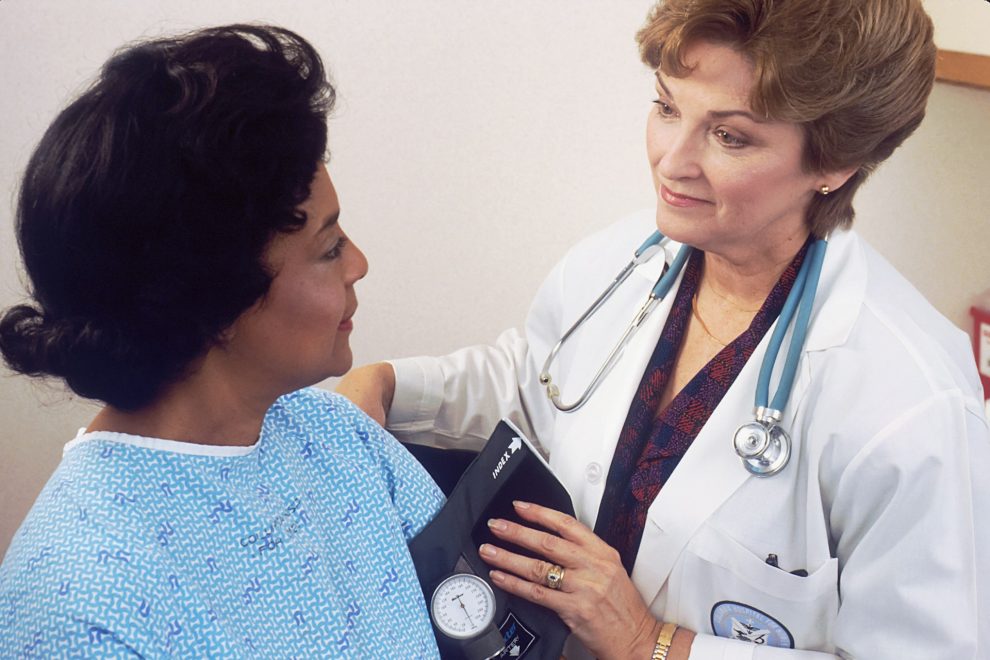
Image: Unsplash/National Cancer Institute