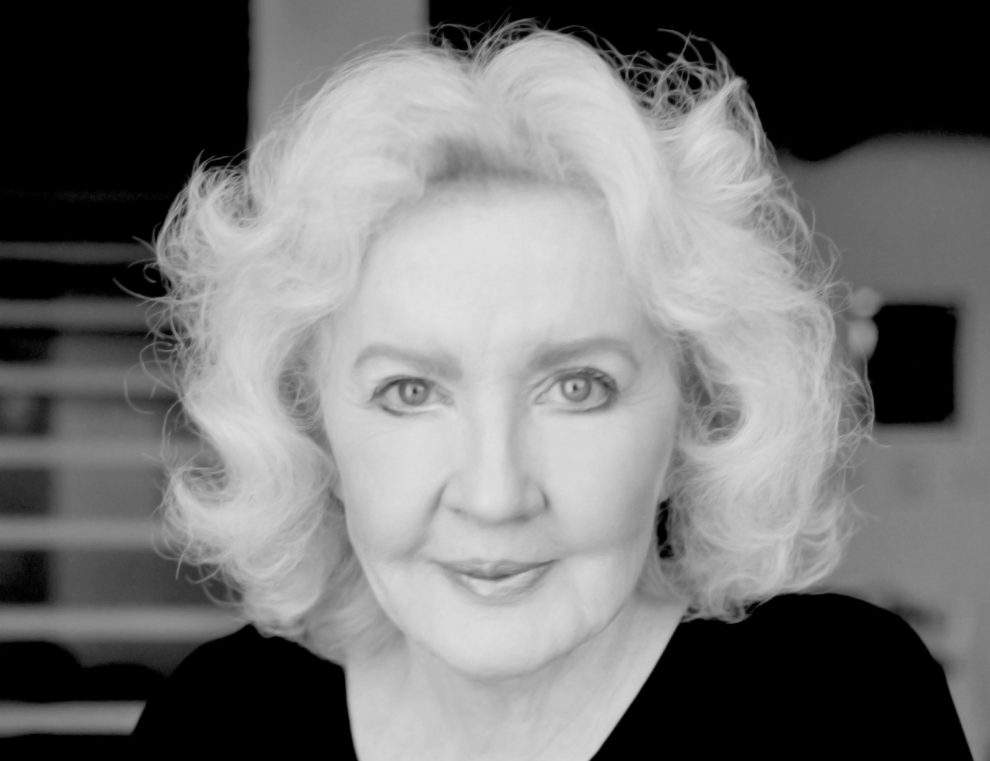
When an addiction recovery sponsor told journalist, playwright, and screenwriter Julia Cameron that her sobriety depended on returning to the practices and beliefs she learned during 16 years of Catholic education, she was skeptical at best. At worst—reeling from a failed marriage to director Martin Scorsese after his infidelity, raising an infant daughter alone, and terrified her successful career would dry up without drink—she felt abandoned by God.
“I was told by my mentors to let the higher power—God—write through me,” Cameron says. “I thought, what if he doesn’t want to?”
But desperation has a way of opening doors and inspiring prayers. “I tried,” she says, “and then my career took off. I found myself feeling that the Great Creator indeed had his eye on the sparrow—me.”
That sparrow is now lauded as the high priestess of creativity. At 78, Cameron has authored or coauthored more than 40 works across 20 genres, including her newest releases, The Daily Artist’s Way: 366 Meditations for Creative Living (St. Martin’s Essentials) and The Prosperous Heart: Creating a Life of Enough (Tarcher Perigee). Alongside her adult daughter, Dominica, she manages a media empire that began humbly with “creative recovery” workshops in Hollywood. Then, in 1992, she published a book blending her spiritual journey with practical tools for “co-creating alongside the Great Creator.”
That book—The Artist’s Way: A Spiritual Path to Higher Creativity (Tarcher)—has sold more than 5 million copies and surged 40 percent in sales over the past five years, thanks to celebrity endorsements from the likes of Doechii, Pete Townshend, Reese Witherspoon, Bella Hadid, and even Scorsese, Cameron’s ex-husband. On TikTok, hashtags about the book’s core practices—#MorningPages and #ArtistsDates—appear in more than 8 million posts. “When we open ourselves to exploring our creativity,” Cameron writes in The Artist’s Way, “we open ourselves to God.”
Raised in a Catholic family of seven in Libertyville, Illinois, Cameron attended parochial schools before earning an English degree from Georgetown University. Her 2007 memoir, Floor Sample (St. Martin’s), credits Catholic teachers and professors with nurturing her dream of becoming a writer, especially those who encouraged her to read iconoclasts such as Pierre Teilhard de Chardin and poet James Wright.
For many years, the best-selling author even stayed in touch with her high school English teacher, Sisters of Charity of the Blessed Virgin Mary Sister Julia Claire Green. “She taught us poetry,” Cameron says. “And she taught us beauty. So we began to see that it was possible to combine spirituality with something that seemed at first like a secular practice—writing poetry.”
“I was very lucky,” Cameron says about her Catholic foundations. “I had pivotal teachers who were mentors for me in the orders of Sisters of Charity, Sisters of Mercy, Carmelite priests, and Jesuit priests. They modeled for me what spirituality was all about.”
Spirituality is all about creation, Cameron writes in her seminal work. That means creativity is not a luxury; it’s a spiritual calling. “Creativity is God’s gift to us,” says The Artist’s Way. “Using our creativity is our gift back to God.”
Cameron’s widely popular 12-week program, outlined not only in her flagship title but also in related workbooks, daily devotionals, and collections of original prayers, demonstrates how to nurture that gift using four spiritual disciplines: Morning Pages are three pages of freewriting completed during daily devotional time; playful excursions called Artist’s Dates, which are weekly solo pilgrimages, restore the creative soul; mandated solo meditative walks cultivate presence and attention; and “writing for guidance” is a practice of praying two-way discursive prayers the author claims God always answers. The book also includes self-reflective quizzes, exercises for rewriting negative beliefs about artists, supportive affirmations, inspiration from spiritual teachers—including Meister Eckhart and Teresa of Àvila—and even the directive to compose a personal artist’s prayer.
“I believe we are all artists,” Cameron says. “And we all have the potential to be mystics.”
While The Artist’s Way’s focus on discipline, sacrifice, and obedience seems characteristically Catholic, Cameron says her approach to combining creativity with faith has been endorsed by Sufis, Buddhists, Jews, Christians, and atheists alike.
“The Artist’s Way talks about divinity,” she says, “in a very catholic—with a small c—way.”
Although Cameron says she no longer identifies as Catholic, she lives in Santa Fe—“a very Catholic town”—and holds deep respect for “anyone who has a faith that works.”
“I don’t consider myself Catholic,” she says. “But I have deep Catholic roots.”
“They often show up despite myself,” she adds with a laugh.
Humility also shows up in a woman hailed as a guru and mystic. Despite success as a self-help sage, she chooses to describe herself as an “artist who sometimes writes nonfiction.” When fans fawn by saying, “Your book changed my life,” Cameron’s standard reply is, “You changed your life.”
All her titles include candid admissions of life-long mental health struggles, frequent “creative U-turns” and failures, and even difficulty following her own advice to silence the inner critic (she calls hers “Nigel”). Through it all, her devotion to God remains strong.
“Secular consciousness tells us that material success equals happiness,” she says. “But I have found that spiritual success equals happiness.”
And that is why Julia Cameron still prays.
“I say this prayer every day: ‘Dear Creator, I offer myself to thee, to build with me and do with me what you will. . . . Take away my difficulties, that victory over them may bear witness to those I would help.’ ”
Julia Cameron’s Core Principles of “Spiritual Electricity” through Creativity
- There is an underlying, in-dwelling creative force infusing all life—including ourselves.
- When we open ourselves to our creativity, we open ourselves to the Creator’s creativity within us and our lives.
- Creativity is God’s gift to us. Using our creativity is our gift back to God.
- The refusal to be creative is self-will and is counter to our true nature.
- Our creative dreams and yearnings come from a divine source. As we move toward our dreams, we move toward our divinity.
(from The Artist’s Way, p. 3)
This article also appears in the May 2026 issue of U.S. Catholic (Vol. 91, No. 5, pages 42-43). Click here to subscribe to the magazine.
Image: Copyright Robert Stivers