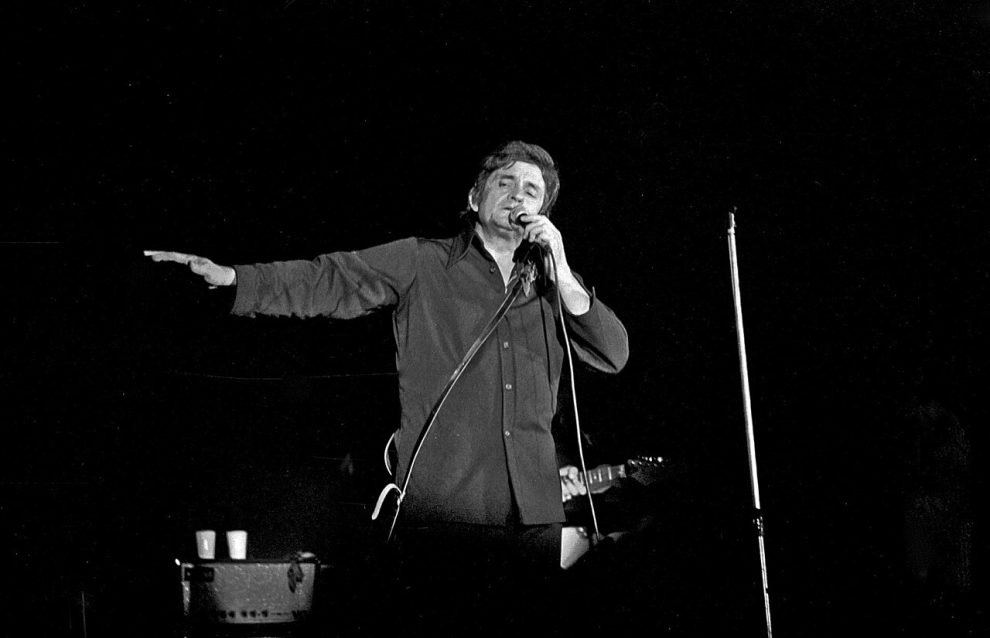
In 1970, at Nashville’s Ryman Auditorium, country artist Johnny Cash recorded his friend Kris Kristofferson’s “Sunday Mornin’ Comin’ Down,” a song about a solitary, hard-drinking musician walking through town on Sunday morning and catching glimpses of a communal life from which he’s been sundered.
Introducing the song, Cash talked about how everyone has experienced being a “drifter at heart” at one time or another. “Today, like yesterday, there’s many that are on that road headin’ out. Not searchin’ maybe for work, as much as for self-fulfillment, or understanding of their life,” he said.
This quest for meaning is a theme running through the subgenre of music known as outlaw country, with which Cash, Kristofferson, and others are associated. Their songs frequently deal with rebels on society’s margins and wrestle with perennial questions about good, evil, salvation, damnation, God, and the devil.
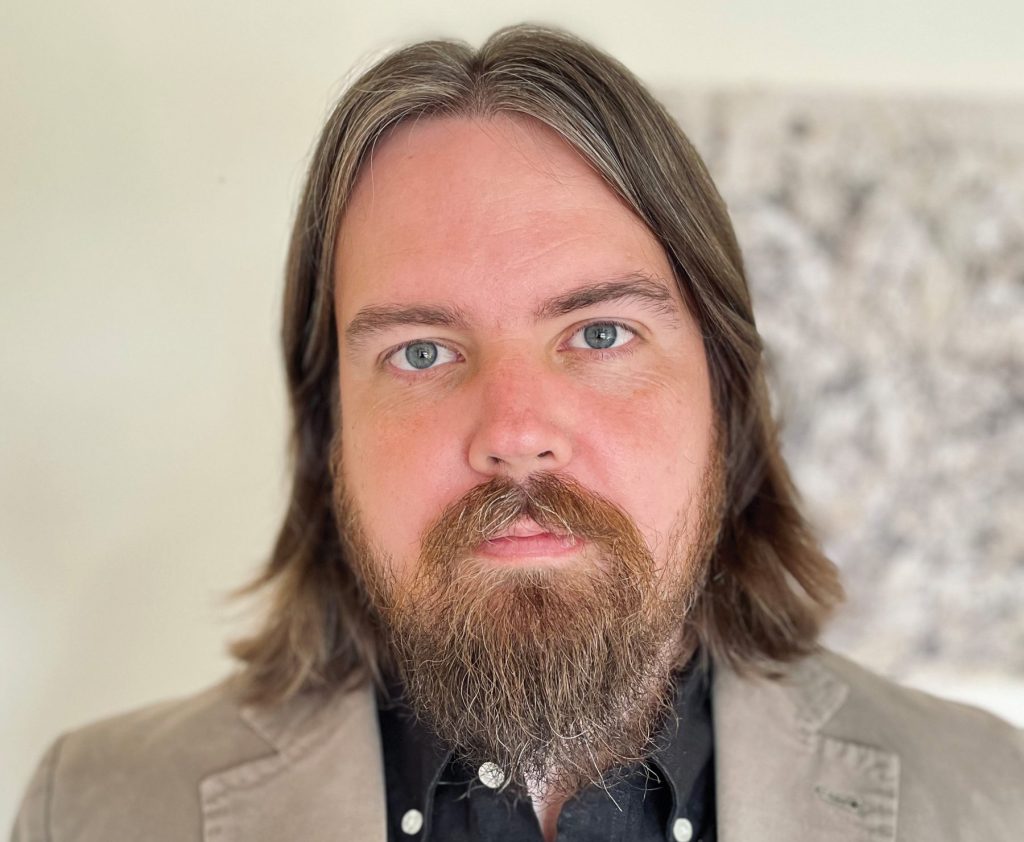
In his new book, Too Sick to Pray: A Theology of Outlaw Country (Fortress Press), theologian C. M. Howell explores how these musicians found, in their status as outsiders, a creative space for engaging with religious questions that haunt the American landscape. The theology they articulate is not formal or orthodox but can speak to other rebels and dreamers who linger in liminal spaces, neither in the church nor wholly outside of it—and to those who push back against the societal conventions determining who is in and who is out.
A musician himself, Howell notes that outlaw theology is articulated in the music itself, as well as in the stories the lyrics tell.
What exactly is outlaw country?
Outlaw country was a quest for artistic creativity associated with the release of a 1976 album called Wanted! The Outlaws. At that time, most country music was recorded in Nashville by RCA Records. In their attempt to make country music sell as well as pop, they infected country music with pop sophistication, putting in string sections instead of steel guitars and overlaying harmonies instead of three-part harmonies. The studios had their own producers and musicians. They prescribed the composition, meter, key, and content of the songs. It was called the Nashville Sound.
The outlaw musicians felt stifled by this. They built their own studios, became their own producers, hired the musicians they toured with, and wrote their own songs. Some, like Kris Kristofferson, used new poetic meters. Some, like Waylon Jennings, didn’t even have choruses. The content of the songs was different. Ironically, they sold better than anything RCA had produced.
The musicians didn’t call themselves “outlaws.” It was a promotional effort.
What’s the significance of the outlaw archetype?
The term outlaw implies living on the edge of some boundary. The myth has such a hold in the American imagination. Think of Clint Eastwood’s The Man with No Name Trilogy. The outlaw is an anti-hero, neither the bad guy nor the good guy. He’s sort of selfish but acts out of an autonomous navigation of morality.
There’s a great quote from a Rolling Stone review of Willie Nelson’s 1975 Red Headed Stranger album. It talks about a man trapped in “that curious nether world between comic innocence and tragic experience . . . a lost and forsaken son slain only to rise again with the promise of a glorious but distant new childhood in exchange for a worn out hopeless path.”
Who were some of the significant outlaw country artists?
It’s hard to understand American culture, especially in the South, without understanding these artists. Johnny Cash, for an entire generation, was bigger than Elvis Presley.
Willie Nelson is another one who’s become a cultural icon. You see him popping up everywhere. Some of the songs he wrote are timeless, like “Crazy,” which we usually hear sung by Patsy Cline. He set up the Farm Aid festival, which is still going on. And he reinvents himself every 10 years. The last reinvention was him and Snoop Dogg singing “Roll Me Up and Smoke Me When I Die.” He appears on Beyoncé’s Cowboy Carter record, which gives her legitimacy as a country artist.
Outlaw country is marked by the complexity of the artists’ songs and stories. Kris Kristofferson’s music has a depth that is almost unparalleled. He was extremely intelligent and highly educated. When he was a senior at Pomona College, the Atlantic Monthly (now The Atlantic), had a short story contest. He submitted four stories and won first place, second place, and two honorable mentions. That led to him getting a Rhodes Scholarship and moving to Oxford, where he studied philosophy. But he dropped out to be a songwriter.
Then there’s Townes Van Zandt, who slips behind the scenes, because he was his own worst enemy when it came to popularization. His lyrics are, I think, the most poetic of any of the outlaw musicians. He came from a family of poets and went to private schools. By the time he was a teenager, he was writing sonnets of his own. Then, in college, he went through a depressive phase and underwent shock therapy, which erased his memory.
While he and Kristofferson came from comfortable backgrounds, the others came from farm families. They grew up picking cotton and pushed themselves to self-educate. A lot of them spent their time on the road reading philosophy, theology, and poetry. As poets, they provide a place to go to reflect on life’s big questions—songs you can go back to countless times and find countless different answers.
What does their music have to do with faith?
One content change that happened with the outlaws was that Willie Nelson recorded country music’s first concept record, Yesterday’s Wine. He got the idea while studying Christology in a little town in Texas while preparing to teach Sunday School. He ran across a book by Levi Dowling, The Aquarian Life of Jesus, an astrological reading of the Bible, and this inspired him.
Yesterday’s Wine opens with this discourse: God and the angels are saying they need a new messenger to send to humanity because perfect man has already come. They need imperfect man. Willie Nelson becomes the imperfect incarnation to spread the message of the Aquarian God.
When he presented this to RCA, they had no clue what to do with it. Everyone found it offensive in some way. So theological themes were at the core of the outlaw tradition from the start.
In their attempt to get creative control over their music, the outlaws tapped into something on an existential level that they couldn’t find any language for, except religious language. They’re playing with theology more than doing theology—appropriating what they have inherited from their culture.
What does this concept of play mean for the religious dimension of outlaw music?
In my book, I was originally going to look for doctrines that align with the artists. I was going to compare Kris Kristofferson’s song “Jesus Was a Capricorn” with Christology. Then it hit me: He doesn’t actually believe Jesus was a Capricorn. He’s doing something else.
A common reaction among theologians and pastors who have interacted with these artists is, “Kristofferson’s a genius, but I wish he hadn’t said Jesus was a Capricorn.” They praise the song but say they wish he hadn’t made it as he did. That gets theology and the arts into a dilemma, where one has to take precedence over the other.
That’s where the concept of play comes in. Play does not mean something immature; the theologian Romano Guardini says that play is the most sacred, serious activity that can happen.
In the modern philosophical tradition, play means three things. First, it’s elusive. It isn’t a material object that can be understood in terms of cause and effect. It dances in front of us and has a luster that attracts us, so even when we can’t really figure out what’s going on in a song, we return to it over and over again, because it draws our attention.
Play also means that no interpretation is ever certain. The best you can get is, “This seems right.” But you can never say, “This is the conclusive meaning.” And play resists the idea that an artist is in full control of their art’s meaning. The audience might have different interpretations, or art might present differently in different contexts.
The outlaws are doing theological play, because the way they use religious symbols and language isn’t like what pastors or theologians do. It’s the echo of the church bell. Being out on the fringe—not in the church, but close enough to hear the bell—gives them this space where they don’t have to participate in the service. They are near enough to find consolation without making a commitment.
Were they influenced by American fire-and-brimstone Christianity?
I like Flannery O’Connor’s phrase that the South is a Christ-haunted place. It isn’t that everyone believes, but everyone has to deal with the question of belief, because it’s so ingrained in their culture. All the outlaw artists dealt with this question differently.
Waylon Jennings was the one who really struggled with the fire-and-brimstone teaching. He’s the only one who didn’t explore other options in literature or theology. He said that life was presented to him as black and white, good or evil. He could never fit into a civilized society, so he was condemned as evil, but he sought to find his own line in that shade of gray.
Townes Van Zandt knew alternative theologies, but he writes in this sort of hopelessness. It’s like he knows God is the only hope for the world, but God can’t be found. He has a line, “It’s like the sound of empty harps.”
Then there’s Billy Joe Shaver, who operates with the same idea as Jennings, that you’re either good or bad—but he wraps it up in this self-proclaimed mysticism, where you’re only judged on what you’re doing the moment you die.
The creativity and power of their songs comes from this existential angst. They’re dealing with questions too big for them to bear.
These men lived intense lives and struggled with addiction, mental illness, and loss. How does their theology relate to that?
Pretty much all of them had tragic stories. Kristofferson is the only one who didn’t. Nelson was abandoned by his parents and raised by relatives. Some people say it’s just his demeanor to look at the bright side of things. But I think part of the reason he studied theology was him wrestling with, “What’s the point of all this?”
Jennings was poor growing up, and his best friend was Buddy Holly. Jennings played bass for him and was supposed to be on the plane that crashed and killed Holly and others, but he gave his seat up to the Big Bopper. As a joke he told Holly, “I hope your plane crashes.” Those last words haunted him. He treated his survivor’s guilt with alcohol and drugs.
The first line of Billy Joe Shaver’s biography is, “I wasn’t even born yet the first time my father tried to kill me.” Tragic isn’t even the word for how much grief he went through.
Van Zandt, like I said, lost his memories due to shock therapy. He used to joke that he’d been told he had a really good childhood; he just can’t remember any of it.
So that’s part of what leads them into this wildness: They have no basis, no structure, no examples good or bad. They find ways that salvation or the gospel help them through tragedies, but it isn’t good news. It’s a last resort.
How do the Outlaws draw on the symbolism and iconography of the Christian tradition?
The most fundamental idea they have from church is that Jesus is good and the devil is bad. But religious symbols get stretched beyond good and evil and used in unexpected ways. Kristofferson was inspired by the poet William Blake, especially his poem “The Marriage of Heaven and Hell.” At the end of it, Blake says he’s learned to live with the devil, and they sit down and read the Bible together.
Kristofferson struggled with a lack of self-confidence well into his life. One way he deals with it is by presenting himself as this artist who’s trying to do good, but no one seems to see it: He’s being crucified for what he believes. He has melded his own goodness with the symbol of Jesus, a prophet who isn’t accepted in his hometown.
At other points he knows he’s doing something wrong. In “The Silver-Tongued Devil and I,” he’s sitting at a bar and sees a girl and knows he can walk over and pick her up—and he does. In the song, the chorus is him telling the girl that he’s the devil. He sees himself doing wrong but does it anyway.
As the outlaws developed their careers, they did other things with the symbols of Jesus as good and the devil as bad. Kristofferson made a political record, Third World Warrior, which comes out against U.S. military interventions in Central America. He points out that El Salvador means the Savior, and America is crucifying El Salvador, crucifying the Savior.
You write about Jennings and Nelson speaking out on Indigenous rights and this element of protest in outlaw country. Did they engage with social and political issues in other ways?
There are layers to this. Most immediately, the outlaws were protesting RCA in Nashville. But at various times, they were actively pushing against the culture. When Kristofferson dropped out of Oxford and moved to Nashville, he was sleeping in a janitor’s closet. Johnny Cash was sleeping in a car on the streets. For a while, they were starving artists. The feeling that they didn’t fit in made them identify with other struggling groups and oppressed peoples more readily. One of the first things Johnny Cash did when he got creative control is record an album called Bitter Tears. President Lyndon Johnson was going to build a dam that was going to flood the native lands of the Seneca Tribe, and Cash wrote this album in protest of that.
One of the first songs Kristofferson recorded was called “The Best of All Possible Worlds,” an idea originally from the philosopher Leibniz. It’s a story about getting drunk in Nashville. At one point in the song, he asks a cop why he’s never seen anyone in jail that’s “neither Black nor as poor as me?” RCA made him change the line.
Jennings’ most theological song is called “I Do Believe.” It’s almost a confession of faith. He wrote it in honor of a pastor called Will Campbell, who directed his pastoral energy toward issues of racial and economic oppression. He eventually was removed from his ordination because of this, but he worked with Martin Luther King, Jr. He knew he had a voice that Black pastors and theologians didn’t have, and he used that voice to promote them. Waylon said that was the only pastor he ever met who felt like he was saying something real.
The title of your book is taken from a Willie Nelson song, “Too Sick to Pray.” What’s the sickness?
What makes Willie Nelson’s music particularly powerful and intriguing is that he uses symbols that seem to have no bottom to their meaning. I think that’s what he’s doing in “Too Sick to Pray.” You could read sickness as sin. But the way he thinks about God, God is always patient. So God will be there when you do want to pray. And Nelson says his songs are prayers.
I often hear it as existential strife: There’s too much to bear in the world and you just need a break. If you had one day where you didn’t have to struggle, then you could have the luxury of prayer, but the sickness, the existential angst, is what’s keeping you from prayer.
I chose the title of the book partly for the ambiguity. But I also think it sets the mood for what the outlaw musicians are doing with religious language. It’s like they want to pray, they almost believe the gospel, but something is keeping them from fully devoting themselves. They live as echoes on a Sunday morning coming down or in the alleys behind the church or on the fringe of respectable society.
What is outlaw theology? And what’s the value for ordinary people of faith?
The metaphor of the outlaw doesn’t work like it used to. For a certain generation, there was something about the outlaw that everyone got, and it spanned from Kris Kristofferson and the hippies in California to Willie Nelson to Roger Alan Wade in conservative places. It meant something to so many people. Now the idea of the outlaw has negative connotations. It suggests colonization—moving west to take someone’s land. I think maybe hip-hop has taken its place, but from an urban center. I also think that the way we listen to music and interact with the arts is completely different.
I like this idea of theology on the fringe or on the edge, though. There are questions that life puts on us and theological practices to help find answers. But I don’t think it’s limited to that. Harold Bloom was asked in the ’70s why students should memorize poetry. And he said essentially, “Life has more problems than you have solutions, and you need to have somewhere to turn to work out those solutions. But to do that, you need to have a poem that has 1,000 different meanings in it and the strength to bear 1,000 readings to find those answers.”
On a tour once, I was practicing Townes Van Zandt’s “Pancho and Lefty” over and over. And a guy I was touring with said, “Be careful with that song. It’ll make you think differently.” I’ve listened to that song so many times. It’s like a mystery I haven’t got to the bottom of.
I think outlaw country can serve as a place for people asking questions who do not want to commit to church. But I think it also shows how far God’s grace reaches. It reaches even those who aren’t committing, in the echoes of the church bell on a Sunday morning coming down.
Even people like Jennings, who were scared away from religion by fire-and-brimstone theology, keep turning and looking at the church and thinking, “Is there something there? Will something provide?” And I think that’s God’s grace extending beyond what we can say is strictly theological.
For people who are new to Outlaw Country, what are some songs you would recommend as an introduction?
Kris Kristofferson’s “Sunday Morning Coming Down” is the best introduction. Townes Van Zandt is, to me, the greatest American songwriter, so “Pancho and Lefty” and “St. John the Gambler,” which shows a woman’s perspective. And Willie’s Red Headed Stranger album, the whole album. And then Spirit, also the whole record.
This article also appears in the August 2026 issue of U.S. Catholic (Vol. 91, No. 8, pages 24-28). Click here to subscribe to the magazine.
Image: Wikimedia Commons/Heinrich Klaffs (CC BY-SA 2.0), Johnny Cash performs in Bremen in 1972