For our Sounding Board column, U.S. Catholic asks authors to argue one side of a many-sided issue of importance to Catholics around the country. We also invite readers to submit their responses to these opinion essays—whether agreement or disagreement—in the survey that follows. Click below to take this month’s survey.
Spring saw the release of a Barna Group study that should trouble anyone who cares for the church. Roughly two out of five people from Gen Z stated that receiving spiritual advice from artificial intelligence (AI) was as reliable as the spiritual advice received from a pastor. About half of practicing Christians indicated they would trust AI to assist their spiritual growth. I am a 17-year-old Catholic who helps lead a parish youth group, and I know all too well why this is.
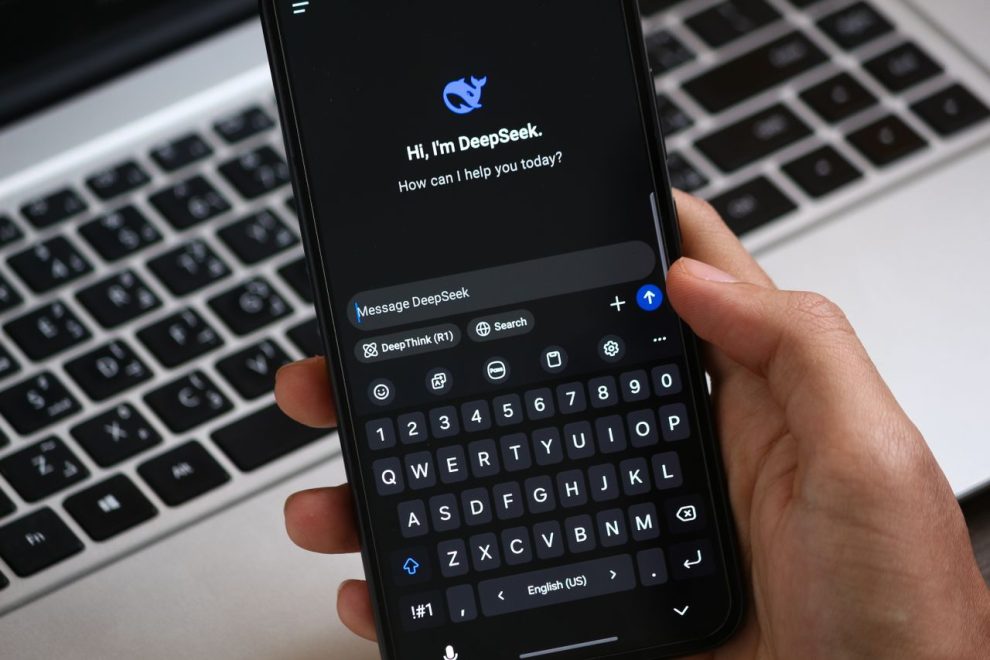
A chatbot never appears irritable. It does not say your questions are ridiculous, or that you should know the answer, or that it is currently busy. When you are unable to sleep, wondering if God exists, it is available, calm, and confident. To a generation raised anxious and online, that is significant. At times it even seems like a blessing. At times it truly assists.
I have become convinced, however, that my generation is in peril of mistaking the doorway for the room. This is not just a religious habit. A 2026 Pew Research Center survey found that about one in 10 U.S. adults turn to AI chatbots for emotional support and a smaller share for companionship, so the instinct to reflect our most personal needs to a machine is already present. And I do not believe the church can afford to allow this to occur without a plan.
In May, Pope Leo XIV issued his first encyclical, Magnifica Humanitas (On Safeguarding the Human Person in the Time of Artificial Intelligence), the church’s most serious response to the development of AI. In it, he says that in the age of artificial intelligence our duty is to remain profoundly human, to protect a greatness in the person that no machine can replace. That is not nostalgia, nor is it a protest against technology. It is a diagnosis of what’s at stake.
The threat is not simply that a chatbot provides incorrect answers. He mentions something far more serious than the correctness of AI’s responses. Leo says that artificial systems “do not mature through relationships.” While they can mimic empathy, advice, even friendship and love—they can create the illusion of a relationship—the danger is that a person will “gradually lose the very desire to form genuine human connections.”
Our Catholic belief system is not primarily a collection of knowledge to retrieve on demand. If it were, then the individual who has done the most reading would always be the holiest. We know this isn’t how holiness operates. Faith develops in relationship. It develops in a community that knows your name, during the silence after communion, in the uncomfortable mercy of confession, while showing up on the days you wish to remain home. A chatbot can define grace for you instantly. A chatbot cannot kneel next to you. A chatbot can explain God to you. A chatbot can never introduce you to God.
Our faith is an incarnational one. We believe God saved us by taking on a body, and we continue to meet God today in physical objects: water and oil, bread and wine, laying hands upon someone’s head. Leo explains plainly that artificial systems “do not possess a body, do not feel joy or pain.” A chatbot could never be anointed and could never receive communion. A chatbot could never weep with you at a funeral or pray with you in a hospital chapel. A chatbot can write beautiful sentences describing the sacraments; it can never offer you grace.
Leo presents two images from scripture: the Tower of Babel (for speed and for independence) and the rebuilding of Jerusalem under Nehemiah, which “rebuilds relationships before rebuilding with stones.” That is the decision being made each time a Christian chooses to open an app instead of texting a friend. One option views questions of faith as problems to be solved immediately and alone. The other views faith as something we can only develop collectively over time in God’s presence and among one another.
The greatest impact of chatbots will be felt by the youngest believers, as Leo points out. He also warns about allowing children in the “most vulnerable stages of life” to access chatbots without adult supervision. Adults who seek answers from a chatbot have years of formation behind them, but if a child is using a chatbot to build their faith for the first time, there is little (if any) existing foundation.
According to the Barna survey, more than 80 percent of practicing Christians fear that AI will misinterpret scripture, and 73 percent fear that people will lose their faith due to AI. We are afraid of the thing, yet we continue to use it.
I am not advocating that we throw our phones into the ocean, or that the church declare war on a tool many will use regardless. There are some developers who have created AI guides with care, and a chatbot that listens to a child’s questions and then directs them toward a live priest is doing something positive. Leo has offered his own test: Teaching someone how to use AI, he says, means teaching them when they ought not to use it. The question is: Does your use of these tools move you further into a real community, or does it become a comfortable substitution?
So what should the church do? Banning the technology and expecting obedience is not a viable nor helpful plan. Here is what a practical plan could look like.
First, parishes and Catholic schools need to provide both spiritual and digital literacy as part of the educational curriculum. We currently instruct teenagers to evaluate sources before trusting them. Likewise, we should teach them to evaluate systems that speak authoritatively about God. One honest discussion in religious education regarding why an algorithm is not your spiritual director would produce far greater results than any content filter.
Second, youth ministry needs to compete on the one thing that AI cannot give: presence. If the most patient, available, and nonjudgmental voice in a young person’s life is an app, then the church has already lost them, and no amount of programming will win them back. The answer is not a better app. It is real people showing up, small groups that are actually welcoming, mentors who are willing to answer questions honestly.
Third, when the church uses these tools, we should prioritize those designed to act as thresholds rather than destinations. A good Catholic AI tool should answer your question, direct you toward people, parish, and sacraments, and then become unnecessary. The success of such tools should be determined by how frequently they send users to church rather than by how long they keep them staring at screens.
Fourth, parents and pastors need to talk about this now, openly and without panic, just as we learned to discuss social media rather than pretend it doesn’t exist. Silence around a habit makes it more dangerous.
Leo reminds us, via Plato, that the deepest understanding occurs gradually—in a classroom of students that disagree with one another, in the quiet after Communion, through the patient company of someone who has walked the same path ahead of you. These experiences cannot be downloaded.
A chatbot will always be patient with me, and I am grateful for that. However, Pope Leo is right that our task in this unusual new age is to be profoundly human. The doorway can be a gift. I hope my generation, with the church and not in spite of it, will not confuse the doorway with the room, and spend their entire lives standing at the threshold of a relationship with God that they were meant to fully enter into.
Image: Pexels