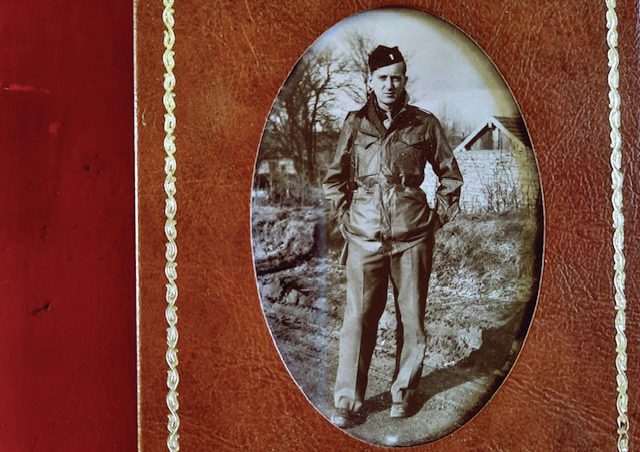
It’s been decades since Father’s Day made any demands on me: no searching for the perfect card or gift for father, father-in-law, or grandfathers. Yet their deaths and the perspective of time now yield many unexpected insights.
It’s the early 1960s in Knoxville. A small black fan is whirring in the corner of my father’s father’s living room. Several cousins sit on the floor around the black-and-white TV, waiting for Lucy to drive Ricky into an exasperated tirade in Spanish. My Puerto Rican cousins have been enlisted to translate Ricky’s harangue for us. My brother, sister, and I have come north from New Orleans; another cousin hails from the hills nearby and speaks with a drawl the New Orleans branch finds hilarious. We are all boisterously unaware of Dandad lying on the sofa chewing his unlit cigar and drifting into a morning nap.
There is no harangue, for I Love Lucy is interrupted by a news report. Suddenly, we are watching a group of young Black women and men, who have been peacefully demonstrating for civil rights, being violently knocked down and swept along a sidewalk with firehoses. We become quiet as the scene captivates us all, including Dandad. When it’s over, he tells us a story.
“When I was a boy in the country,” he begins, “I had a friend named Sam. Sam and I did everything together. We went fishing and swimming in the pond and ate at each other’s house every day. But then we got older, and it was time to start school. That’s when I realized Sam and I were very different.”
We are all thinking one boy being Black and one being white is about the biggest difference in the world. But Dandad looks out the window and across 70 years at two best friends walking along a dusty country path, then continues:
“The only difference between Sam and me,” Dandad pauses for our attention, “was that I had shoes to wear to school and Sam didn’t.”
I Love Lucy is over. Dandad’s story lingers in the air just long enough to settle in my conscience for a lifetime.
Blessed are you, Dandad, for you hungered and thirsted for justice.
It’s 1968 and my husband Ed and I are passing through Knoxville. Several times Dandad has asked us to bring him to the nursing home to visit my grandmother, but I ignore the hint of pleading in his voice and tell him we have 500 miles to drive that day. I whisper to Ed that my grandmother recognizes no one and all she can say is “Eh, Lawdy,” so what’s the use? We leave Dandad waving goodbye to us from his back porch. It’s my last memory of him; both grandparents will be dead by the decade’s end.
For I was ill, dear granddaughter, and you did not visit me.
Pop-Pop, my father-in-law, drives us all to tears of laughter with his eccentricities: the exquisite antique table he “fixed” by veneering it with linoleum; the time he accidentally put the car into drive instead of reverse and crashed through the window of Dunkin’ Donuts; his propensity to trim bushes just as they were about to burst into bloom so that the only buds to survive the massacre formed a pathetic little circle just above the topsoil.
But his love for family is so strong that he worries endlessly about our safety. Visiting the French Quarter at night appalls him. Ed and I ignore his admonitions and go anyway, unconcerned that he will sleep fitfully, imagining misfortunes that may occur. In his retirement, he cruises the streets of our neighborhood; seeing him from our kitchen window, ever on the lookout for suspects intent on doing us harm, makes me smile several times a day.
We have moved to Santa Fe and are visiting New Orleans for the Christmas holidays in the early ’80s. It’s late and three generations are safely in bed, but it’s raining cats and dogs outside. The rain beats against the windows and sounds like bullets bouncing off the patio’s aluminum awning. But sleep comes quickly—to everyone but Pop-Pop. We hear him pacing the hall several times, and it occurs to us that he is worried and maybe we should pace with him. But we don’t oblige—he’s just overreacting to an everyday New Orleans downpour.
We wake to a near disaster. The rain has stopped, but I open my eyes to see ripples of water reflected through the window and jump up to see flood waters lapping close to the foundation of the house. We hear on the news that two of the city’s hard-working pumps are down and houses are flooded all around the city. Pop-Pop rejoices that we have been spared.
I was afraid, Ed and Donna; could you not keep watch even one hour with me?
Père, my mother’s father, takes his role as head of family seriously. We are never so rowdy when he is among us, smoking his pipe and speaking sparingly. There are six of us siblings—plus one on the way; and, though he craves order, he gives Mom a break by including us on trips, especially to the Gulf Coast. We are at times so distracting that, to his great embarrassment, he once drove off leaving 4-year-old Chris playing on the beach. As a gourmet cook, he works behind the scenes to make us the pralines, stuffed potatoes, and oysters Rockefeller we love. I eventually become aware of the role he plays as protector of his and my grandmother’s widowed sisters—in his 70s, he rows himself down a flooded New Orleans street to rescue a sister-in-law stranded after a hurricane.
I grow to consider Père a haven of security, and, after his death, he manages to encircle me with peace, as he lights a small flame of faith in my soul.
It’s 1978 and I’ve just found out I’m pregnant with our second child. At the same time, we learn that my father is terminally ill with cancer. He’s only 58, and he and my mother have just begun to enjoy some personal and financial freedom. The sadness I feel overwhelms me, and I cry often: When someone at work mentions their father or when I think of my children without their grandfather, I cry; when I think of the pain he will suffer, I can’t stop crying. My religious beliefs at the time are totally inadequate to handle this sorrow.
But one night Père is there in a dream, relaxed, smoking his pipe and wearing his favorite flannel shirt and a little string tie. We hug—I am overjoyed to see him, since he’s been dead for over a year. But when he asks how the family is doing, I start crying: “Oh, Père, Daddy’s going to die and he’s going to suffer so much.” A man of few words, in death as well as in life, he looks intently at me and says only, “It’s going to be alright, Donna.” For some reason, this all seems real, and I awake to the certainty that, no matter what, my father will not suffer unbearably. Finally, the crying stops.
Come to me, Donna, you who are overburdened, and I will give you rest.
———
My father’s battle with cancer lasted three years. Usually, he was good-humored: He’d call us to breakfast while slapping a tune on his thighs; he had a host of nicknames for his wife and children and a large vocabulary of silly words and expressions. But Daddy had never dealt well with illness. A bad cold caused him to have us on the run fixing hot tea; a bout of hiccups required someone to hold a glass of water to his lips so he could sip while pressing his thumbs to his ears and two fingers to squeeze his nose.
Yet, of all the gifts he gave us, teaching us how to die with dignity and in peace was the greatest. He conquered his demons, complaining little and often countering the pain with buffered aspirin only. Life went on as if he weren’t sick. He went to work; he traveled; he taught himself to play the organ—finally confiding to us that our generation had actually produced some worthwhile songs. When he began to require shots for the pain, he left his job, but continued to participate in family life. His laughter while watching The Red Skelton Show and Barney Miller was contagious, and his serenity made me forget that death lurked nearby.
One day Daddy could not get out of bed to join the rest of us in welcoming my sister’s foster child into the family. He went to the hospital, and when I visited him two days later, I saw that the pain was so severe he could not smile anymore. That night at home, I raised my fist angrily to heaven, reminding folks there of Père’s reassuring words in a dream three years before. Two hours later, my mother called to tell us Daddy had died; she was relieved, she said, because the doctor had feared he could have suffered up to six more weeks of constant pain. Rather than grief, I felt at peace, comforted by that little spark of faith that had begun with a promise made in a dream—a promise kept. I did not realize then that that small flame would grow and bless the rest of my life.
Blessed are you who weep, for one day you will be comforted.
Dandad, Pop-Pop, Père, Daddy: Our fathers, who art in heaven, hallowed be your names.
This article also appears in the June 2026 issue of U.S. Catholic (Vol. 91, No. 6, pages 18-19). Click here to subscribe to the magazine.
Images: Courtesy of Donna Whitson Brett