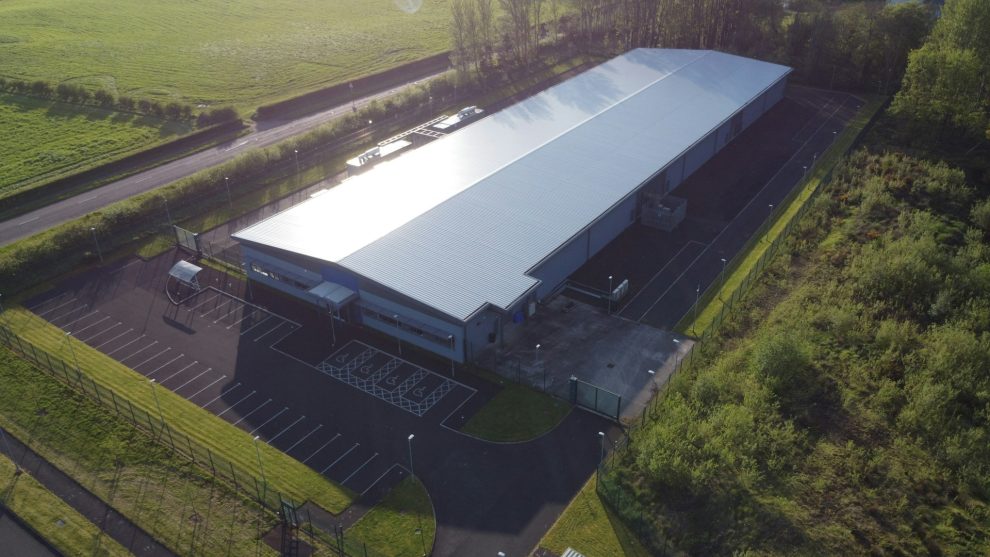
For many people who use artificial intelligence, it is easy to ignore the reality of where this technology physically lives: data centers. These massive warehouses filled with computer servers are what make machine learning, social media, and generative AI possible. But many data center locations are chosen because the land is cheap, the residents have limited political power, and the environmental regulations are easy to navigate. Where and how data centers operate is important because of the public health and environmental impacts, specifically noise and air pollution and water scarcity.
To be fair, the economic impact of these facilities is not insignificant. Supporters argue that this is an opportunity for struggling communities to become hubs of technological innovation. NPR reports a data center in Quincy, Washington, provides 75 percent of the town’s property tax revenue. And data centers can bring well-paying jobs into areas that have experienced unemployment and economic loss, emphasized a report by Molly Elise Bush of the University of Alabama at Birmingham Institute for Human Rights. Richmond Parish, Louisiana, for example, received 500 new jobs tied to a data center investment. For residents who have watched factories close and farms disappear, the arrival of a data center can feel like hope.
But others say that economic development does not outweigh the environmental and human costs that come with it. The ecological toll of AI infrastructure is staggering. It is estimated that data centers caused 6 billion dollars in air pollution related health damages in 2023. Scholars Adam Wierman and Shaolei Ren warn that data centers pollute the air with microscopic particles that bypass the body’s defenses and settle deep in lung tissue. This small particulate matter which can lead to asthma, cardiovascular disease, and long-term organ damage, can travel for hundreds of miles. So even people who do not live near a data center may breathe in dangerous emissions.
Bush’s research shows that a data center in Oregon consumed 355 million gallons of water in 2021. Once used for cooling servers, much of that water cannot be returned to the drinking water supply. An NPR report described growing anxiety among residents in regions already struggling with water scarcity that they may soon find themselves competing with data centers for this basic resource. When water becomes scarce, will people or computers take priority?
Bush’s report also reveals that the burden of these harms is not equally shared. Since many AI centers are built in economically vulnerable rural areas—like Bessemer, Alabama, a predominantly Black city—already disadvantaged communities are disproportionately affected by the resulting pollution and water scarcity. It is a continuation of a long history of marginalized communities becoming sacrifice zones that shoulder the environmental costs of economic progress. This is environmental racism.
The “dominion” over the Earth given to humanity by God does not grant a license to destroy (Gen. 1:26–28). Rather, it calls us to care for, sustain, and protect what God has made. Local governments are extensions of our stewardship. Their responsibility is not simply to count dollars, but also to safeguard people and the land that sustains them. When the ground and air are polluted and wells run dry, no tax break or influx of jobs can restore what has been lost.
Catholicism’s preferential option for the poor means society should first consider how decisions impact those who are least able to bear harm. When data centers threaten water supply, increase asthma rates, or destroy majority-Black rural communities, we must take notice. Pope Francis, in Laudato Si’ (On Care for Our Common Home), reminds us that we cannot allow technological progress to be an excuse for environmental and human sacrifice.
It is possible to develop AI in more sustainable ways. Data centers could be powered by renewable energy, built in regions where water is abundant, or designed to recycle cooling water rather than discard it. In Portugal, some data centers are using renewable energy and seawater cooling. In Denmark, a data center is powered by windmills. Surplus energy is given back to the city to provide heat.
Cities could require impact assessments, noise protections, and community benefit agreements before construction begins. Churches could advocate for national standards that prevent companies from seeking out communities that are easiest to exploit.
We must demand ethical technology. AI can change the world, but human lives and dignity and the Earth God called “very good” must not be the price we pay for it.
This article also appears in the April 2026 issue of U.S. Catholic (Vol. 91, No. 4, pages 30-33). Click here to subscribe to the magazine.
Image: Unsplash/Geoffrey Moffett