• Digital Edition
  • Newsletters
  • Donate
  • Renew
  • Subscribe
U.S. Catholic
  • About
    • Mission
    • Who We Are
    • Contact U.S. Catholic
    • Write for Us
    • Advertise with Us
    • FAQ
  • Sections
    • Arts & Culture
    • Catholic Voices
    • In the Pews
    • Our Faith
    • Peace & Justice
    • Poetry
    • Religion
    • Saint Calendar
    • Spanish Content
  • Podcasts
  • Magazine
    • Current Issue
    • Issue Archive
    • Digital Edition
    • Advertise
    • Subscribe
    • Renew
  • Giving
subscribe
U.S. Catholic
  • About
    • Mission
    • Who We Are
    • Contact U.S. Catholic
    • Write for Us
    • Advertise with Us
    • FAQ
  • Sections
    • Arts & Culture
    • Catholic Voices
    • In the Pews
    • Our Faith
    • Peace & Justice
    • Poetry
    • Religion
    • Saint Calendar
    • Spanish Content
  • Podcasts
  • Magazine
    • Current Issue
    • Issue Archive
    • Digital Edition
    • Advertise
    • Subscribe
    • Renew
  • Giving
subscribe
U.S. Catholic
subscribe
  • About
    • Mission
    • Who We Are
    • Contact U.S. Catholic
    • Write for Us
    • Advertise with Us
    • FAQ
  • Sections
    • Arts & Culture
    • Catholic Voices
    • In the Pews
    • Our Faith
    • Peace & Justice
    • Poetry
    • Religion
    • Saint Calendar
    • Spanish Content
  • Podcasts
  • Magazine
    • Current Issue
    • Issue Archive
    • Digital Edition
    • Advertise
    • Subscribe
    • Renew
  • Giving

SHARE

FacebookXEmail
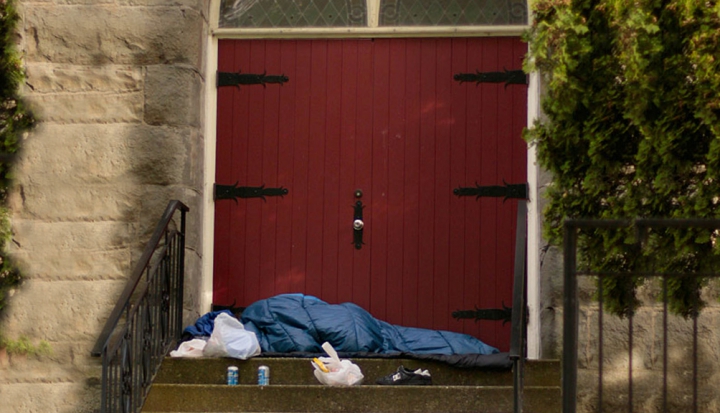
person-sleeping-bag-church-steps-red-door

What is liberation theology?

The poor not only should be cared for, but also brought into the fullness of human flourishing.
Peace & Justice
Kira Dault
Published October 14, 2014

A little more than a year into his papacy, Pope Francis seems to be speaking loudest about economic injustice, alternatively denouncing “trickle-down” economics and calling over and over again for a “poor church for the poor.” Francis’ supporters and opponents alike often blame this particular attitude on one source: liberation theology.

Broadly speaking, liberation theology is a social and political movement within the church that attempts to interpret the gospel of Jesus Christ through the lived experiences of oppressed people. While that doesn’t necessarily seem like it should be a cause of contention in the church, it has, in the 60 or so years that it has been practiced and thought, caused a tremendous amount of controversy.

Liberation theology has its origins in Latin America in the mid-1950s as socio-economic development pushed the peasant workers and farming populations into desperate poverty. With the economic unrest came political unrest, and military dictators took over many governments in the name of national security.

While these social and political transformations were taking place, the church as a whole was also moving toward a more socially oriented mission. Laypeople, religious, and charismatic members of the hierarchy committed themselves to working with the poor.

Advertisement

The final piece of the puzzle, and the one that caused most of the controversy, was that some strains of liberation theology used Marxist economic theory, applying it to the gospel. In this interpretation, Jesus becomes the “liberator” and always is firmly on the side of the poorest of the poor. Because of this preference for the poor, liberation theology often calls for reorganization of social, governmental, and economic structures so that the poor are not merely cared for, but brought into the fullness of human flourishing. The seminal work on liberation theology was written by Dominican Father Gustavo Gutiérrez in 1971. A Theology of Liberation gave the movement its name, and emphasized the church’s mission to those on the periphery of society.

As liberation theology picked up steam and support, its relationship with the Vatican and the church hierarchy became chilly—and sometimes hostile. In 1984 the Congregation for the Doctrine of the Faith, led at the time by Cardinal Joseph Ratzinger, condemned liberation theology because of its use of Marxist principles and its association with political movements. Pope Francis himself had a rocky relationship with the movement when he was in Argentina, clashing with some of his fellow Jesuits who wanted to confront Argentina’s violent military dictatorship.

Today, however, the Vatican seems to be warming to liberation theology. In February of this year, Gutiérrez was invited to the Vatican and reportedly received a hero’s welcome. The Vatican newspaper L’Osservatore Romano declared after Francis’ election that liberation theology can no longer “remain in the shadows to which it has been relegated for some years, at least in Europe.”

This article appeared in the October 2014 issue of U.S. Catholic (Vol. 79, No. 10, page 46).

Advertisement

This article is also available in Spanish.

Have a question you’d like to get answered? Ask us at editors@uscatholic.org!

Image: Flickr photo cc by waferboard
Advertisement
TagsCatholic social teaching Economic justice Theology
ad for Catholic Relief Services - Faith in Action. Help safe lives today
ad offering InterVarsity Press' book titled

About the author

Kira Dault

Kira Dault is a former associate editor at U.S. Catholic.

You may also like

Just Politics Banner

Catholic sisters and advocates explore how we love with action

The Editors
Photo of UFW march struck through with paint

How justice movements deal with legacies of abuse

Cassidy Klein
People talking in a classroom

We can’t have a healthy democracy without education

Meghan J. Clark
    Share This!
    Share
    FacebookXEmail
ad offering 25% off to celebrate U.S. Catholic redesign

What’s trending

    Sarah Probst Miller reflects on the readings for the twenty-second Sunday in Ordinary Time
    Catholic Voices

    A Sunday reflection for August 30, 2026

    Sarah Probst Miller
    a priest with his back to a congregation - US Catholic - Images
    Religion

    What’s the point of being a Christian?

    A U.S. Catholic interview
    person walking on a wooden path
    Our Faith

    Pray the Examen to find your spiritual path

    Deborah Gregory
    u-s-catholic-judgment-scales
    Religion

    What is canon law?

    Dawn Eden Goldstein

SUBSCRIBE

DONATE

RENEW

SIGN UP FOR FREE NEWSLETTERS

Quick Links

  • Mission Statement
  • Who We Are
  • Reprint Policy
  • Job Opportunities
  • AI Policy
  • Advertise
  • Contact
  • Submissions
FOLLOW US
  • Facebook
  • Twitter
  • Instagram
  • Youtube
Copyright © 2026 US Catholic. All Rights Reserved | Terms of Use | Privacy Policy
a small white version of the USC logo