When I look at the calendar on my phone, each day is more color-coded than the dashboard of a 20-year-old clunker of a car. I cannot recall how long I have told myself that the calendar will get better next week. Next week has yet to arrive. Each day I am a living sacrifice to that calendar.
Brian Preston and Bo Hanson of The Money Guy podcast call this stage of life “the Messy Middle”: the years between young adulthood and middle age, when responsibilities multiply faster than time and resources, and you are stretched thin. Careers evolve, children arrive, mortgages are signed, parents begin to age, and community obligations accumulate. Unlike the seasons of the year, the Messy Middle is all four seasons all at once.
There is an irony to reaching this point in life. At 38, I have considerably more responsibilities than I did at 18 or 28, but somehow I have less control over any given Tuesday. I have a career, a mortgage, a wife, children ages 12 and 9, and enough experience to occasionally convince myself that I know what I am doing. However, the people and responsibilities I love refuse to cooperate with my color-coded calendar. Children need things. People get sick. Appliances break. Work changes. Money only goes so far. And sometimes the person making everything difficult is me.
Let me share five saints who help remind me that holiness is possible even in the Messy Middle. Even if I emerge from this season with a few scars and noticeably less hair, I might still retain some integrity. Of note, any saint who supposedly had the gift of bilocation is disqualified from this list because frankly, that’s just ridiculously unfair.
Saint Thérèse Couderc (1805–1885)
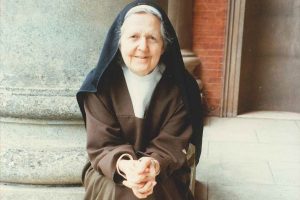
Around the age of 21, Marie-Victoire Couderc, who took the religious name Thérèse, cofounded (with diocesan priest Fr. Jean Peter Terme) a new congregation to provide the Spiritual Exercises and safe lodging for women pilgrims in Lalouvesc, France. She was faithful. After helping the fledgling Sisters of Our Lady of the Cenacle take root, she was forced to resign as superior in her early 30s in 1838. Under false pretenses, she was replaced by a wealthy newcomer who the struggling congregation’s Jesuit advisors favored; the newcomer was even given the title “superior-foundress.”
Religious life isn’t a career. But in the private sector as in the church, office politics and injustices abound. In this instance, Thérèse was pushed aside within the community she helped establish and never again permitted to lead it.
What makes her a companion for the Messy Middle is what happened next. She did not allow humiliation to harden into cynicism. She stayed, worked, and prayed. Nearly 30 years later, she experienced a mystical vision of “goodness” written upon all creation. Thérèse may have relinquished power, but her faith kept her moving forward.
Servant of God Dorothy Day (1897–1980)
“Everybody wants a revolution, but nobody wants to do the dishes,” Dorothy Day apparently said. Amen! And, I would add, no one wants to fold the laundry, clean the litter box, or pick up their rooms either. And then there is the drudgery of doing it all again tomorrow, but such is the Messy Middle for working parents.
Day, cofounder of the Catholic Worker Movement, didn’t get to live within the neat and tidy schedules of religious life. No, like any parent or person with work responsibilities, her grand aspirations of revolution were often interrupted by pressing unexpected needs at 6:40 a.m. and 6:40 p.m. These are needs I understand, such as feeding hungry children, filling out forms or updating too many apps, and putting up with unexpected issues or broken appliances. Day loved to quote Dostoevsky: “Love in action is a harsh and dreadful thing compared to love in dreams.”
At least to me, and perhaps also to Day, it is astonishing how little control I have in this season of life compared to how much control I thought I would have. But she also provided great examples of how to savor what little time and control she did have: She journaled and she wrote. On Saturday afternoons she would close her door and listen to the Metropolitan Opera on the radio, and on Sundays she found time for Mass. I guess we now call this “self-care.”
Venerable Catherine McAuley (1778–1841)
Catherine McAuley, among many things, was a caregiver and a provider. The money her family had was gone by the time she was a teenager, so she knew both comfort and want. Not to be a financial burden, she would move in with various relatives. She sought two things in life: communion with God and care for the poor. She never married, but as an adult she became the adoptive mother to nine or more children. She found practical ways to help the poor around her, and she nursed dying relatives.
One relative, whom McAuley cared for, left his fortune to her when she was 43. After all the good she had done and all the people she served, she didn’t pivot back to having wealth for herself. No, at age 48 she built her first House of Mercy in Dublin with the dual purpose of providing relief for the poor and a refuge for young women.
In a playful poem she wrote later in life, I can see how she managed all of this and somehow avoided burnout and the temptation to revert to personal comfort: “Don’t let crosses vex or tease; try to meet all with peace and ease. Notice the faults of every day – but often in a playful way… attend to one thing at a time; You’ve fifteen hours from six til nine…” Balancing family and finances is not easy, I find. But like McAuley, I’ll try to remain practical, resolving to be good at it today and better tomorrow.
Saint Peter
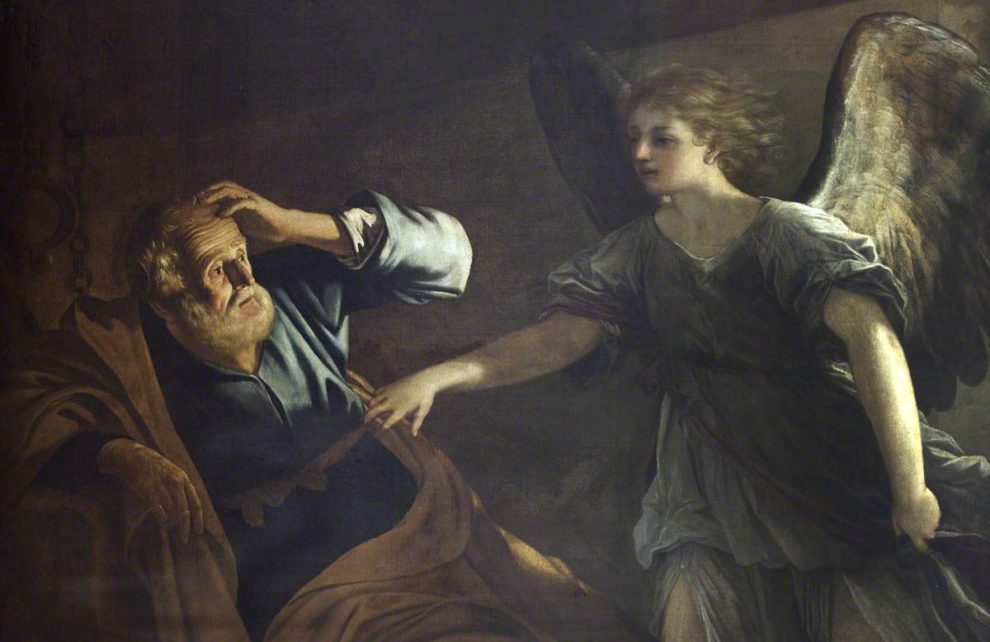
As the poet Malcolm Guite wrote of Peter, he was an “impulsive master of misunderstanding.” Of all the people in the Christian scriptures, Peter, always eager, yet often wrong, is the person I most identify with. Before he made a mess of things such as nearly drowning, being rebuked as Satan, or denying Jesus, he asked Jesus to help his ailing mother-in-law. People we love get sick—and die. This fact seems to accelerate as we age. Peter demonstrates that I alone cannot fix everything (or many things). And in spite of credentials, skills, ability, and, dare I say, maturity, I’m still prone to screw things up just like Peter. Sometimes the “Mess” in the Messy Middle is something external, but sometimes I am the mess.
Pope Saint John XXIII (1881–1963)
There’s a twofold reason the Good Pope, elected at age 76, makes this list. First, he demonstrates with gentleness and humor that there is life after the Messy Middle. Second, his quote, “See everything, overlook a great deal, correct a little,” is one I turn to often. I could keep my head down and ignore all that is going on, but I don’t subscribe to ignorance as bliss. I could insert myself into any situation I feel needs my assistance or I could point out every splinter I see in my children’s, wife’s, neighbor’s, and friend’s eyes. Or, as John’s quote suggests, I could pray for the wisdom and discernment to know what few occasions require me to involve myself or offer a correction. But, as a dad of a preteen, that’s a lot easier said than done.
John’s later life reminds me that I don’t yet have it figured out. No matter how certain I may be, I know it’s preposterous to think that the cement of my life has already cured. We just don’t know yet what our life will become, even at the age of 38!
Honorable Mention: Saint Drogo (1105–1186)
(Drogo is the patron saint of coffee; caffeine also helps in the season of life.)
These are my saintly companions in the Messy Middle. Thérèse reminds me that I will not always be treated fairly. Day reminds me that love usually requires doing something considerably less interesting than I think. McAuley reminds me to use well the time, money, and responsibilities entrusted to me. Peter reminds me that I cannot fix everyone and that sometimes I am the mess. And John reminds me that I do not yet know what my life will become. Looking at these saints and holy people, I see that holiness is possible amid being passed over, doing the dishes, paying the bills, making mistakes, and asking for help. These things are not keeping me from becoming the person God calls me to be. They are how I am becoming that person.
I have said for longer than I can remember that things will settle down next week. At this point, I suspect I will keep saying it untilthy kingdom come. But perhaps I don’t need to wait for next week. God has not asked me to become holy in some future life with a calmer calendar, fewer obligations, perfect children, or more control. The Messy Middle might not be something to get through before I get serious about holiness. Holiness is here, even if it isn’t on the calendar.
Image: Wikimedia Commons, The Angel Appearing to Saint Peter, Anonymous, 1630-1766