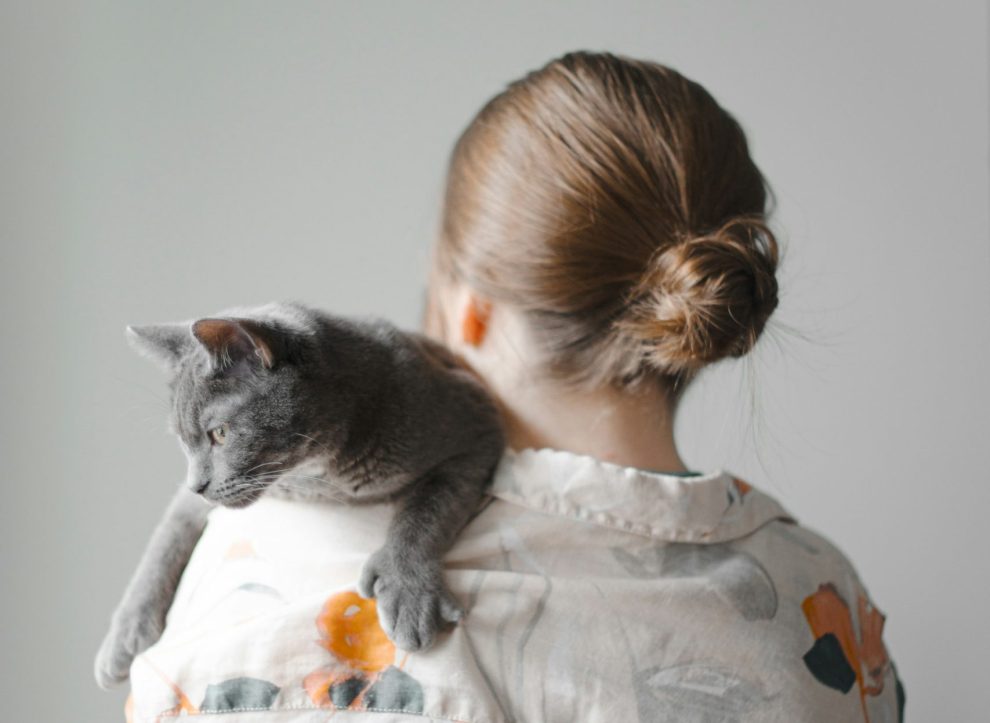
This is my feline conversion story.
I live in the urban beach peninsula of Rockaway, Queens, a part of New York City which in many ways is far different than the rest of it. It includes seven miles or so of oceanfront, a place where nature and the intrusion of hundreds of thousands of humans coexist, often uneasily.
Over the past five years, as I rode my bicycle on the boardwalk, I noted scores of cats who live on the beach; a clear example of human intervention on the environment here. This winter, we noticed the tropical parrots taking up residence on a light post near the ferry stop. In a pristine natural universe, those parrots wouldn’t be here in the cold. Neither would the cats.
The felines are especially visible in winter, long after the day trippers have departed. They are fat cats, not in an oligarch kind of way, but literally on the obese side, feasting on the meals put out for them by a cadre of cat ladies. The cats prance around as if they own the oceanfront, tolerating the humans who nurture them, flitting in and out of the little enclaves sheltered from the wind and the snow beneath the boardwalk.
“Cat lady” has become a cultural stereotype, often held up for mockery. It’s tempting to ridicule them. Why not put that effort into humans? There’s enough human misery here just off the ocean, including unhoused people seeking shelter and a meal, and the families in public housing whose lives are a constant struggle. Let the cats fend for themselves. They don’t belong here anyway, taking up valuable oceanfront property when they should be sharing a home, animal shelter or bodega.
Some Catholics are uncomfortable in a society where pet food overwhelms the baby food aisle in most supermarkets. They argue our priorities are out of whack. When pet owners frequently mimic the roles of mothers and fathers, there is a good argument that maybe those instincts would be more fruitful if applied to vulnerable humans.
Yet there are other currents in Catholic thought that insist we are called to care for all living things, and they’ve been around long before Pope Francis articulated them in his encyclicals. St. Francis of Assisi saw God’s grace in every living creature. As for cats, the late Pope Benedict XVI was known to embrace felines much of his life, from his childhood in Bavaria to his professor days, where cats were said to follow him to classes. He fed strays in the Vatican Gardens. A children’s book presented his biography through the eyes of two of his favorite cats. In retirement, he welcomed the felines regularly.
I had little experience with cats growing up. But three years ago I got a cat as a kind of semi-retirement project. Or, I should say, my wife got one. She wanted a dog, and I reminded her that canines need to be walked, even in the long February freeze. So we settled on a cat provided by a small shelter.
Bolt is her name, jet black with a splotch of white on her head. Named for an early propensity to take off running, as she has aged she’s adopted an easygoing gait, content to stay in our apartment. She shows little interest in the outside world, including our shared hallway and outside terrace. She spent our first two years together avoiding me. If we are cat parents, I am the distant father, with my wife taking on the warm, cuddly maternal role.
I did a lot of taking care of the family dog growing up, but cats were always looked down upon in my experience. Perhaps they were considered not masculine enough in a family environment that was shaped by six brothers and a lone sister. Maybe Bolt caught on to this reluctance. When she first arrived I stepped on her tail by accident. She harbored years of resentment and kept a careful distance. New to the species, I looked up cat care on Google and found that felines basically look at us as big cats. Bolt likely perceived me as a large awkward oaf best to stay away from.
I read that they respond to food. So I woke up first, gave Bolt breakfast regularly, and now she no longer runs from me whenever I appear. She rubs up against my leg as I take the cat food out of the packet. In the morning, when breakfast needs to be prepared, she will jump on the bed and hiss at me, right at my face, a signal she sends to get up. So goes the appeal of feeding time. Most other times she lies down in apathetic silence, awaiting her next meal. Still we have a start on a relationship.
There’s a lesson in all this. We are grandparents, no longer regularly exposed to young children demanding attention. And, like those cat ladies on the beach, we are challenged to nurture creatures who rarely reciprocate with much warmth and affection. I’ve come to recognize a selflessness among the cat ladies to be admired rather than scorned. Those cats on the beach are fat because the cat ladies are willing to put out food for them in all kinds of weather, throughout the year.
To scorn the cat ladies is to believe that taking care of one of God’s creatures is to forsake all others. I’ve come to believe it doesn’t work that way. We truly are called to care for all creation, wherever we can. And perhaps caring for others, even when they give us neither thanks nor any material reciprocation, is more of a muscle that needs exercising, and cats provide a way to do that.
This summer, as the beachcombing human hordes descend on the shores, the cats spend their time largely out of sight. I await their return as the weather cools and their needs become more obvious, met by the cat ladies who deserve a salute, not quiet scoffing.
Image: Unsplash/Sarah Shull