My dad and I communicate largely through rock ’n’ roll. It’s easier than direct conversation. In my early teens, I discovered the riches of his generation’s contribution to popular music, and we’ve had countless great discussions since.
We’ve talked about the bonkers drum technique of the Who’s Keith Moon, the merits of the Beatles’ Sgt. Pepper’s Lonely Hearts Club Band vs. the White Album, and the guilty pleasure of the Traveling Wilburys (and the Jeff Lynne late-’80s production sound in general). But for Dad, it was always the Rolling Stones, first and foremost. When he was 13, he rode his bike to the record store to purchase the vinyl single of “Jumpin’ Jack Flash.” He never looked back.
When I was 15, he bought me an album by Warren Zevon, a dark-humored singer-songwriter from the ’70s. It was a dad lovingly equipping his son with music he would dig. I never looked back.
It’s common for men to communicate this way. Conditioned not to share the deeply personal, we stereotypically fall back on sports and other shared frames of reference when talking among ourselves. If this isn’t outright toxic masculinity, then it’s at least a growth area that challenges many of us in our relationships.
Dad is quiet, often difficult to read. He’s the sort of person who only speaks up when he has something to say. Also in the mix is that, for 50 of his 70 years of life, Dad has held a deep, personal trauma: A car crash killed his best friend—Don—when they were in their early 20s. Dad was there to witness it.
To my knowledge, he’s only ever opened up about it with Mom. That’s how I got the details of the story, some decades back, before I could really appreciate the deep and meaningful bond of such a friendship.
Dad and Don also shared a love for discussing rock ’n’ roll music. In an unusual moment of candor, Dad recalled an exchange in which Don asked him how he liked the then-new Stones album, Exile on Main Street (1972), now considered by many fans to be the band’s definitive contribution to culture.
“Honestly, I’m not too keen on it,” Dad confessed.
“Oh, Clemmer,” was Don’s friendly retort. “Listen to it again. You’ll love it!”
Dad did. And he did love it. Recounting the story, it was clear he felt gratitude that his buddy had set him straight.
Don’s death fell in the middle of what is considered a fallow period for the Stones, a string of mid- ’70s albums that didn’t live up to their prior golden age. That changed with the release of a 1978 album, Some Girls, widely considered their last truly great work.
The realization recently hit me that Dad and Don never got to compare notes on this album. It was an emotional realization, and it felt right that I should offer some kind of sympathy. That was a terrifying idea to communicate between two grown men!
But the opportunity arose some months later, as we sat by Dad’s stereo, listening to a newly acquired live performance of a song from Some Girls. I didn’t have the nerve to take the direct approach. Instead, I fell back on what I knew.
“You told me the story about Don and your first listen of Exile,” I ventured. “What would he have thought of this one?”
Dad cracked a smile and tilted his head thoughtfully. “He’d have liked it,” was the characteristically succinct reply. I then muttered something like an expression of sympathy, but I don’t know that it broke through the volume of the music.
The moment has stayed with me. Rather than tap into some torrent of long-held sorrow, his reaction was delight at being invited to reflect on the memory of his friend.
It’s a wonder how the people closest to us can sometimes be the toughest cyphers, the most daunting to crack and unpack. Heaven only knows what intense emotions might await us if we speak vulnerably about the things that matter most deeply to us.
This got me thinking about prayer. It’s easy enough to keep a comfortable, cordial relationship with the God we often call “Father.” We have well-worn areas where calling on God for assistance and expressing gratitude come easily. This ease doesn’t mean it’s not authentic. In my experiences of both family and spiritual life, the constancy, the faithfulness of a father figure has fostered appreciation and closeness, even when it’s felt more than it’s seen.
Conversely, I know the areas of life where I’d rather not speak directly with God, where openness feels too vulnerable. I imagine lowering these guardrails could unleash a torrent of judgment and the harsh insistence that I get my act together.
But Dad’s happy response to my question about Don raised for me the possibility that these relationships can support this level of openness. Maybe I’m holding a too-narrow view of what it means to let God in. After all, God is the source of unconditional love and the one who transforms all things. We’re talking about the same joyous, all-encompassing love that sparked all of creation into existence. Why shouldn’t we embrace that love more deeply, especially with those more guarded and uncomfortable parts of ourselves?
It’s easy to imagine a confrontation with such powerful, personalized love as scary. Maybe the idea raises feelings of unreadiness and unworthiness. A priest friend once lamented from the pulpit that too many people go through life thinking they can never be pleasing to God. But really, we’re already more loved than we could ever imagine, exactly as we are. Karl Rahner called it God’s “adventure of love for what lies outside himself.”
Should my unexpectedly happy interaction with my dad about an emotional memory prompt me to trust in more direct and overt love with the father figures in my life? Probably. But again, how scary!
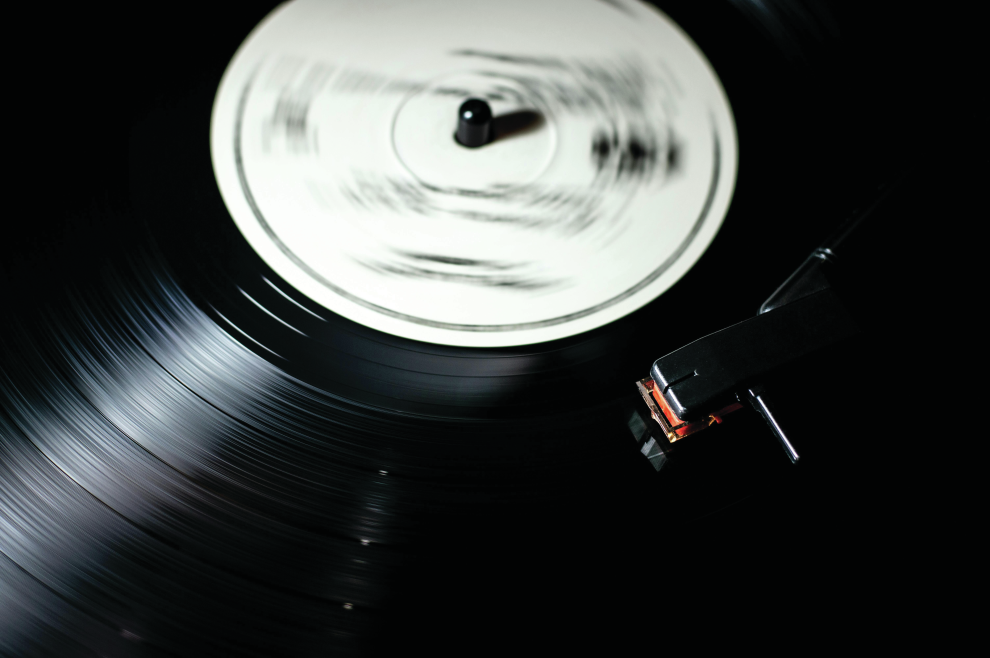
In the meantime, I realized something else: For Dad and me, the Stones aren’t merely a language. They’re a love language. And when a language transcends words and rests in the shared enjoyment of things we cherish, shaping us together, something profound is happening. It may look like two guys quietly sitting together, digging on the same vinyl record. It’s also an act of abiding in the quiet knowledge that we’re already more loved than we could ever imagine.
This article also appears in the April 2026 issue of U.S. Catholic (Vol. 91, No. 4, page 38-39). Click here to subscribe to the magazine.