For our Sounding Board column, U.S. Catholic asks authors to argue one side of a many-sided issue of importance to Catholics around the country. We also invite readers to submit their responses to these opinion essays—whether agreement or disagreement—in the survey that follows. Click below to take this month’s survey.
On September 25, 2015, Pope Francis addressed the United Nations General Assembly in New York to urge the world’s leaders to work together for solutions to climate change. His landmark encyclical, Laudato Si’ (On Care for Our Common Home), had been promulgated in June. This brilliant teaching letter brought the world and the church to a new understanding of the links between poverty, environmental degradation, human dignity, and reverence for God’s sacred creation: a common home meant as a source of abundance and beauty for all.
Laudato Si’ didn’t shy away from moving principle into practice, stating directly: “We know that technology based on the use of highly polluting fossil fuels—especially coal, but also oil and, to a lesser degree, gas—needs to be progressively replaced without delay.”
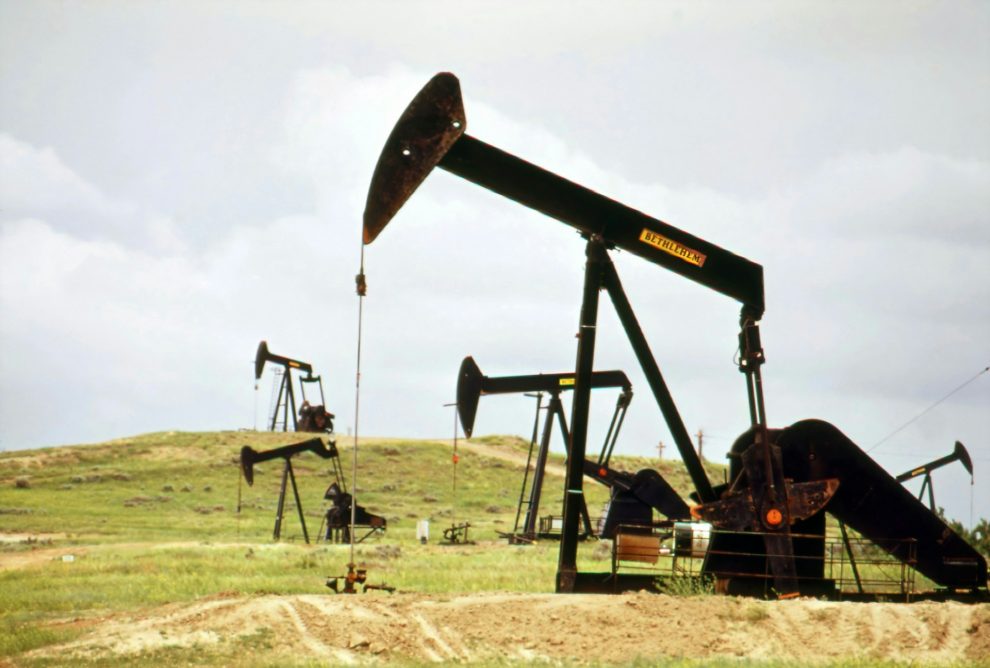
Two days before the pope’s appearance before the UN, however, Reuters reported there had been “235 oil and gas leasing deals signed by Catholic Church authorities in Texas and Oklahoma with energy and land firms since 2010.” This means the church earns income by allowing energy companies to extract oil or gas from land or mineral rights it owns, usually through lease payments and a share of production royalties.
Given Catholic teachings in Laudato Si’ and elsewhere, and what we know today about the impacts of oil drilling on environmental and human health, is profiting from oil and gas leasing morally permissible?
The answer contains complexity, but centuries of ethical analysis, rigorous philosophy, and Catholic social teaching rooted in scripture and tradition offer us intellectual and moral resources to guide decisions, even as the contexts of our economies, societies, and cultures change. The U.S. bishops’ socially responsible investment guidelines align appropriately with a world that is not black and white and where we are called to many tasks simultaneously. There are few straightforward answers, and simplistic platitudes are inadequate guides.
The question of whether the church should profit from fossil fuels requires we consider the moral vocation of being entrusted with safeguarding investments for the benefit of others and acting in the best interests of another party, especially in managing money, property, or power.
If a Catholic institution owns land or mineral rights that can be leased for profit, the party whose best interest must be served include the congregants of the parish, the members of the diocese, or the students of the university. Arguably, funds earned by leasing mineral rights would benefit these individuals and communities financially, just as any other revenues would. All such church income supports mission projects, scholarships, retreats, ministries, and outreach to the poor.
However, Catholic moral teaching recognizes an additional beneficiary beyond these individuals. The principle of human dignity and of full personhood affirms that we are not only individuals; we are also social beings within a community, and so assets must be stewarded for all. The fossil fuel industry is the leading cause of climate change and other forms of environmental degradation. Thus, funds gained by oil and gas leasing lead to the destruction of our common home. The best interest of everyone affected by the impacts of fossil fuels includes future generations who will inherit the Earth and people already living with the dangerous and unhealthy impacts of a destabilized climate.
The USCCB’s guidelines for socially responsible investing clearly states: “Revenue should not be gained if it is gained by unjust means, comes at the expense of human life, reduces the human dignity of others, or leads to the destruction of our common home.” It also recognizes that “socially beneficial activities and socially undesirable or even immoral activities are often inextricably linked in the products produced and the policies followed by individual corporations.”
So herein lies the complexity of the question. Within the framework of the bishops’ broad directions, I offer a few signposts to guide our discernment in the case of profiting from oil and gas leases or similar ownership of fossil fuel assets. We call this diversified impact investing.
The bishops offer three major directives. First, do no harm, meaning refuse to invest in harmful companies, and divest if already invested. Second, actively work for good, meaning shareholder engagement and other policies. Third, promote the common good, meaning various forms of impact investing.
Do no harm
The clearest on-ramp to diversified impact investing is to refuse to invest. The sickness of our communities in cancer alleys, the asthma and respiratory diseases of our children and elderly people, and the storm impacts on vulnerable families require us to rethink energy and economic structures.
Actively work for good
When considering shareholder engagement in the context of fossil fuel assets, there are numerous reasons to be cautious. Shareholder engagement has resulted in celebrated and meaningful accomplishments for the progress of Catholic social teaching in the workplace and in corporations for things such as worker safety, advancement of women in the C-suite, elimination of toxins in productions, and limitations on child labor.
However, in 40 years of shareholder engagement, no science-based progress has been made in reducing emissions. In fact, emissions continue to rise. The most powerful fossil fuel companies maintain an ongoing, determined effort not just to continue business as usual, but to expand drilling. Additionally, fossil fuel companies’ active resistance to supporting new forms of healthier, clean energy is clearly documented.
Shareholder engagement works when its purpose is to advocate for better corporate and production processes and policies. But shareholder engagement cannot result in change when what is needed is an end to a corporation’s product itself: fossil fuels.
A Catholic institution might consider retaining only the minimum number of shares necessary in a fossil fuel company to vote in shareholder engagement, simply to continue the dialogue. For stocks held longer than three years, that’s $2,000. However, be cautious about investing staff time or resources into shareholder engagement advocacy, because in 40 years of efforts it has neither eliminated nor reduced the greenhouse gas threat.
Promote the common good
Catholic institutions should take the approach recommended by Pope Francis in Laudato Si’, to progressively replace fossil fuels without delay. That doesn’t mean it needs to happen overnight.
Prudence, or legal obligations to donors, may require selling these holdings over a three- to five-year period. That’s legitimate. Donors who have given land or mineral rights should be engaged in dialogue about the imperative to shift to a healthy, non-polluting, renewable economy and avoid the scandal of profiting from fossil fuels and enabling the further extraction of fossil fuels.
Money that the church already has earned in fossil fuel production shouldn’t be viewed as tainted, and donors shouldn’t be made to feel guilty. The fossil fuel industry created a great deal of industrial progress and modern comforts. However, those are the marks of the past, and the dangers of the future climate emergency are already engulfing the present. We can envision a more creative way forward.
No further profit from fossil fuel extraction and production from this day forward should continue. This can perhaps begin a way forward toward the healthy, renewable energy transition we need, in line with Catholic moral teaching.
Image: Unsplash/Documerica