The suspense thriller Sinners, written and directed by Ryan Coogler, is up for 16 Academy Award nominations, the most any single film has ever garnered. The film, rooted in authentic Black American history, weaves in elements of horror, fantasy, magical realism, and vampire lore. It also draws heavily on the traditions around blues music.
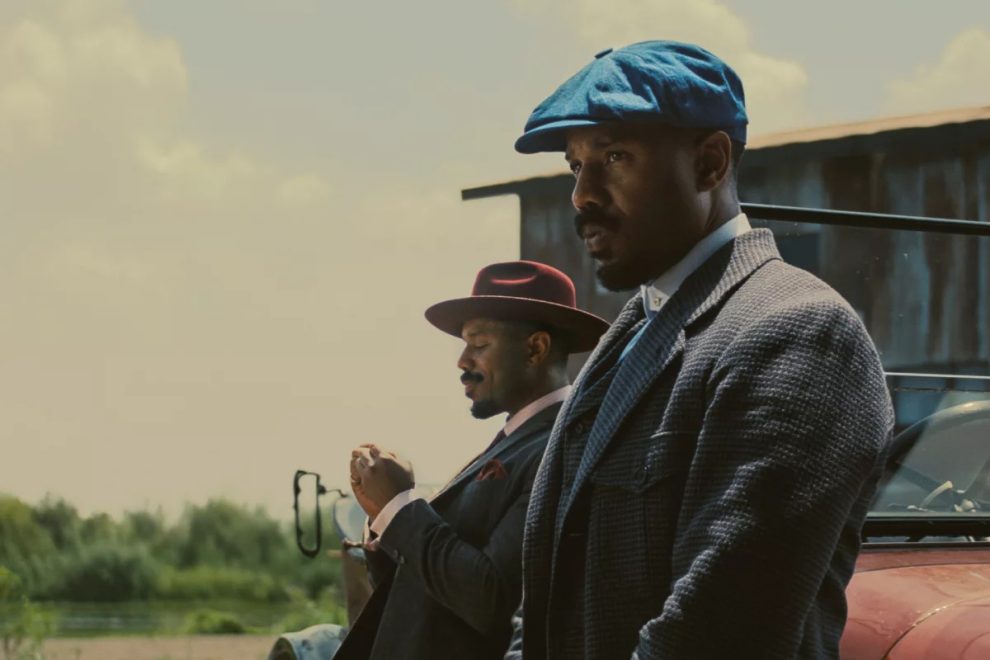
In Sinners, Michael B. Jordan plays twin brothers, Smoke and Stack, who return to the Mississippi Delta after a stint working for the Chicago mafia. The brothers start a juke joint where the Black community can gather to drink, gamble, dance, and make or perform music. The joint becomes a hub of solidarity and shelter—but also attracts malevolent outsiders.
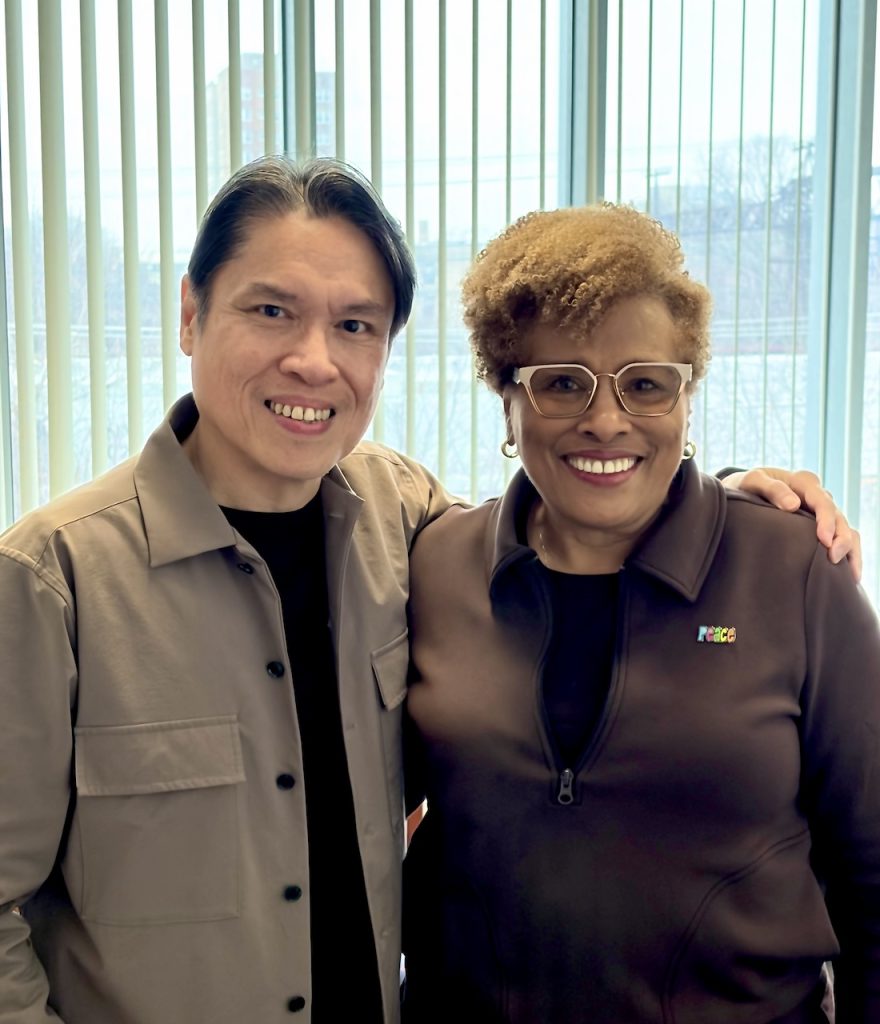
Theologians Antonio D. Sison C.PP.S. and C. Vanessa White, both professors at the Catholic Theological Union, find in Sinners an array of powerful themes relating to art, storytelling, memory, family, sin, and redemption. They believe the film holds relevance for developing a theology of liberation.
What themes in the film stood out to you?
C. Vanessa White: One central theme the film explores is the power of love in its many forms: romantic love, familial love, communal love, even self-love. Love in this film becomes a source of vulnerability as well as a force of resistance.
The theme of cultural assimilation also runs throughout the narrative. Characters wrestle with what must be surrendered in order to belong and what must be preserved in order to remain whole. Assimilation is not simply a spiritual, but also a psychological tension.
And finally, the power of music functions as a transcendent force within the film. Music becomes more than art. It is memory. It is resistance and liberation. Through song and sound, characters momentarily transcend their circumstances. Music allows the characters to reclaim agency, remember their history, and experience freedom. Even when external conditions remain oppressive, music becomes a spiritual language that speaks when ordinary speech fails.
Sin, suffering, and compromise shape existence, but love, cultural memory, and music hold the power to transform and redeem it.
Antonio Sison C.P.P.S.: Aside from what Vanessa mentioned, what stood out for me was the power of art and story. At best, art destroys old forms and creates new ones. I see that on two levels in the film. First, the portrayal of blues music. But also, the film itself, because it’s genre busting. It destroyed cinematic conventions and expectations that I was used to. And story is the way human beings communicate what is meaningful from one generation to another.
Another theme is the social dynamics of race, culture, and gender.
And thirdly, Black history. I’m an immigrant. I have lived and worked in the United States for more than 20 years, but this film told me that I had much more to learn about Black history.
How did the movie affect you on an emotional level?
White: For me, the film was familiar. It’s set in the Mississippi Delta, and my mother’s family lived near there, on the Arkansas side. My grandfather owned a farm nearby, and we’d visit there every summer, so the cotton fields, the sharecroppers picking cotton, and the town, were very familiar.
The other thing that struck me is how Ryan Coogler used horror to speak about the experience of Black life, racial oppression, and segregation as well as Black resistance and resilience. Even though I don’t usually like horror films, I loved this film.
Sison: Although I can enjoy horror, I was stunned by this film on many levels. I was moved to tears by the pivotal time-traveling Juke scene. Years from now, I think, when other Oscar contenders probably won’t be talked about, this film will.
What’s the significance of blues music in the movie?
White: According to theologian James Cone’s book The Spirituals and the Blues, the struggle for Black survival is what both the spirituals and the blues are about. In the blues, the men and women of the Delta expressed their feelings, their joys and sorrows. They needed to refresh their spirits in the sound and rhythm of Black humanity.
The blues, in fact, are the secular dimension of the Black experience. And the time of enslavement is the historical background out of which the blues were created. The blues took form after emancipation and reconstruction in the United States, and they invited Black people to embrace the reality and truth of the Black experience. They are a secular lament, telling our own stories, interpreting the nature of the world, asking and answering epistemological and ontological questions in our own voices and our own terms.
Sison: Blues music, as portrayed in the film, can be seen as a form of dangerous memory. That’s a term from theology, where an experience that evokes the paschal mystery has a way of militating against the status quo. In the film, the dangerous memory is of the Black experience of slavery, conjuring ghosts from the antebellum period and chattel slavery and the Jim Crow era. Conjuring really is the right term. It’s like the blues raises from the dead these historical stigmata of the Black experience. And it asks the question: Are there still ghosts that need to be exorcised?
White: Musically, the spirituals came before the blues, because the spirituals are rooted in enslavement. The blues are rooted in emancipation and reconstruction. The spirituals were how the enslaved were able to interpret Christianity. If you want to know the theology and understanding of Christianity, of Christ, for the enslaved Black person, look at the spirituals. If you want to look at the trauma of that time of enslavement, of Jim Crow and segregation, look at the blues.
What’s the significance of the juke joint in the film, beyond it being the place where the music happens?
White: The juke joint is both a sanctuary for Black joy and resistance and a target for exploitation. It’s a way of coping with life’s contradictions. Before people go to church on Sunday, they need that time of celebration and connecting to their authentic selves on Saturday. But it’s also a place of exploitation, because a person’s money is drained for a temporary sense of freedom and release.
In one scene, several characters are talking about one of the people who came to the juke joint who couldn’t pay in regular money. Whatever he had he wanted to use as payment. Stack argues that this person, just for this time, needs this, so can’t we show some empathy? There is this tension: the juke joint is a time of celebration, of coping with life’s contradictions, and a time when people’s money is taken from them.
Another significant aspect is that a juke joint was one of the few businesses that Black people could have. People in the Delta Mississippi were primarily sharecroppers—they were working for someone else. In the Jim Crow South, there were few things that Black people could really own. So Smoke and Stack can take pride in owning the juke joint.
One of the characteristics of Black spirituality is that sense of person as connected with community. I am, therefore we are. Smoke and Stack own the juke joint, so the community has a sense of pride and ownership, too.
Sison: The juke joint is a place where diversity and communion become possible. Outside is a world of racism, of the Ku Klux Klan killing Black folks. And it’s a world of vampires. The vampire trope is a metaphor for those who drain out the life of others.
The juke joint, even temporarily, is a sacred space, where you can cherish who you are in all your differences and diversity. And you come together in this liminal moment, on the threshold between reality as we know it, and a bigger reality, a spiritual world.
Yet, it’s not a sanitized space. It’s also a place of sin, humanity, imperfection—yet somehow light shines through the cracks of imperfect humanity.
White: On Saturday you’re in the juke joint; in Sunday you’re in church. And in some ways, they’re two sides of the same coin. In both these places, a Black person, living in the Jim Crow South, can for a time feel like a full human being. Outside, they are oppressed and dehumanized and denied. But on Saturday in the juke joint, they reclaim a sense of their worth and connect with their giftedness.
Then on Sunday, something similar happens. In many Black churches, you were called “Mr.” and “Mrs.” You were given a title. You were not just called by your first name. And you had roles within the church.
How does the film portray both the shared experiences and the tensions between the Irish and the Black communities it depicts?
White: Historically, both Irish and Black people in the Americas were considered inferior and oppressed and marginalized, though this was more extreme and lasted longer for Black people. In Isabelle Wilkinson’s book, Caste: The Origin of our Discontents (Random House), she explains how each new immigrant strove to become more American—more white— and some succeeded more than others.
The character Mary in the film is one-eighth Black. Stack, who loves her, feels the only way she can survive is if she embraces her whiteness and denies her Black self. This colorism was a phenomenon for many Black peoples. In one scene, Sammie asks Mary, “What are you?” That question is asked a lot. I’ve even been asked that question. There was the brown paper bag test: The closer your skin tone was to a light brown paper bag, the more acceptable you were.
Many Black people, when they moved from the South to the North, changed their racial identity. This is the story our pope’s ancestry. His grandparents and great-grandparents were Creole—were considered Black in the South. When they moved up North, they became white on the census.
The tragedy of colorism is that you have to deny a part of yourself in order to be accepted. And this can create internalized racism, when Black people began to see being Black negatively.
But, getting back to the Irish and Black communities, there’s this need they have to connect with each other. At one point, Remmick, the Irish vampire, says, “I want your stories. I want your song.”
Sison: In the scene when the vampires are trying to gain entry to the juke, they also use music. There’s a trio, with little stringed instruments, and they start to sing a song called “Pick Poor Robin Clean.” It’s a blues song from an earlier period. It’s cultural appropriation; it shows that they’ve already stolen something. And the way they sing is devoid of any kind of soul—it is the whitest rendition of soul-based music I’ve ever heard. It’s almost like a mockery, with this very synchronized choreography and singing in a cheerful, meaningless, inorganic way.
How does the film’s depiction of the Chinese community in the Mississippi Delta challenge other Hollywood representations of Chinese immigrants?
Sison: Coogler did his historical research, because the Chinese were a significant community there in the 19th century. Although the first Asian settlers in the Delta were Filipino/a, they were a smaller population and were localized in Louisiana. In the Delta, the Chinese were the significant Asian community. They were used as labor for cotton plantations. But eventually they became small business owners. They were the ones who catered to the Black community, because of segregation. There was intercultural solidarity.
The food supply for the Black community was sourced from Chinese grocery stores, because Black people were not allowed into white establishments. The Chinese were also segregated, because they were neither Black nor white, but they became a conduit between those two communities. That was portrayed very well in the film, in the character of Grace, the grocer, and her husband, Bo.
In one scene the vampire Remmick threatens to attack Grace’s daughter. And you can see the fury of maternal love. Grace erupts in a paroxysm of rage and rallies the other folks to fight the vampires. She’s like a warrior woman.
One of Hollywood’s prominent Asian stereotypes is the heavily accented foreigner, fresh off the boat, who’s a subject for comedy. A quintessential example is the Japanese character Mr. Yunioshi in Breakfast at Tiffany’s—played by Mickey Rooney in yellow face, in a very insulting way. It’s hard to watch, to be honest.
There’s another Asian stereotype called the Dragon Lady. This is a beautiful Asian woman in traditional dress who’s a beguiling seductress and who eventually attacks the male main character. This appears in several James Bond films.
Grace is not a stereotype. She’s second or third generation, not fresh off the boat. She and her husband are portrayed with Southern accents. Details like that matter in terms of representation.
White: Here in Chicago, many of our stores in the Black community are Asian owned. This relationship has a long history. As depicted in the film, the Chinese immigrants were a little more accepted than Black people, so they could have businesses on the white side and on the Black side of town, while remaining somewhat neutral. But I wonder: What did that to do their inner life both psychologically and spiritually?
What theological questions and issues does the film raise?
White: The theme of the power of love, specifically Black love, is theological. Throughout the film you see various forms of love. First you see a mother’s love, what mothers were willing to sacrifice for their children. The character Annie, the healer uses her healing powers in another depiction of love. When she speaks to Smoke about how he’s downplaying her healing powers, she says, “You don’t know how my prayers have sustained you.”
The last scenes in the film speak about an afterlife. I won’t give it away too much if you haven’t seen the film, but one revelation is that it’s a journey toward freedom and liberation.
Sison: Some might ask: Why would we recommend this for Catholic viewing, since it involves very graphic portrayals of violence and sin? First, it’s a portrayal of the world. Honestly, it would be more obscene to portray a Pollyanna scenario where sin does not exist. I mean, look out the window. The world is at war right now. How many children were killed in the girls’ school in Iran by the U.S. bombing? And even prior to that, the regime in Iran killed a great number of people. It’s a very tumultuous time we’re living in. If we’re shocked by portrayals in a film, we’re not in touch with reality. Reality is more shocking than any story.
The Bible is not coy about portraying sin. Among other references, Judges 19 depicts what scripture scholar Phyllis Trible calls a “text of terror.” It’s a graphic portrayal of a woman being raped, tortured, murdered, and dismembered, and she doesn’t even get a name.
A denial of reality is not helpful. We must be able to face the signs of the times if we are to negotiate through the world we live in.
And to inject systematic theology: Original sin is both the personal sins we commit and the sin of the world. The situation of sinfulness is something we are all born into, something no one is exempt from. The film portrays this. But it also shows redemption. We see traces, however imperfect, of that light shining through.
White: If we look at the film through the lens of what’s going on today, we should ask: How do we continue to exploit one another? How are we called to resist the negative forces that dehumanize?
In the very last scenes with Sammie, he has been told that what he is doing is evil, and he needs to give it up. And the decision that he makes speaks of his resistance to those negative forces and his determination to reclaim his gifts.
The film begins and ends with the song “This Little Light of Mine,” because the whole film is a flashback. The opening scene is the church.
Sison: That’s right: At the end of the day, it’s not original sin that’s at the heart of the film. It’s original blessing.
Image: Warner Bros. Pictures