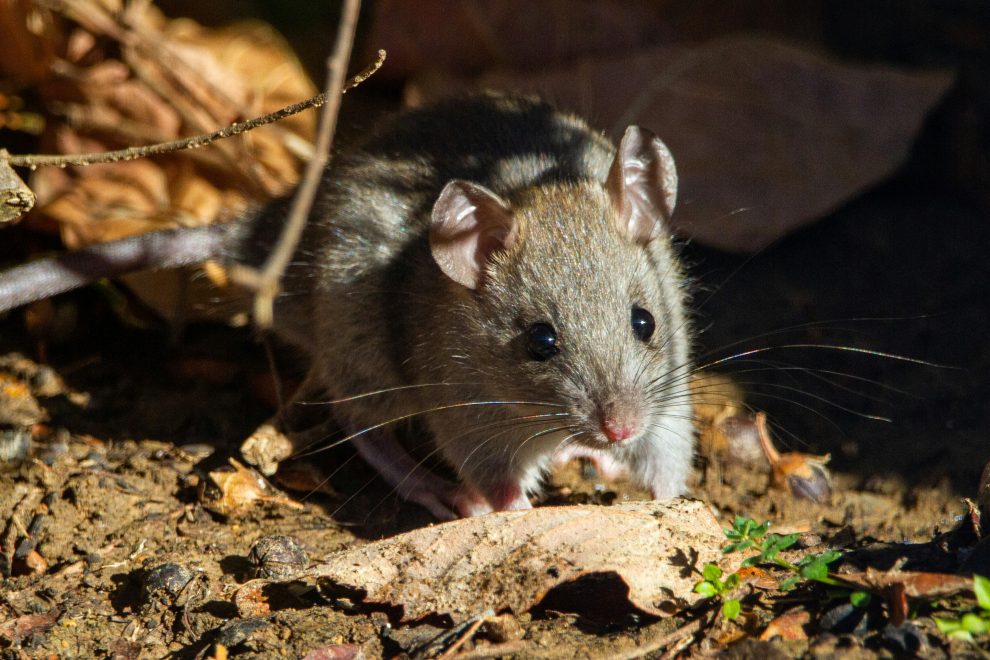
I was working quickly, spreading mulch in my garden, when I flipped over a sheet of cardboard and saw a tiny face with round black eyes staring up at me. I’d disturbed a field mouse’s nest. After the frightened mouse scurried into the grass, I saw her babies. Fragile pink jelly beans, dark eyes sealed with a thin membrane, they lay helpless on the soft earth. Carefully, I rolled each baby mouse into a wad of dried grass and returned them to their hollow. Then I replaced the cardboard.
Field mice are protective mothers, and when a nest is disturbed they usually return. I do not know whether this mouse returned, however, because I haven’t picked up the cardboard again. If they’re there, I want to leave them in peace. But each time I walk past that area, I wonder. And I think about how the story of my life that afternoon was simple, but for that mouse family, it was apocalyptic.
In The New Organic Grower (Chelsea Green Publishing), gardening guru Eliot Coleman talks about the importance of paying attention to what is going on in one’s garden. He quotes Scottish poet Robert Burns’ poem “To a Mouse, On Turning her up in her Nest, with the Plough, November 1785.” The poem is in dialect: “Wee, sleeket, cowran, tim’rous beastie, / O, what a panic’s in thy breastie!” As Coleman points out, following the observation of an unnamed English naturalist, the poem would not have been written in the modern era. A farmer on a tractor would not have seen the mouse.
Yet the farmer being close to the earth wouldn’t necessarily translate into a better outcome for the mouse. The farmer might have chosen to kill it. The truth is that people have never, in recorded human history, lived in blissful harmony with nature and one another. And simply paying attention is not the same as benevolence. Surveillance states, after all, pay close attention to their citizens.
I never meant to harm the mouse. And I take pride in the fact that my gardening methods are ecologically friendly. Over the years, the soil I care for has grown richer, sweeter. Of course other beings make their homes there. I’ve turned up moles when digging trenches and found snakes and toads under ground cover. My gardens teem with pollinators and predatory insects I think of as beneficial, as well as cucumber beetles and tomato horn worms and other creatures I think of as harmful. All of us are there to get a meal; we just have different ways of doing it.
Main character syndrome is a pop psychology term used to describe someone who thinks of themselves as the perpetual protagonist, everyone else as supporting characters. Yes, we are the central figures in our own stories. But our own stories are not the only ones. Here in the United States, we have a habit of making ourselves, not just individually but collectively, the main character in every story. How many of us know, for instance, which Allied nation had the most casualties in World War II? (Hint: It wasn’t us.)
When we forget that our stories interlace with those of others, we can do harm without meaning to. We can even reach the point where we begin to do harm deliberately. We wage unjust wars because of stories that cast other cultures as automatically sinister. We demonize immigrants and blame the poor for their own hardships, because these stories make us comfortable. If we’re not careful, we can brainwash ourselves into viewing our subjective biases as gospel truth.
Since my encounter with the mouse family in my garden, I’ve been moving more cautiously, trying to decenter myself and be aware of the myriad of complex narratives that make up the natural history of this little plot of land where my corn and tomatoes grow. Everything has a story to tell, though we have to practice to learn the language they tell it in. Sometimes, these are stories of survival against fearsome odds. What role am I playing in the story of other lives? When my story brushes up against theirs, is it a benevolent encounter or a catastrophic one?
This article also appears in the August 2026 issue of U.S. Catholic (Vol. 91, No. 8, page 9). Click here to subscribe to the magazine.
Image: Unsplash.com/Joshua J. Cotten