• Digital Edition
  • Newsletters
  • Donate
  • Renew
  • Subscribe
U.S. Catholic
  • About
    • Mission
    • Who We Are
    • Contact Us
    • Write for Us
    • Advertise with Us
    • FAQ
  • Sections
    • Arts & Culture
    • Catholic Voices
    • In the Pews
    • Our Faith
    • Peace & Justice
    • Poetry
    • Religion
    • Saint Calendar
    • Spanish Content
  • Podcasts
  • Magazine
    • Current Issue
    • Issue Archive
    • Digital Edition
    • Advertise
    • Subscribe
    • Renew
  • Giving
subscribe
U.S. Catholic
  • About
    • Mission
    • Who We Are
    • Contact Us
    • Write for Us
    • Advertise with Us
    • FAQ
  • Sections
    • Arts & Culture
    • Catholic Voices
    • In the Pews
    • Our Faith
    • Peace & Justice
    • Poetry
    • Religion
    • Saint Calendar
    • Spanish Content
  • Podcasts
  • Magazine
    • Current Issue
    • Issue Archive
    • Digital Edition
    • Advertise
    • Subscribe
    • Renew
  • Giving
subscribe
U.S. Catholic
subscribe
  • About
    • Mission
    • Who We Are
    • Contact Us
    • Write for Us
    • Advertise with Us
    • FAQ
  • Sections
    • Arts & Culture
    • Catholic Voices
    • In the Pews
    • Our Faith
    • Peace & Justice
    • Poetry
    • Religion
    • Saint Calendar
    • Spanish Content
  • Podcasts
  • Magazine
    • Current Issue
    • Issue Archive
    • Digital Edition
    • Advertise
    • Subscribe
    • Renew
  • Giving

SHARE

FacebookXEmail
Las Patronas header image

‘Las Patronas’ gives hope to Central American refugees

Peace & Justice
Joseph Sorrentino
Published October 11, 2016

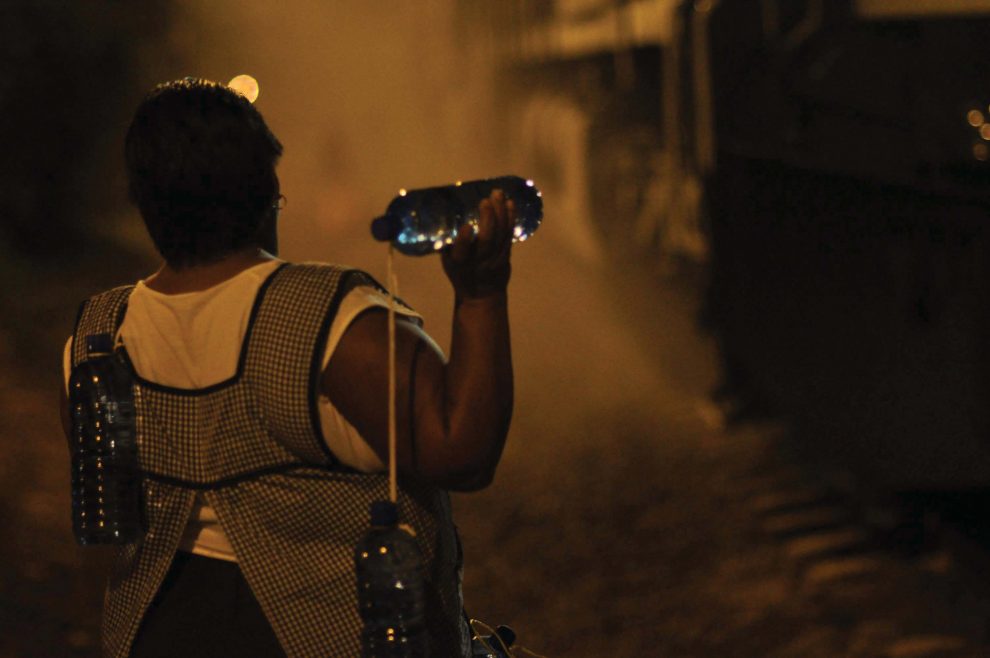
A dozen people line the train tracks in La Patrona, Veracruz, Mexico, holding out bags of food and bottles of water tied together with string as a train thunders toward the crossing. Most are women. Known as Las Patronas, this group has been aiding Central American refugees, including those who cling to the tops of the cargo trains they call La Bestia: the Beast.

Until the summer of 2014, hundreds of refugees could be found on the trains. These people had gone days without anything to eat or drink, so they’d grab the food and water held out by Las Patronas as the train hurtled by. But in June 2014 President Obama met with Mexican president Enrique Peña Nieto in Washington, D.C. to discuss ways to slow Central American migration through Mexico. Two months later the Mexican government instituted Programa Frontera Sur(the South Border Program).

When Peña Nieto announced the program, he said it would protect refugees. The plan, according to the Mexican government, would stop refugees and migrants from risking injury by riding the train, develop strategies to guarantee migrants’ security and protection, and combat the criminals who prey on the refugees. But the main governmental effort has been to keep people from riding the trains, forcing refugees to make the journey by foot, an even more dangerous route.

While visiting Las Patronas in February 2015, I accompanied some of the women to the train tracks, where they waited to hand out food and water. The women scanned the train cars in anticipation when the train reached the crossing. But it passed without anyone handing out a thing. Norma Romero Vázquez, the group’s spokesperson, watched as the train continued on its way. “There is nobody,” she said, a hint of sadness in her voice. The women packed up their goods and walked back to their small compound, where they prepare food and care for the refugees who arrive on foot daily at the small shelter.

Advertisement
Advertisement
ad promoting Claretian Mission Campaign

Now that they can no longer ride La Bestia, refugees and migrants walk for days through Mexico—through cities and towns and also mountains and jungles—to reach shelters that dot the route north. The women in Las Patronas are one of these stops along the route. Despite the fact they themselves live in poverty, they’ve devoted their lives to helping refugees and migrants reach safety.

Read more

TagsCatholic social teaching Immigration Ministries War and peace
orange ad promoting U.S. Catholic's upcoming redesign

About the author

Joseph Sorrentino

Joseph Sorrentino is a freelance journalist and photographer. Visit his website at sorrentinophotography.com.

You may also like

Jane Goodall

Jane Goodall’s care for all creatures rose from her spirituality

Nicole M. Perone
April 2026 Cover Art

Are humans an invasive species?

Liuan Huska
Leo likes to work, so he can often be found sweeping, carrying in supplies, or doing whatever needs to be done in the shelter.

Crossing the border: One migrant’s story of hope and resilience

Joseph Sorrentino
    Share This!
    Share
    FacebookXEmail

What’s trending

    weaving machines in a textile factory
    Peace & Justice

    A Luddite lesson in labor justice for our technocratic age

    Levi Checketts
    Jamie Marich reflects on the readings for the Sixth Sunday of Easter
    Catholic Voices

    A Sunday reflection for May 10, 2026

    Jamie Marich
    Pope Leo XIV in popemobile
    In the Pews

    A multi-faceted papacy: Pope Leo XIV, one year in

    Enzo Del Brocco
    mosaic of Sophia - U.S. Catholic
    Religion

    Who is Sophia in the Bible?

    Joyce Rupp

SUBSCRIBE

DONATE

RENEW

SIGN UP FOR FREE NEWSLETTERS

Quick Links

  • Mission Statement
  • Who We Are
  • Reprint Policy
  • Job Opportunities
  • AI Policy
  • Advertise
  • Contact Us
  • Submissions
FOLLOW US
  • Facebook
  • Twitter
  • Instagram
  • Youtube
Copyright © 2026 US Catholic. All Rights Reserved | Terms of Use | Privacy Policy
a small white version of the USC logo